
Welcome to Modern Agriculture!

INTRODUCTION TO GIR COW FARMING
Gir cow belongs to the humped category of cattle breeds in India. This cow is considered unique in characteristics when compared to other breeds. Gir is native to the Indian subcontinent and has originated from the Gir hills and forests of Kathiawar (Gujarat). Though the Gir cow originated in Gujarat, it is now found in many states in India. Gir is also known by other names such as Gujarati, Sorthi, Surti, Kathiawari, Bhodali and Desan. Gir cattle are well known for their adaptability and milk producing capacity. This cow breed is generally reared by the nomadic tribes of the state for their basic livelihood. Gir cow is a pure breed and the oldest breed in India.
Gir cow is also reared in countries like United States, Mexico, Brazil and Venezuela. This Gir breed achieved global status due to Brazil, supplying improved Indian origin cattle embryos and semen to other countries. Gir breed is considered the best dairy breeds in the world.
Above all these facts, there is one great aspect that has been researched for years on Gir cow by various research institutes about gold being found in the cow urine. The presence of gold dissolved with other soluble salts and metals is detected by a thorough research. After this observation, it is expected to develop new therapies for the cure of diseases. Of the 5100 compounds present in the cow urine, 388 of the compounds have medicinal properties. Cow urine finds its use in Ayurveda for development and balance of mental health. Gir cow dung and urine are both used as the main ingredient for organic agricultural practices. They are termed as bio-fertilizers and bio-pesticides and used to prevent fungal and parasitic infections in plants.
Rearing the Gir bull along with the cow is a local practice used by the Maldhari tribe to improve their breed genetics, milk yield, reproduction health and growth.
PHYSICAL CHARACTERISTICS OF GIR COW:

ADVANTAGES OF GIR COW FARMING:
HOUSING FACILITIES FOR GIR COW FARMING:
The house for the cows is generally made of concrete. The house should be well aerated and roof height should be 16 to 18 feet in the centre with 8 feet high side wall. The walls should be made of brick and the floor cemented. If a low investment house is planned, then the roof is made up of thatched tile instead of cement. The house should be built such that there is at least 5 Square meter of space per each cattle. The house should be built in north-south direction and should be maintained dry. A drainage system within the house is a must for the removal of trash. The house should be thoroughly cleaned to avoid the spread of bacteria, mosquitoes, parasites and virus which may otherwise cause disease to the cattle.
FEED MANAGEMENT FOR GIR COW FARMING:
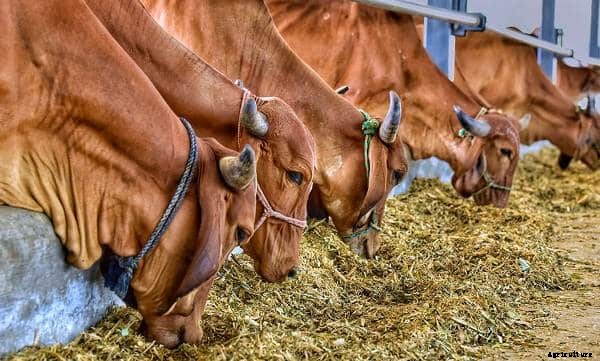
The food that is given to the cows is an important factor that promotes health, production and growth in the cows. The expenditure to feed the cows is almost 50% of the total cost of the farming. Open grazing is essential for reducing the cost of the feed and also provides required nourishment to the cows. Additionally the Gir cow is fed with green Jower, Bajra straw, groundnut cake, dry fodder, cotton seed cake, soya bean husk, coconut and jaggery. The vegetables that are fed to the cattle include carrot, beet-root and drumsticks. There should be regular feeding routine, but overfeeding should be avoided. All the grains should be provided to the cow in the form of medium ground powder. The feed of the cows should be stored in dry places to prevent bacteria and moulds. The feed of the cow should be estimated according to its growing stage and condition such as feed for below 6 months cow, growing animals, lactating cow, bulls, etc. Water should be provided in adequate quantity to the cattle at all times.
HEALTH CARE FACILITIES FOR GIR COW FARMING:
The mortality rate in Gir cattle is very low. The risk of death in a cow is high when it is just born till the age of one month. Broncho-Pneumonia and Pneumo- Enteritis are the two main reasons for the mortality of calves. The viral respiratory vaccine is administered to the calves when they are 2 to 3 weeks old. When the calves are 1 to 3 months old they are given Clostridial vaccination. Gir cow may sometimes suffer from reproductive disorders like Prolapse, Placenta retention, Dystokia etc. Since cows are fed with rice and wheat straw, they get infected due to the Fusarium fungus present in the straw and develop a disease called ‘Deg Nala’. This disease challenges the movement of the cows by affecting their legs. Proper antibiotic and anti-inflammatory drugs are given intramuscularly can treat the disease and show improvement in 45 days. Deworming treatment should be done to the cows at an interval of 30 days. Gir cattle can be affected from many other common diseases such as digestive disorders, jaundice, anthrax, Anaplasmosis, Anaemia, Foot and Mouth disorders, Hypomagnesaemia, Lead Poisoning, Rinderpest, Black quarter, Ectoparasites, Endoparasites, Mastitis and Ringworms. Proper care and hygiene along with suitable treatment can help cattle live longer.
YIELD AND BENEFITS OF MILK FROM GIR COW FARMING:
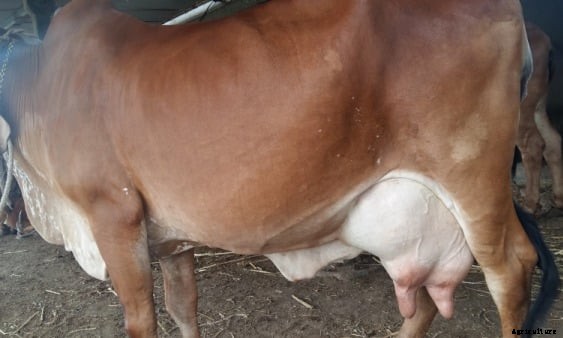
The Gir cow breed is estimated to produce 1590 kg of milk per lactation on an average. During the first calving process 1600 to 1700 kg of milk per lactation is produced, but for mature cows, the milk production is higher around 1800 to 2000 kg per lactation. The cost of 1 liters of milk varies from place to place (e.g. Rs 50 to Rs 70 per liter) and is comparatively high because the milk is believed to contain two protein groups: the casein and whey protein. The milk has 80% of casein protein and is specified as A2 milk. By research and observation, it is believed that the consumption of the A2 milk has some improvements in health such as reducing autism, type 1 diabetes, neurological disorders, immunity problems, endocrine disorders and symptoms of schizophrenia. The cow’s milk has an average of 4.69 to 4.97% of fat in its milk.
ECONOMICS/COST and PROFIT OF GIR COW FARMING:
An estimation of rearing Gir cow is given here. This can be taken as an example for beginning a farm for cow farming. The minimum basic investment details for farming are provided here and not the entire structure of the project. The cost details may change depending on the location and also the demand of the cattle in the area.
TYPE OF FACILITY COST The cost of the cow shed for 4 cows, 40 sqft/ cow@ Rs 250/ sqft 40,000 The cost of the calf shed for 4 cows, 20 sqft/ cow@ Rs 250/ sqft 20,000 Cows produce 10 liters milk @ Rs 30000 transports 1,20,000 Transportation per cow is Rs 1000 so for 4 cows 4,000 Hand operated chaff cutter 10,000 Appliances needed for the dairy are Rs 1000 per cow 4,000 Electrification of the farm 12,000 Total recurring capital 2,10,000 Feed cost for cows for one month 5,000 Animal insurance about 5% of the animal cost 6,000 Cultivation of fodder in 1-acre land 10,000 Cost of vaccine and electricity, extra emergency costs 9,000 Total Expenditure 30,000 Total farm cost 2,40,000This above estimation is done when:
The profit in Gir Cow Farming from the above estimation can be analysed as follows:
Each cow produces average milk each day: 10 litres (4 cows: 40 litres)
The selling price of 1 litre milk: Rs 27
The price of 40 litre of milk for 1 day: Rs 1080
The total income for a month is: Rs 32,400
Annual Income: Rs 3,88,800
So the net profit in Gir Cow Farming is (annually): Rs 1,48,800
The price of the cow and the value of milk both have changed due to the fact that these cows produce nutritious milk which can help people overcome health problems.
CONSERVATION AND IMPROVEMENT PRACTICES ON GIR COW FARMING:
Several research institutes have started developmental activities to preserve the breed as well as improve its current condition. The All India Coordinated Research Project on Cattle for Genetic Improvement is producing a crossbred of Gir with other exotic breeds so that the new breed is suitable for the present day environmental conditions. The progeny of the Gir cattle are being tested by the Animal Husbandry Department and Project Directorate on Cattle for gene improvement. The bulls are tested on gene improvement and superior quality of the germplasm is used for other developmental programmes. It is known recently that the breed is on the vulnerable list in the International Union for Conservation of Nature (IUCN) data. The National Bureau of Animal Genetic Resources is handling projects to conserve the breed of Gir cattle. The qualitative and quantitative traits of the breed are characterised to study the molecular aspects of genes and breed descriptors. They conserve the germplasm of the animal.


