
Welcome to Modern Agriculture!

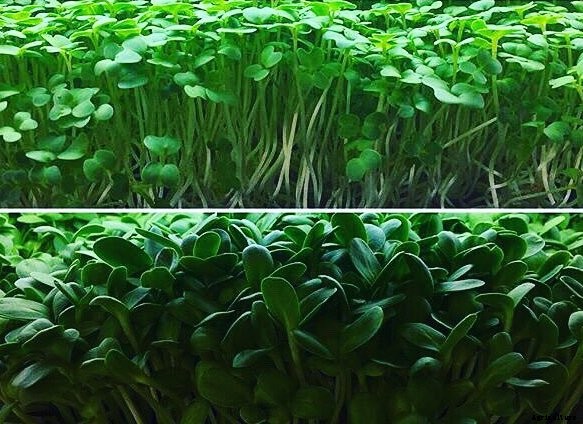
Microgreens – this term refers to the foliage, baby vegetables, and legumes that are harvested at a seedling stage, just after the sprouting has begun. Generally, all edible leaves are categorized as Microgreens but chefs, in particular, consider Microgreens to have special flavors, color, and texture like the mustard and the radish greens. Sprouts and Microgreens are sometimes considered similar but they differ in the way of germinating. Sprouts germinate in water, whereas Microgreens are grown in soil and are harvested. These tender leaves contain 40 times more nutrition and high vitamin C, E, and K content when compared to the fully-grown leaves. It is also believed that Microgreens don’t always require soil to grow, but they need good controlled conditions of light, air, and water. The height of Microgreens is about one to two inches when harvested. Microgreens are currently used in many cuisines for garnishing and salad dressings. Microgreens farming is a low investment high dividend agricultural practice as it requires less space and money but yields serious returns. The common considerations of Microgreens farming are beets, arugula, mustard, radish, endive, kale, etc.
NEED FOR MICROGREENS FARMING:
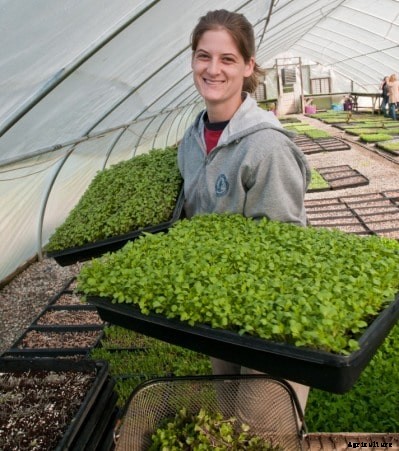
While considering urban commercial farming, Microgreens farming can be appealing for certain reasons:
FARMING PROCESS FOR MICROGREENS:
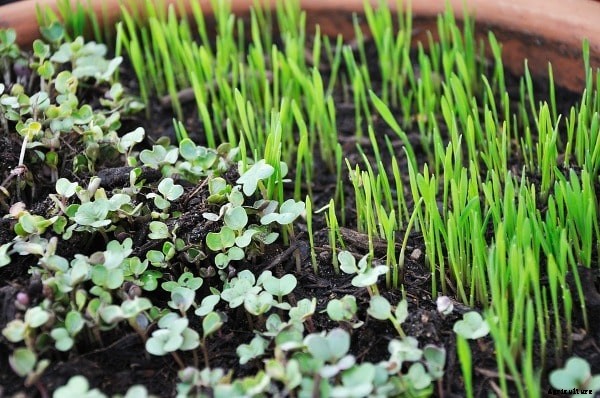
Research has shown that Microgreens farming needs good observation and maintenance of external conditions for achieving good results. Details like light, soil, water; harvesting should be finely tuned to have optimized output.
MATERIALS REQUIRED FOR MICROGREENS FARMING:
EQUIPMENT REQUIRED FOR A LARGE SCALE MICROGREENS FARMING:
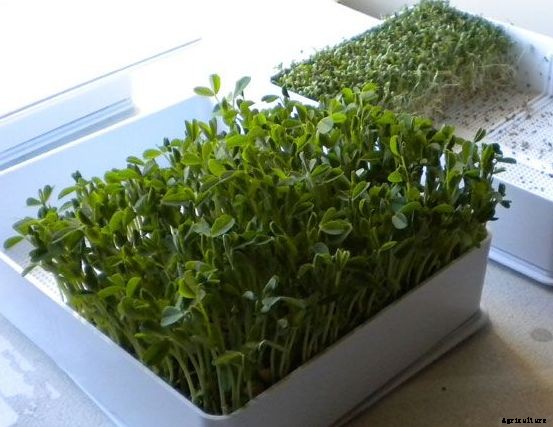
Some extra considerations have to be made when farming for Microgreens on a larger scale. When there is no possibility of Microgreens farming in an indoor area, then a greenhouse or a hoop house is a possibility for year-round production. A hoop house can be constructed with low-cost or recycled materials.
Heating system: Solar heating is a good option for hoop houses during the spring, but during winter alternate sources of heating should be provided for efficient plant growth. The growing area can be heated using heat mats and biogas systems with the help of water heaters.
Growing area: an elevated table-like bed structure is used by a farmer for Microgreens farming because it is easier for seeding and harvesting than groundwork. A table which is accessible from all sides is chosen for this purpose and the width of the bed should be easily available from each side of the table.
Heat mats: electric heat mat is used during the winter to heat the beds in the growing area without dissipating the entire heat to the hoop house. A much cheaper and efficient source of heating is through growing mats with the hot fluid circulating system. Glycol fluid is used as a heating fluid in these systems which circulate through the mats.
Water supply: constant water supply is needed to maintain the moisture level of the soil in the growing area. Long hose pipes with spray nozzle necks are best suited for the purpose of Microgreens farming
Ventilation: large fans have to be established to provide ventilation to the Microgreens so as to prevent fungus in the winter and cooling in summer. The fans keep the hoop house at optimum temperature and moisture levels with adjustments made as and when required by the farmer. Fans also keep the air circulation intact in the area of Microgreens farming. Large barn fans or household table fans can be used for this purpose.
Area for processing: Microgreens are washed in a clean sink and dried on a large table space.
Packaging: micro-perforated food bags with a heat sealer is recommended to pack the Microgreens such that they are prevented from tampering and can also breathe within to stay fresh and last longer.
Refrigeration: before the Microgreens are delivered to the required location they have to be packed and refrigerated properly otherwise they would wilt. A normal household refrigerator is good enough for storing Microgreens.
BENEFITS and ADVANTAGES OF MICROGREENS FARMING:
SEEDS MOSTLY GROWN IN MICROGREENS FARMING:
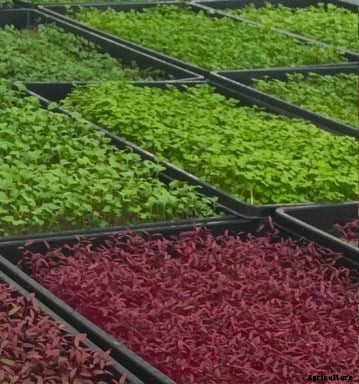
There is a long list of Microgreens that can be grown, but some commonly grown varieties are basil, beets, broccoli, cabbage, celery, chard, cilantro, spinach, parsley, lettuce, chervil, kale, radish, peas, arugula, mustard, kohlrabi, amaranth, and sorrel. It is worth mentioning here that not all seeds are safe to be grown as Microgreens because to protect the seeds during storage they are treated with chemical fungicides and pesticides. Commercial purpose seeds do contain harmful chemical content. Therefore, it is advisable to use untreated seeds or seeds with organic treatment.
GROWING MICROGREENS AT HOME:
There are four simple steps to be followed to grow Microgreens at home in the kitchen garden.
ECONOMICS/COST AND PROFIT OF MICROGREENS FARMING:
There are two types of investments included one is the fixed costs and the second is the variable costs. The fixed costs are for the propagation trays of size 10 x 20” which cost around $1 / tray. The variable costs include seeds, soil, water, packaging, etc. The seeds for Microgreens farming are estimated to cost around $15/ lb. It is observed that 1 tray can handle 1 ounce of seeds so the cost of seeds per tray is $1. 75/25 mix of potting soil and coconut coir per tray cost around $1 depending on the way the tray is filled. The price of packaging material depends on how is it required by the customers. They can be packed in disposable packets or reusable containers. The cost of Microgreens harvested per tray is around $2-4, which depends on many factors. Most Microgreens yield 8-12 ounces per tray, but for specific shoots like sunflower radish and peas, the yield is 12-18 ounces per tray. Apart from this, there are some hidden costs like labor when Microgreens farming is done on a bigger scale.
The total revenue generated is estimated at:
Production: 8-12 ounces/tray.
Pricing: $3 per ounce.
Revenue: $24-48.
Restaurants are the best customers for Microgreens farmers because they buy Microgreens in bulk on a regular schedule. The production can be streamlined when the requirement is known and orders come in on a weekly basis. Marketing Microgreens production is the most essential part of the farming process as this improves the production rate and demand.
The biggest motivation to grow our own greens is that the nutritional value of production has reduced over the past decades. Growing baby vegetables and leaves without many chemicals retain their nutrition levels. On the other hand sprouts have some bacteria grown on them due to the water content, but the Microgreens have negligible bacteria risk because they are grown in soil and only the leaf and plant are consumed instead of the root and seed. Microgreens farming is a type of decentralized farming, where the food is grown near the people who eat it. When produce is transported over long distances then it gets wasted and it amounts to 30-50% of the total food materials. Research has proven that the more we decentralize our food production and bring it close to our kitchen, we rely less on other sources of food and transport which ultimately improves our well-being.
In case if you are interested in this: How To Grow Organic Lettuce.

