Drumstick Farming Project Report (Moringa), Cost and Profit
Introduction of Drumstick Farming Project Report:
The following information is about Drumstick Farming Project Report (Moringa).
Introduction to moringa:
The drumstick is a vegetable plant grown for its edible tender pods, leaves, and flowers that are nutrient rich. The drumstick tree is a softwood tree and is native to India. The trees are grown in the tropical and sub-tropical regions around the world. The drumstick tree is called by many English common names for its various qualities such as Moringa, drumstick tree, benzoil tree, and horseradish tree. The tree is a fast-growing, drought-resistant and perennial vegetable tree.
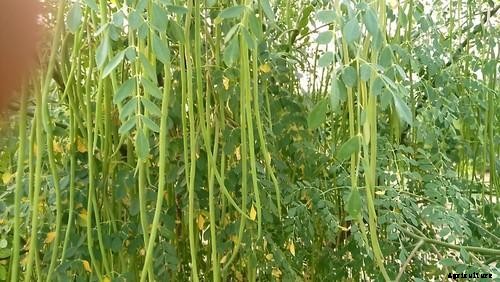
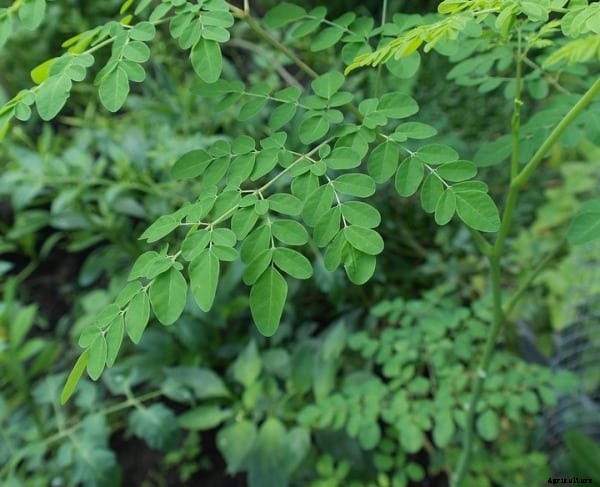
The trees are small to medium sized of about 10 to 12-meter height, The trunk of the tree can reach a diameter of 35 to 45 cm and is thick corky with fragile stems. The tree branches are drooping with leaves that are tripinnate with elliptic leaflets. The pods are long pendulous reaching 20 to 80 cm in length. The seeds inside are trigonous in shape with wings on angles. The tree bears yellowish creamy white flowers that are bisexual with sweet fragrance growing on slender hairy stalks. The flowering of the tree varies from region to region in India and is greatly influenced by rain, soil and other environmental conditions. Flowering occurs once a year between January to August in South Indian conditions. In central Kerala, peak flowering starts in December to January; in southern parts of Kerala it is February to March; Coimbatore it is March to May and in Bangalore, it is July to September. In conditions with constant seasonal temperatures and with consistent rainfall, flowering can happen twice or throughout the year. The trees are cut down to one to two meters under commercial farming by farmers as the plants regrow with pods and leaves within arm’s reach. The trees start bearing pods from the sixth month after planting.
Moringa.
The pods of the drumstick tree are a very popular vegetable with distinctly inviting flavor and its leaves are used in dry seasons in South Indian cuisine. Pods are nutrient rich in Carotene 110 mg, Vitamin C 120 mg, Phosphorous 110 mg and minerals such as Potassium 259 mg, Chlorine 423 mg, Magnesium 28, g, etc. in every 100 grams.
Scientific/Botanical name of Drumstick:
The botanical or scientific name of drumstick tree is ‘Moringaoleifera Lam’ and the plant comes from the family Moringaceae.
Other names of Drumstick Tree:
Moringa Tree – the name given for its long, slender, triangular seed pods.
Horseradish Tree – the name given for its root tastes resembling horseradish taste.
Ben oil Tree or Benzoil Tree – the name given to its oil extracted from Moringa seeds.
Drumstick in Indian Languages:
Gujarati –ઢોલનીછટા (Ḍhōlanīchaṭā),
Malayalam – Muringa,
Telugu – మునగకాయ (Munagakāya),
Kannada –ಡ್ರಮ್ಸ್ಟಿಕ್ (Ḍramsṭik),
Tamil – முருங்கை (Muruṅkai),
Hindi – सहजन (sahajan),
Bangle – ড্রামস্টিক (ḍrāmasṭika),
Marathi – शेवटा (śēvaṭā),
Punjabi – ਡਰਾਮੇਸਟਿਕ (ḍarāmēsaṭika).
Drumstick Varieties/Drumstick Cultivars:
Drumstick varieties are classified into Perennial and Annual types.
Perennial Type: These varieties have been in cultivation for centuries. In India, they are typically propagated through cuttings. These trees are less resistant to pests and diseases while requiring greater rainfall. The trees take a long time to grow and are usually not preferred for commercial cultivation.
Annual Types: These trees are the common and regular trees that we found in the current cultivation developed through plant breeding research. They are propagated through seeds offering fast growth, early maturity, higher yields, and adapts to various soil and climatic conditions.
Drumstick Varieties:
PKM1:
This is also known as Periyakulam 1 developed by the Horticultural Research Station of TNAU through pure line selection. This is a commercially viable annual variety propagated only from seed. The trees are shorter (4 to 6 m) with higher pod (200 to 230 per annum) yield. Pods are non-bitter with uniform length (65 to 70 cm) and green in color. The pods’ texture is fleshy, non-fibrous and soft with extended shelf life. The tree comes to flowering in 90 to 100 days and harvesting by 160 to 170 days after planting.
PKM2:
This variety is a higher yield hybrid producing 240 fruits per tree with a yield of 90 to 97 tonnes per hectare. This variety is derived from crossing MP 31 and MP 38. This variety can be densely planted compared to PKM1 with spacing 1.2 x 1.2 m, while PKM1 is planted at 1.5 x 1.0 m. Fruits are fleshy and 120 to 130 cm long. PKM2 consumes more water compared to PKM1.
Chavakacheri:
Is a perennial variety from Sri Lanka. Each tree produces about 90 to 120 long pods per annum.
Chemmurungai:
This is a perennial variety from Sri Lanka. This variety produces flowers throughout the year and bears pods throughout the year. Pods tips are red.
Kudumianmalai 1 (KM -1):
This variety is developed by Anna Pannai, Kudumianmalai of Pudukottai. The tree is bushy and starts bearing pods from the sixth month after planting for up to two to three years. Each plant produces 400 to 450 fruits per year, giving a very high yield.
MoolanurMoringa:
This is a perennial variety extensively grown around the regions of Moolanur and other places in Tamilnadu. Pods grow up to 40 to 50 cm in length and weigh about 120 grams each. Moolanurmoringa trees are maintained up to 15 years without pruning and they produce about 200 kg pods per season.
ValayapattiMoringa:
This is also a perennial cultivar. The pods of this variety are 60 to 70 cm long and each pod weighs about 120 grams. Each tree of this variety produces about 1000 to 1200 pods per annum.
Climate and Soil Requirement for Drumstick Farming:
The plants can be grown in a wide range of soils. Well-drained sandy loam soils with a pH of 6.0 to 7.0 are ideal soil conditions while red soils are recommended as high seedling vigor was observed. The plants grow well in tropical and sub-tropical climatic conditions. The tree is susceptible to frost and shedding of flowers is observed when day temperature exceeds 40° C. The ideal temperature with luxuriant plant growth is observed at 25° to 35° C.
Land preparation for Drumstick Farming:
Land Preparation for Moringa.
Deep plowing of the land is required for drumstick farming. About 20 tonnes of farmyard manure is incorporated per hectare at the time of the last plowing of the land. For perennial cultivars, Pits size of about 45 x 45 x 45 cm is dug at every 6.0 x 6.0-meter spacing while for annual cultivars; pits are dug at 2.5 x 2.5-meter spacing. For farming of drumstick leaves, 1.0 x 1.0-meter spacing can be maintained. Each pit is filled with a well-mixed mixture of soil, 10 to 15 kg of farmyard manure or compost along with 100 grams of Nitrogen, 200 grams of Phosphorous, and 50 grams of Potassium before the onset of monsoon.
Seed Treatment in Drumstick Farming
Treat the seeds with approved biopesticides or chemicals before sowing as this will help control seed borne diseases. Soak the seeds overnight in water and sow the seeds on the other day. This will help in early germination. Seed treated with 100 grams of Azospirillum for 650 grams of seeds resulted in early germination with increased seedling vigor and growth.
Propagation in Drumstick Farming
There are two types of propagation in drumstick farming.
Seed Propagation: This method is suitable for annual cultivar types. Seeds are sown in two to three-centimeter depth in each pit. Under regular and proper irrigation, germination happens after 8 to 10 days.
Stem Cutting: This method is suitable for perennial cultivar types. When trees stop producing pods, cut off the branches for growing new trees and this will promote fresh growth. Cut branches that are 5 to 12 cm in diameter and 100 to 150 cm in length for planting in each pit. Application of cow dung on the top end of the cutting will protect the cut-branches from pests and diseases at the time of planting. For proper root and plant growth, place one-third part of the cut-branch inside the soil pit.
Nursery: Seeds are planted in nursery beds or in 15 x 7 cm polyethylene bags in the months May to June. Soil must be well mixed with organic manure at 2:1 ratio. After 8 to 10 days the process of germination takes place and 30 to 40 days old seedlings are ready for transplanting in the mainland. About 600 to 700 grams of seeds are required for a hectare land. It is recommended to raise a few extra plants in polythene bags for the purpose of gap filling in the mainland.
Irrigation in Drumstick Farming
Drumstick plants can withstand drought conditions for up to six months. They require minimum irrigation for proper growth. Soil conditions such as too dry or too wet will lead to flower drop. Optimum soil moisture should be maintained for more yields. Irrigate fields once in a week up to three months, followed by once in 10 to 12 days thereafter. Irrigation may not be necessary during the rainy season. Maintain adequate soil moisture during the flowering period and avoid stagnation of water.
Manures and Fertilizers in Drumstick Farming
After the third month of sowing or planting, 100 grams of urea, 100 grams of superphosphate, and 50 grams of murate of potash should be applied to each plant or pit. During flowering time apply 100 grams of urea pet plant or pit. Heavy irrigation should be provided at the time of pod development.
Intercultural operations in Drumstick Farming
Weeding:
Since the drumstick plants are widely spaced, manual and mechanical intercultural operations can be undertaken. Regular weeding with a hoe will loosen the topsoil for good aeration and removes the unwanted plants and weeds. Fields having older drumstick trees are recommended to weed four times a year. For shallow-rooted weeds, three to four times of hoeing is required each time after irrigation. When fields are infested with numerous weed, mow the fields before weeds produce seed as close to the ground as possible. Those drumstick plantations that not weeded properly will produce fewer leaves and flowers and the leaves begin to yellow at the base. Application of registered herbicides at timely intervals will help to control the growth of weeds.
Pruning:
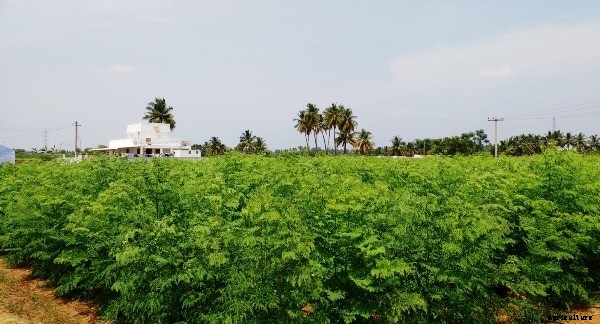
Drumstick tree branches grow long and vertically, producing leaves and pods. When branches left growing naturally the pod production becomes low. The trees tend to grow 10 to 12 meters long making harvesting of fruits difficult. Pruning makes young tree branch laterally, making them short and bushy by pinching the terminal bud on the central stem when the trees are between one to two meters in height. Pruning can be undertaken on a regular basis after each harvest. Pruning helps the tree to produce more branches leading to more flowering and fruits. Harvesting will be made easy as tender pods and leaves will be in comfortable reach.
Read: Country Chicken Farming Project Report.
Pests and Diseases in Drumstick Farming:
Bud Worm (Noorda moringa):
The insect lays a creamy oval-shaped single egg on flower buds. When eggs hatch, dirty brown larva with black head bores into flower buds and causes shedding by feeding over them. The adult insect has dark brown forewings and white with brown border hind wings. The larva then goes inside the topsoil and transform to cocoon and pupation takes place. As the flowers are destroyed, there won’t be any pods on the infected trees. Collect the infected flowers and buds having larva or eggs and cocoon from the topsoil and destroy them completely. Spray the fields with Malathion one-liter per hectare.
Lead Caterpillar (Noordablitealis):
The adult insect lays a cluster of white oval-shaped eggs on tender shoots. The larva feeds on the leaves destroying the foliage into papery structures.
To control, spray the fields with registered insecticides like one-gram of Carbaryl 50 WP in a liter of water or 2 ml of Malathion 50 EC in one-liter of water. Plow the soil around the tree to expose pupae and kill them. Collect the infected parts along with larva and destroy. The other effective way to stop the adult insect is by arranging light traps in the drumstick fields.
Hairy Caterpillar (Eupterotemollifera):
A large size yellowish brown colored moth lays a cluster of eggs on tender shoots and leaves. The densely hairy larva emerges when the eggs hatch and start feeding on tree trunks feeding gregariously. They destroy the trees by scrapping the bark and eating away the foliage and under severe infestation; the foliage of the tree gets completely destroyed.To control, destroy the cluster of eggs and caterpillars. Usually, the adult insects appear after the rains. Place light traps in the fields to attract and kill the insects immediately. Spray the fields with insecticides such as 25 grams of FORS in one-liter of water or two-grams of Carbaryl 50 WP in one-liter of water.
Pod Fly (Gitonadistigma):
This insect is a fly that looks yellowish with red eyes. The fly lays cigar-shaped eggs in groups near the grooves of tender pods. Maggots appear after hatching and feed on pods. Infected pods become dry and split from the tips. Gummy substance oozes from the pods. Infected pods fall down immaturely.To control, destroy all the fallen and infected pods. Plow or rake up the topsoil around the tree and destroy the pupae. Use citronella oil, or eucalyptus oil, or vinegar, or dextrose, or lactic acid to attract the adult flies. Infested fields must be sprayed with insecticides such as 3 ml of Nimbecidine in one-liter water during 50% pod formation and next dosage after 30 to 35 days.
Bark Caterpillar (Indarbelatetraonis):
The adult moth is pale brown to look with brown spots on its forewings and with hind wings that are white in color. Caterpillars boreholes on the bark and live in zigzag galleries. Larva or caterpillars are long, stout, and brown in color. Infected places have silken webbed masses that consist of chewed plant material and excreta of the caterpillars. To control, clean the boreholes by removing webbed material en mass on the tree bark affected places. Insert the holes with cotton wool that is dipped in fumigants such as chloroform, or petrol, or formalin and cover them with mud.
Harvesting in Drumstick Farming
Drumstick Leaves and Shoots: Drumstick tree has a compound leaf; numerous leaflets are connected to the rachis which stems from the branch. Harvesting of leaves and shoots can be done manually by using a pair of shears or sharp knife. Leaves and tender shoots must be harvested from 100 to 150-centimeter tree height onwards above the ground. In large-scale drumstick plantations, harvesting can be done mechanically. Those who harvest shoots and leaves at the base of the petiole will be quicker and easier, but will have less vigorous growth in the following harvest season.
Drumstick Seeds: It is recommended not to climb trees to harvest fruits or seeds as the branches break easily. Pods that reach maturity are harvested immediately. Pods that turn brownish and dry will open easily for extraction of seeds. Matured pods split open, letting seed fall on the ground. Matured seeds have good chances of germination and they should be stored in a dry place.
Drumstick Pods or Fruits: Tender pods can be harvested as soon as they attain their pod length. Each drumstick variety produces different pod lengths, depending on the tree variety pods must be harvested according to their length. Pods that are tender, fleshy, and immature are harvested. Thick pods do not fetch value in the market, hence they should be left out for seed harvesting.
Yield in Drumstick Farming
Depending on the variety of the tree planted and farming practices, trees can give two fresh leaf harvests in a year. So also, depending on tree varieties, fresh pods can be harvested twice in a year. Under good cultivation, a drumstick plantation can yield 18 to 20 tonnes of pods per acre per year and 25 to 32 tonnes of fresh leaves per acre in a year.
Drumstick Farming Project Report- Costs and Profits in Drumstick Farming
Economics in Drumstick Farming:
Drumstick Farming Cost and Profit.
Investment and Maintenance pattern on Drumstick farming in the one-acre land. Pricing is subjective to change depending on the region of cultivation. The figures in this project report are not accurate, but to give an understanding to young entrepreneurs on investment and the returns of the drumstick farming business project.
Given below is the cost and returns of drumstick farming for pod and leaf production. A drumstick farm with perennial cultivar can sustain production for up to 10 years. On an average for the first seven years, an acre field produced 13.5 tonnes of pods and 31 tonnes of fresh leaves per annum. The market price for tender pods and fresh greens is Rs. 12 per kg respectively. It is found that leaf production is giving more profit over pod production.
Establishing Cost for Pod Production:
S.NoParticularsCost (Rs/Acre)
1.
Seed Purchase
725/-
2.
Land preparation for farming
7,500/-
3.
Labor cost
15,000/-
4.
Manure and Fertilizer
20,000/-
5.
Herbicides and Pesticides
3,000/-
6.
Irrigation charges
3,500/-
7.
Miscellaneous
5,000/-
Total Cost54,725/-
Establishing Cost for Green/Leaf Production:
S.No
Particulars
Cost (Rs/Acre)
1.
Seed Purchase
1,250/-
2.
Land preparation for farming
7,500/-
3.
Labor cost
17,500/-
4.
Manure and Fertilizer
25,500/-
5.
Herbicides and Pesticides
3,750/-
6.
Irrigation charges
3,500/-
7.
Miscellaneous
5,000/-
Total Cost64,000/-
Income on Drumstick Farming:
S.NoParticularsCost (Rs. /Acre)
1.
Pods (16.5 t/year @ 25/- per kg)
4,12,500/-
2.
Fresh Greens (31 t/year @ 25/- per kg)
7,75,000/-
3.
Dry Leaves (3 t/year @ 95/-)
2,85,000/-
Profit on Drumstick Farming:
S.NoParticularsCost (Rs. /Acre)
1.
Profit – Pods (C1 – A) per year
3,57,775/-
2.
Profit – Fresh Greens (C2 – B) per year
7,11,000/-
3.
Profit – Dry Leaves (C3 – B) per year
2,21,000/-
Choosing a best perennial variety type to do drumstick farming in one-acre farmland may require about 450 to 550 trees @ 6.0 x 6.0-meter spacing. The average pod production may go up to 20 tonnes per acre under best farming practices with good soil and climatic conditions. The Mandi rate (vegetable market rate) for fresh tender pods would be anywhere between 25/- to 35/- per kilogram, fresh greens (drumstick leaves) would be anywhere between 25/- to 50/- per kilogram, and dry leaves anywhere between 75/- to 100/- per kilogram. Taking all these figures into consideration with timely investment, a farmer can make a profit of around Rs. One-lakh per month. After removing all the fixed and variable cost investments from the net profits that make drumstick farming business worthy to start.
The by-products of drumstick tree such as fresh pods, fresh
Why is Drumstick Considered Super food?
greens, and flowers are packed with anti-oxidants, anti-inflammatories, vitamins, nutrients, and minerals are fully packed in a recommended dietary allowance (RDA). The drumstick is rich in A, B, C, D, and E vitamins. They are rich in minerals such as calcium, phosphorus, potassium, copper, iron, magnesium, silica. Drumstick also contains alpha-linolenic acid, amino acids, plant-based omega-3, carotenoids along with nutraceutical properties. Compared with other vegetables and other food products; dried drumstick of 100 grams contains the following:
9 times richer in protein than yogurt.
10 times richer in vitamin A than carrots.
12 times richer in vitamin C than oranges.
15 times rich in potassium bananas.
17 times richer in calcium than milk.
25 times richer in iron than spinach
30 times richer in magnesium than eggs.
Marketing of Drumstick Vegetable
The demand for drumstick leaf and its final products are high both in local and global markets for its nutritional and medicinal values. Researchers have observed, there is constant demand growth for drumstick tea and drumstick seed oil both in the local and international market. A farmer can sell their raw products to the commission agents or to industries directly that prepares Moringa final products. The best way to market farm products is by social media and online marketing.
Tips for growing Drumstick
Soak the seeds for 24 hours and dry them in the shade before planting for early germination
Plant the seedlings in a big container and place it indoors if you live in cold climate regions
Drumstick needs well-drained soils with 6.0 to 7.0 pH value
Flowering happens once in a year or twice in a year. Pruning if left unchecked, they grow fast and reach 40 feet in a few years
Harvest drumstick pods when they are immature and tender, about half an inch in diameter
For fresh greens, harvest young seedlings, growing tips, and young leaves
For dried leaf powder, harvest older leaves
For seed oil extraction, leave the pods for ripening on the tree until they dry out and turn brown.