
Welcome to Modern Agriculture!

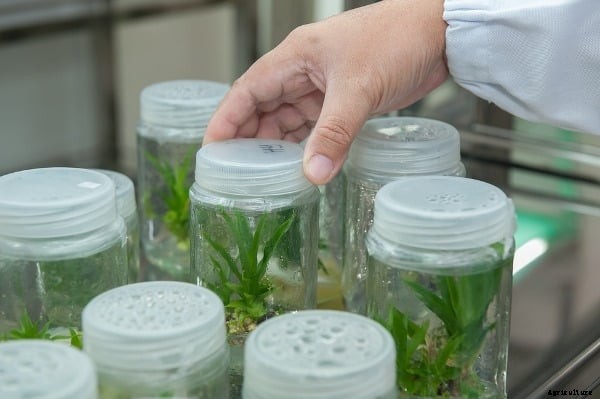
The technique of maintaining and growing plant cells, tissues, and other plant parts under sterile conditions in a nutrient medium is called ‘tissue culture’ in plants. This technique or tissue culture is used for propagation purposes. Therefore, this method is also known as micropropagation. By the use of this method, a clone of a plant is produced under a controlled environment and then propagated to the external environment. The part of the plant which is used for tissue culture is called an ‘explant’. This culture was first established by Gottlieb Haberlandt in the year 1902. The capacity of a plant cell to regenerate into a whole plant is biologically termed as ‘cellular totipotency’. The explants are grown in containers with a medium that is rich in nutrients. All the materials related to the tissue culture are sterilized before use to prevent infections and rotting of the tissue. There are different types of tissue culture in plants such as Callus Culture, Organ Culture, Single Cell Culture, Suspension Culture, Embryo Culture, Anther Culture, Pollen Culture, Somatic Embryogenesis, Protoplast Culture, Shoot tip and Meristem Culture and Explant Culture. The three major aspects of the environment required for tissue culture are the nutrient medium (the mix of salts, vitamins, nutrients, and other growth stimulators), the Aseptic conditions (sterilization), and the aeration of the tissue (includes the stirring of medium). The tissue culture in plants is expected to undergo four stages before being actually propagated to the external environment. The stages are:
Stage 1 or the initiation phase: The explant that has to be cultured is sterilized to prevent the development of microorganisms which may negatively affect the process.
Stage 2 or the multiplication phase: In this stage, the explant is re-divided and introduced into the medium. Here the tissue proliferates and produces new shoots.
Stage 3 or the root formation: Hormones are used to induce rooting and the explants are prepared to be transferred to the regular growing media.
Stage 4 or the establishment phase: The propagules are finally moved to the external soil conditions.
Read this: Banana Tissue Culture Information.
Plants that have been grown successfully using tissue culture technique are Banana, Pineapple, Fig, Parval, Tindora, Lemon, Ginger, Sweet Potato, Sugarcane, Tomato, Potato, Cabbage, Papaya, Mango, Guava, Strawberry, Turmeric, Jatropha, Eucalyptus, Teak, Orchids, Bamboo, etc.
If tissue culture is being practiced at home, then there are some available materials that can be useful.
The media for tissue culture plants is made up of macronutrients, micronutrients, vitamins, growth regulators, and carbohydrates or sucrose. These elements are common for most of the plants and are designed by Murashige and Skoog. Some special groups of plants like conifers may require additional nutrients. The general constituents of the media are:
Preparation of the media for Tissue Culture Plants:
It is a very difficult task to weigh each constituent for preparing the medium for each plant tissue. So, conveniently the stock of the medium is prepared and stored in the refrigerator and regularly checked for contamination or precipitation. The common media used for tissue culture are readily available in the market with a specification for each.
An example of the media mixture process is outlined here:
1-liter container is filled with three cups of water.
2.2 g or a half packet of MS medium with 2 tablespoons of sugar is added and mixed well.
1 ml of BAP (benzyl adenine) and 1 ml of PPM (plant preservative mixture) are added to this solution.
Water is added to make 1 liter of the mixture. The pH of the solution should be in between 5 and 6 or 5.6 to 5.8. If the PH is acidic, add a small quantity of baking soda and mix well. Else if the PH is basic then add a few drops of vinegar and mix well.
Dispense the media into the baby jar once the required pH is achieved. Each jar can take 25 ml of the solution.
The gelling agent agar 30 ml or 50 ml is added to the 25 ml solution.
The jars are capped and placed under heat conditions such as in a microwave, pressure cooker, etc. for sterilization.
The media used for the culture of plants are taken into a glass container and is sealed with either cotton or plastic closures and is sterilized by the method by autoclaving for 30 min at 15 pounds per square unit pressure. The vitamins, amino acids, hormones, and other plant extracts are destroyed while autoclaving, therefore the solution of these compounds is sterilized by the use of Millipore filter paper with a 0.2-micrometer diameter of pore size. When old trees or plants are selected for tissue culture then sterilization of the explant is a serious issue due to contamination. Spores in the plants are removed by using insecticides and pesticides and covering the shoots with thin, transparent film bags before collecting the explant. The surface has microbial contamination so it is thoroughly sterilized before planting into the nutrient medium. Hypochlorite, ethyl, and isopropyl alcohol are used as surface sterilizing solutions for plant tissues. The explants are first washed in distilled water or warm water for 20 to 20 minutes to remove the dust particles, then with a detergent solution, and finally with 0.1% of HgCl2 and NaCl solutions for five minutes. The explants are again washed with sterilized distilled water to remove the sterile nodal segments from the explants. The use of sterile forceps to handle the tissue or explant is a must.
For tissue culture in plants if a liquid medium is used, then there is a risk of tissue submergence and lack of oxygen supply which may result in the death of the tissue. To overcome this problem a gelling agent is used. Gelling agents should have a property that is highly essential for tissue culture that is the agent should form a liquid when heated, become semisolid when cooled and withstand sterilization. The most commonly used gelling agents are Agar, Agarose, and Gelrite. Other gelling agents available are Gellan gums, Alginic acid, and Gelcarin. The gel is primarily used to firm the media; therefore it is added in the powder form and heated such that it reaches the boiling temperature. As the media cools, it forms the gel. This gel is a partial solid surface to anchor the explant from being submerged, but soft enough to help explants absorb nutrients. The media mixtures are readily available in the market with the gelling agent and hormones added to it. For example, for the MS media, 1 liter of the solution needs 4.33 g of the pre-made mix, but if a gelling agent is also present like agar then 1 liter of the solution needs 9-12 g of the mix.
As the explant is established in the medium, it should be grown under good and moderate light conditions. The photoperiod should be a long one. The temperature should be stable around 25 degrees Celsius but may vary between 22 – 28 degrees Celsius. When the tissue or explant stop growing then it is time to either replace them or divide them to form subcultures. To do this the required sterile workspace and media are prepared. To replace the tissue it is required to just pull it out from the jar and replace it into the new jar with the medium. But if the tissue has to be divided then the sterile work area is set to cut the tissue into pieces and place them into jars. The instruments used for cutting have to be sterilized before use.
This is the stage in tissue culture where the shoots or the plantlets that were grown are stimulated for root growth and hardening. It is also done within the internal environment such as a test tube. After the micropropagation process, root growth is an essential requirement and doesn’t happen in the early stages. The plantlets are put in a medium which stimulates growth and root initiation such as Auxin.
Hardening prepares the plant to be grown in the natural environment. Since the plantlets are grown in a conditioned zone they require time to adjust to the external environment. The plants become susceptible to diseases when taken out from the in vitro. Hardening of plantlets involves weaning them slowly from constant, stable high humidity, low light, and warm environment levels to variable and unstable light, humidity, and temperature levels. The external environment is also maintained at high humidity levels by mist watering or by placing plastic covers with a hole over the plants.
To transfer the plants into the external natural environment, it is highly important that the tissue culture media from the roots is removed. To do this the plantlets are put under running warm water such that the force of the water thoroughly cleans the media off the roots. If this is not done, then there is a risk of molds (fungi) feeding on the media and destroying the plants. The treatment of plants should be the same as they were treated in vitro. The cover of plastic bags over the plants should remain for a week until the plants adapt to the natural surroundings. The plants should be kept away from direct sunlight and once they harden, they can be treated as any other soil-grown plant.
Future Of Tissue Culture Plants:
The agriculture industry can become sustainable with low energy inputs and high-quality yields with the assistance of biotechnology. The technique of tissue culture in plants can produce superior quality plants, but their potential has not been exploited in many developing countries. The performance index of tissue cultured plants is high when compared to conventionally propagated plants. The market for an improved variety of plants can be slow if the multiplication rate is slow. Tissue culture can help speed up this process by means of faster propagation. The use of chemicals is also reduced because the plants are grown in a disease-resistant environment. The importance of tissue culture in plants should be recognized and implemented for greater agricultural output and also for generating rural employment in developing countries.
In case if you are interested in this: How To Grow Organic Lettuce.


