
Welcome to Modern Agriculture!

Introduction
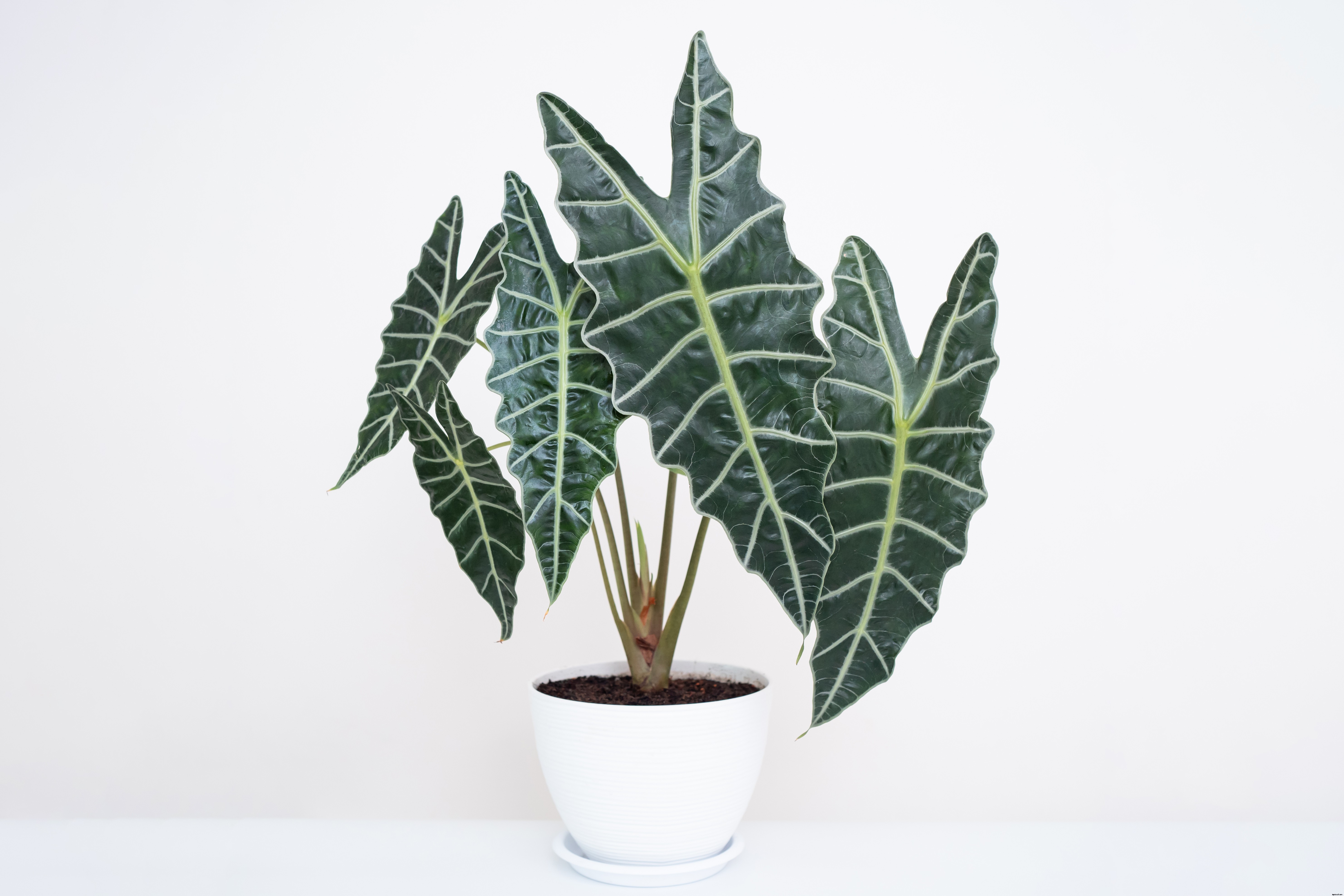
The foliar charm, the pattern of leaf variegation and texture, and its tolerance to limited sunlight make the Alocasias one of the most popular plants among landscape gardeners and plant collectors.
Alocasia comprises around 100 species and is a morphologically diverse genera in the family Arecaceae. The members are extensively used for several purposes. Its leaves, roots, and stem are used for edible purposes at some places, and the plant Giant Taro has many medicinal properties including antidiarrheal, antifungal, and anti-inflammatory properties.
The medicinal properties and the beauty of the plant make it highly wanted among people. The sky-high demand for these plants in commercial space has pushed scientists to come up with a better alternative to fulfill the market demand. And, tissue culture tools have been proven excellent techniques to fulfill all the aforementioned purposes.
This article presents a description of the Alocasia genera and its members and further, it will take you to the tissue culture of this plant and its procedure.
Alocasia is a genus with tuberous perennial flowering plant species having broad leaves and rhizomes. The plants typically grow 2-6’ tall.
The leaves of plants are long-stalked, arrowhead-shaped to heart-shaped that are decorated and colorfully adorned in different sizes, from 8” to 36” long, depending on the species. The plants are commonly called Elephant's ears due to the resemblance of their leaves to big elephant ears.
They are native to tropical rainforests, secondary vegetation sites, and along streams or marshy places from India, Southeast Asia, and southern China through the South Pacific Islands (in particular The Philippines, Caroline Islands, and Indonesia) to Eastern Australia.
Alocasia has been the height of fashion for gardeners, culturists, and plant collectors for over 150 years. These plants are collected and sold at a large scale to fulfill commercial scale.
The existence of several species of the genera has been threatened due to continuous collection and habitat destruction. The pressure of protecting these plants can be relieved by using in vitro micropropagation techniques.
Tissue culture has been an essential biotech tool in plant labs due to its great potential for the propagation of high-value medicinal plants, manufacturing of high-quality natural products, and rapid and mass production of plants.
It’s the best alternative for the production of medicinally important plant metabolites, rapid multiplication of endangered or rare species, production of disease-free plants, and plant–genome transformation.
Many companies have used the shoot tip culture technique to produce a lot of disease-free clones of aroids since 1974 (Hartman).
Here, a procedure to tissue culture Alocasia longiloba using seeds has been covered, which is taken from the study of Abdulhafiz, F., Mohammed, A., Kayat, F., Zakaria, S., Hamzah, Z., Reddy Pamuru, R., Hamzah Z., Reduan, M. F. H. (2020). Micropropagation of Alocasia longiloba Miq and Comparative Antioxidant Properties of Ethanolic Extracts of the Field-Grown Plant, In Vitro Propagated and In Vitro-Derived Callus. Plants, 9(7), 816. doi:10.3390/plants9070816
To break the seed dormancy and maximize seed germination, follow the procedure to treat seeds:
Keep watching your plant and record their growth and notice any negative changes to take instant actions before your cultures are completely spoiled.
And, if this protocol works for you, let us know at info@plantcelltechnology.com.
For any tissue culture requirements, visit the PCT store now and get all you want to get going with your tissue culture processes.
And, if you need any suggestions and solutions to your tissue culture problems, you can use our consultation services to directly talk with our scientists.


