
Welcome to Modern Agriculture!

QUINOA FARMING PROJECT REPORT – INTRODUCTION
Quinoa is a product from a flowering grain crop belonging to the amaranth family and considered as super food. This crop is related to the spinach very closely, but is not a grass variety; instead it is a pseudo cereal crop. Quinoa is considered to have originated from the Andean region in the North-Western South America some 4000 years ago. This is an ancient grain, which is traditionally cultivated in the highland and interandean valleys because of its adaptability and versatility of sustaining in any environment. . Peru is the second largest producer of Quinoa. As consumers with health consciousness were looking for alternatives, this crop gained attention and was discovered to have a high nutrient content with a delicious flavor. This quinoa farming project report contains all the details of the plant, its varieties, cultivation methods, benefits and economics (cost and profit details).
QUINOA FARMING PROJECT REPORT – IMPORTANCE OF THE QUINOA CROP
This crop is mentioned as the ‘golden grain of the Andes’ because of its characteristics. The crop adapts extraordinarily to different agro ecological areas. The crop can survive in any temperature ranging from -8˚C to 38˚C and humidity ranging from 40 to 80%. The crop is resistant to any sort of soil conditions and exhibits minimum acceptable production. This crop is categorized as the most promising crop of humanity by the Food and Agricultural Organization because of its ability to solve the serious problem of human nutritional deficiency. The usefulness of the crop has helped research and development teams to obtain more improved varieties of the crop for commercial cultivation. The germplasm of the crop species is being collected and preserved in Peru such that its genetic diversity can be studied in developing different varieties to satisfy the growing demand of the consumers.
QUINOA FARMING PROJECT REPORT – PROPERTIES AND USES OF THE PRODUCT
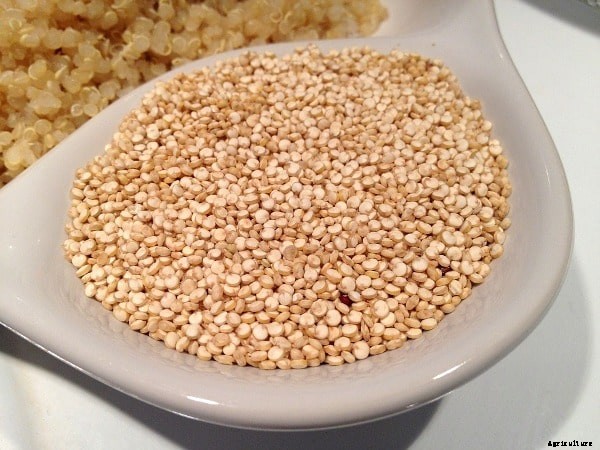
Quinoa is considered as a food with high nutritional value and fiber content. The composition of a raw quinoa grain is such that it contains 13% water, 64% carbohydrates, 14% protein and 6% fat. After cooking the composition of the grain changes to 72% water, 21% carbohydrates, 4% protein and 2% fat. The quinoa grain is gluten free and is easily digestible. The presence of different nutrients discussed in detail.
QUINOA FARMING PROJECT REPORT – PLANT CHARACTERISTICS
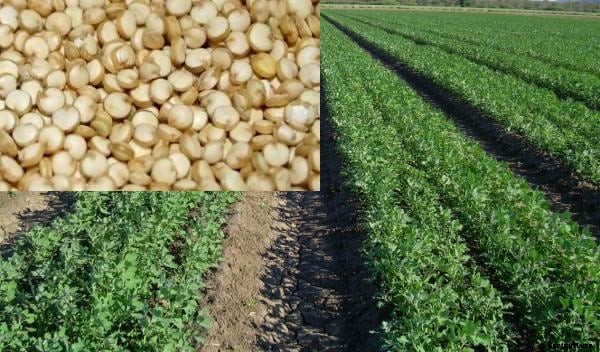
The plant is considered as an herbaceous variety and dicotyledonous in nature. The physical features of the plant are as described:
QUINOA FARMING PROJECT REPORT – CULTIVARS OF QUINOA
There are different varieties of quinoa cultivated in its place of origin and some general information about these cultivars is given here:
INIA 431 – ALTIPLANO
INIA 427 – YELLOW SACACA
INIA 420 – BLACK COLANA
INIA 415 PASANKLLA
ILLPA INIA:
SALCEDO INIA:
QUILLAHUAMAN INIA:
YELLOW MARANGANI:
JULI WHITE:
KANKOLLA:
JUNIN WHITE:
All these varieties are obtained by the cross breeding of different plant genotypes and exhibit different properties in appearance, growth and yield. Other commercial varieties available for farming are:
QUINOA FARMING PROJECT REPORT – CULTIVATION DETAILS
QUINOA FARMING PROJECT REPORT – SOIL AND CLIMATE REQUIREMENTS
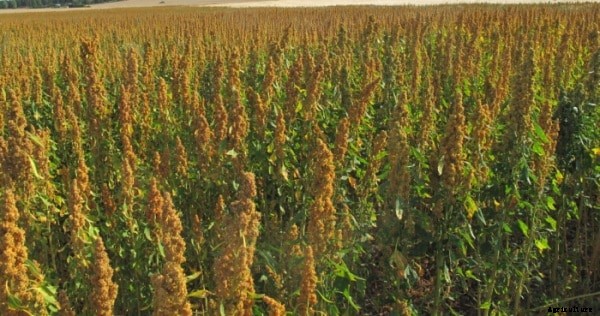
The crop ideally requires well drained soil with high organic content and moderate nutrition. Preferably grown on neutral soil, but can survive both acidic and alkaline soil types. Loamy soil is most suitable for cultivation of quinoa and the pH can vary from 4.5 to 9. Different types of quinoa plants can adapt to different climatic conditions, so this plant can survive in any climate such as desert, warm and dry, temperate with high humidity, rainy and high mountain areas. The crop can withstand temperature from -8˚C to 38˚C, but the ideal temperature required by the crop is 15 to 20˚C. The plant can tolerate heat and altitudes up to 4000 m. The minimum rainfall requirement for quinoa farming is 100 mm.
QUINOA FARMING PROJECT REPORT – LAND PREPARATION AND PLANTING
The land for quinoa farming can be prepared by giving adequate number of ploughings and making it weed free. The soil is treated with the application of a balanced fertilizer. While cultivating quinoa one sq. meter of area can be used to plant 15 to 500 crops. The minimum and commonly used row spacing is 12.5 cm, 25 cm or 50 cm. The depth of planting should be 1 to 3 cm. The plant spacing is 60 cm. The sowing of the seeds should be done in the month of May and the seeds take 24 hours to germinate. Within 3 or 5 days the seedlings emerge.
QUINOA FARMING PROJECT REPORT – PROPAGATION TECHNIQUES
Propagation of quinoa is done through seeds. The seeds can be directly sown in the farmland or grown in the nursery. The seeds need cool temperature condition initially and germinate within 24 hours. Deep planting of seeds should not be done.
QUINOA FARMING PROJECT REPORT – MANURE AND FERTILIZER REQUIREMENTS
The land preparation is done by adding 20 to 30 tonnes of organic matter to improve its condition. Nitrogen fertilizer is required for the quick growth of this plant. One hectare of land requires fertilizers in the following quantity; nitrogen @ 120 kg, phosphorous @ 50 kg and potassium @ 50 kg. Organic farming is expected to give good results in quinoa. Excess manure and fertilizers can make the soil dry and lose its fertility. It is observed that the varying nitrogen content in the soil has a varying yield profile. Therefore the minimum range of nitrogen requirement of the plant is 150 to 180 pounds of nitrogen per acre land.
QUINOA FARMING PROJECT REPORT – IRRIGATION REQUIREMENTS
Under rain fed conditions, the crop grows well. It doesn’t require any extra irrigation if the rainfall is adequate. Excessive irrigation during the establishment stage of the crop may help the plants grow tall, but there is no improvement in the yield, but if excess irrigation is given to the seedlings then there could be a potential danger of damping off and stunting in the plants. Plants require irrigation when there is no minimum rainfall available. Irrigating the crops is done only until the development of second or third leaf stage.
QUINOA FARMING PROJECT REPORT – INTERCULTURAL ACTIVITIES
Thinning is done immediately after germination of the seeds and these small young leaves are used in salads. Currently manual weeding is practiced and there is research being conducted on the proper chemical required for weeding. Some herbicides have been named for the use in quinoa farming such as asulox, dual magnum, Gramaxone, ro-neet, rely etc.
QUINOA FARMING PROJECT REPORT – PEST AND DISEASE MANAGEMENT
The common diseases destroying the quinoa plant and their suitable remedial measures are discussed here:
Pests that destroy the quinoa crop are:
Pests can be easily controlled by cultural practices such as nutrient management, irrigation, planting density, crop rotation, tillage and phytosanitation. Chemicals of the pirethroids type are used or kerosene solution is used for controlling pests. Burning of rubber or adding ash to the soil after sowing seeds are done to prevent some pests.
QUINOA FARMING PROJECT REPORT – HARVESTING THE CROP
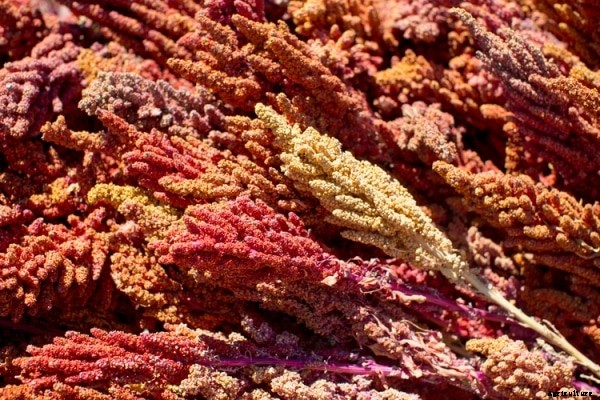
Even before the full maturity of the plant, quinoa is harvested. The signs of harvesting are known by the yellowing of lower leaves of the plant. The plants are cut to a length of 20 cm while harvesting and are made into small sheaves. These sheaves are left in the rows to dry. It may take 30 to 45 days for drying the grains under the sun. Harvesting should not be done during rain.
QUINOA FARMING PROJECT REPORT – POST HARVESTING TECHNIQUES
Threshing is the method of removing the grains from the plants by spreading them on the ground and beating them with a stick. The chaff can be separated by silting or winnowing the grain. Mechanical drying can also be used, but the selection of drier is important. The seeds should be cleaned, dried and stored carefully. Once the grain is processed it should be stored in clean, dry and ventilated areas. The traditional way of storing quinoa grains is using mesh sacks.
QUINOA FARMING PROJECT REPORT – PRODUCTION DETAILS / YIELD
Like any other crop, the yield of quinoa depends largely on the environmental and farming aspects. The average yield of the crop can be estimated as 1000 pounds per acre. The variety of the cop also facilitates in a different yield characteristics. The cultivar CO407 shows the consistent behavior in the yield pattern and produces 1200 lb/acre.
QUINOA FARMING PROJECT REPORT – COST AND PROFIT ANALYSIS
QUINOA FARMING PROJECT REPORT – DETAILS OF INVESTMENT AND RETURNS
The estimation of investment in quinoa farming is presented here. The actual price of materials may vary for different places and countries. This estimation is an example of the investment structure for the quinoa farming project. Also the market price of quinoa grains may be different such that the annual profit may change depending on the place of farming and quality of production. The quantities and prices mentioned here are for 1 hectare of farming land. There could be other hidden charges like mechanical equipments, extra labour etc.
MATERIALS AND OTHER REQUIREMENTS INVESTMENT (IN US $) 5 kg of manure cost @ $ 10 /kg 50.00 Labour for ploughing and manure application 150.00 8 kg of Seeds @ $ 5/kg 50.00 Sowing cost 100.00 Pest control chemicals and application 200.00 Harvesting procedures and transport 200.00 Machinery for post harvest methods 50.00 Milling of the grains 200.00 Total material and labour costs 1000.00QUINOA FARMING PROJECT REPORT – PRESENT DAY MARKET POSITION
Initially the market for quinoa was limited because people were not aware of its use and importance, but a recent study has shown a steep increase in the price of quinoa due to its increasing demand. This product can attract high premiums and it is known that exporting 2 tonnes of quinoa has earned Australia AU$ 18,840. This food grain is considered to solve the food security issues that arise in different places. This crop can serve as a cash crop in developing countries and contribute to the economy of the country. In India there are 130 agro climatic zones which are suitable for its cultivation and can create a big revolution in the food industry. 1% annual production of quinoa can generate an economy of Rs 60,000 crores.
QUINOA FARMING PROJECT REPORT – SEED PROCUREMENT AND SUPPORT


