
Welcome to Modern Agriculture!

Mango is a tropical flowering tree cultivated for its fruit. It is native to South Asia, but now it is cultivated widely in the tropics. It has the status of being the national fruit of India, Pakistan, Philippines and the national tree of Bangladesh. This tree is cultivated in tropical and warm subtropical climatic zones which are frost free. Half the mango production is done in India and China is the second largest producer. Almost around 1000 different varieties of mangoes are found all over the world, which indicate that mango has a special value. It is just like a common garden tree in the tropics. Mango framing is a leading practice in India and is generally referred to as ‘king of fruits’. The farming of mango is low maintenance, agriculture venture. The fruit that is obtained from the plant is either used raw or in a ripened form. It is widely consumed for its taste, flavor, and fragrance. This mango farming project report consists of all the detailed information about the farming of mango/cultivation practices of mango orchard and it’s cost and profit analysis.
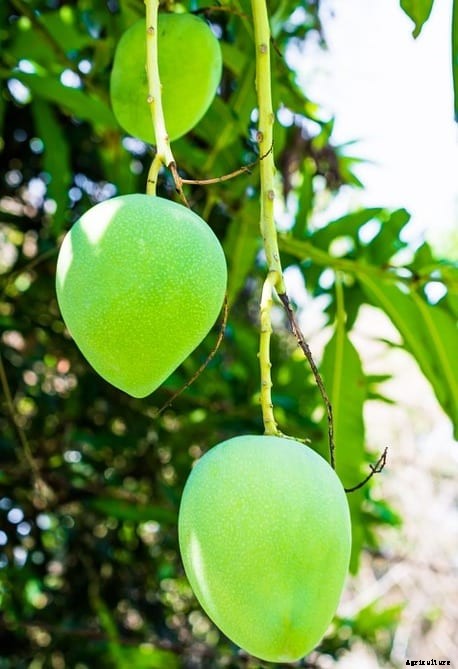
In India, the production of mangoes is 151.88 lakh tonnes annually and it occupies almost 36% of the total area under fruits i.e. 22.97 lakh hectares. The states of Uttar Pradesh and Andhra Pradesh have the largest area under mango cultivation. India exports mangoes as well as the pulp of mango to Middle East countries, Bangladesh and Europe. Only two major varieties of mango are exported from India. 40% of total fruit production in India accounts to mango and there is a large scope for further development and production.
The fruit of mango has nutrition as well as medicinal values in it. It has a pleasant flavor and taste. The farm of mango produces the fruit and some additional by-products which can be used for different purposes. Mangoes contain carbohydrates, proteins, fats, minerals, vitamins (A, C, B₁, and B₂). Upon ripening the concentration of vitamin C decreases and the amount of glucose, fructose, and sucrose increase.
The peel and pulp of mango contain several phytochemicals such as triterpene, lupeol, etc. the peel of mango contains compounds like provitamin A, beta-carotene, lutein, polyphenols and xanthonoid (mangiferin).
Volatile organic chemicals which belong to terpene, furanone, lactone, and ester classes are the reason for the typical flavor in mangoes.
The raw mango is used for flavoring; the seed is boiled and made into starchy flour for consumption and the tender leaves are consumed as vegetables.
The medicinal uses of mango are:
Leaves and seeds serve as food for the animals. The mango tree is a rich source of nectar.
The timber from the mango trees is used for making wooden articles, but it should be treated with preservation elements. The wood from mango tree is an excellent charcoal substitute and a yellowish –brown dye for silk is made from the bark, which is called the tannin.
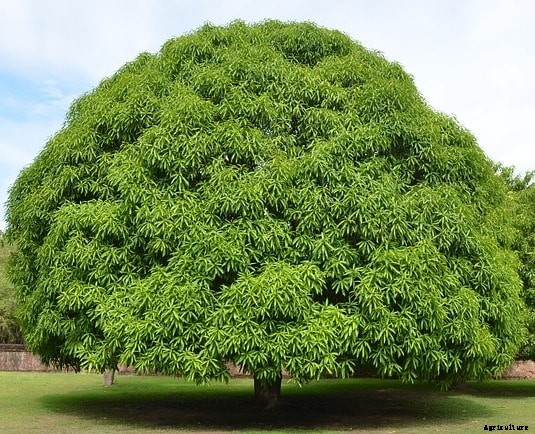
There are over 1000 varieties of mango found all over the world and India alone has more than 500 varieties. The commercial farming of mango is restricted to only a certain type of improved varieties. The varieties for commercial trade and domestic use are different. The selection of mango for farming is done based on factors such as temperatures, adapt to weather, availability of materials and market demand. Some of the popular Indian varieties are listed here.
Some other hybrid varieties are: Mallika, Ratna, mangers, Arka Aruna, Arka Puneet, Arka Anmol, Sindhu etc.
The pacific varieties are: Ah – ping, Fairchild, Gouviea, Haden, Kensington Pride, Kopu Reva, Mapulehu, Momi-K, Popa and Rapoza.
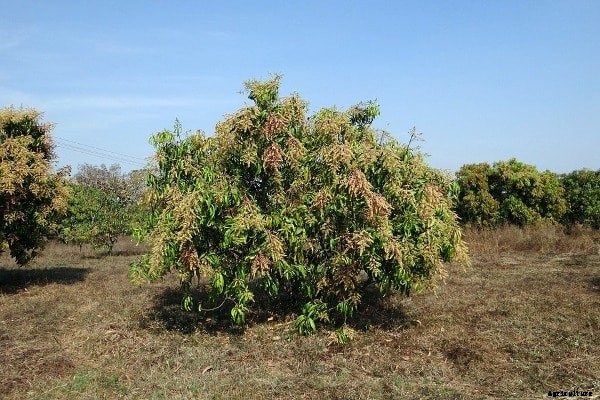
The Mango tree grows well in areas which have cool, dry climate with severe heat during the flowering and fruiting period. It is possible to grow mango trees at an elevation of 1200 m above sea level in tropical zones. The average annual rainfall required for mango farming is 400 to 3600 mm and the temperature of the area should be around 24 to 27˚C. Alkaline, calcareous soil and heavy soil are suitable for mango farming. The pH of the soil should be in the range of 5.5 to 7.5. However, the trees produce best on well-drained sandy or gravel soil.
Read: Tissue Culture Techniques; Process; Setup Loan.
The propagation in mango can happen either by seeds or by other vegetative methods. The embryo of the seed decides the quality of the seedling. The polyembryonic seeds produce three or 4 seedlings which are different from the parent plant. Whereas, the monoembryonic seeds produce one seedling different from the parent plant. To produce varieties of mango, grafting is done. The upper part, scion of one variety is joined to the lower part, rootstock of another variety. This process is done generally when the plants are very young, in the nursery stage. The grafting can be done either by the cleft graft method or by the whip-tongue method. Grafting is generally done in the shade with temperatures around 18 to 21˚C. The scion of the plant is generally treated with a fungicide or insecticide before grafting to avoid diseases.
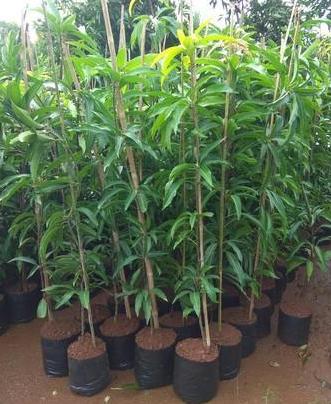
The land for mango planting should be ploughed deeply and levelled properly with a gentle slope for drainage. The spacing between the plants varies in different areas. The spacing is 10 m x 10 m for dry areas and it is 12 meters x 12 meters in heavy rainfall and rich soil areas. The pits are filled with 20 to 25 kg of FYM, 2.5 kg of superphosphate and 1 kg of muriate of potash mixed with the original soil. one-year-old old seedlings that have grown in the nursery are transplanted into the main area in the month of July – August if the area is rain-fed else transplantation is done in the month of February – March if irrigation facility is available.
Decomposed farmyard manure has to be applied every year to the plants. Fertilization is done in two doses, one in October when the plants are young and the season for flowering would begin; the second dose is given after harvest the crops in the month of June or July. 3% foliar is needed for the plants where the land is sandy. The age of the mango tree decides the amount of fertilizer required by it. Young plants require 100 g of nitrogen, 50 g of phosphate and 100 g of potash. The plants which are older than 10 years need high quantities of nutrients such as 1 kg of nitrogen, 500 g of phosphorous and 1 kg of potash. The other important nutrients required for the mango trees are chlorine, boron, copper, iron, manganese, magnesium, zinc, sulphur and calcium.
Irrigation is supplied depending on the soil type and climate of the area. The plants are not irrigated during the monsoon season. Young plants are irrigated at an interval of 2-3 days or 4-5 days in the dry areas when the plants are 5 to 8 years old the irrigation is provided at an interval of 10-15 days. During the fruit-bearing stage, the irrigation is provided in 2 or 3 cycles. Intercropping has done in the early years of mango farming so the irrigation has to be adjusted accordingly. The drip irrigation system is highly beneficial and also helps in the Fertigation technique.
Intercropping is practiced depending on the agro-climatic conditions of the area and their nutrition, irrigation, etc. facilities have to be taken care separately. Crops like the papaya, guava, peach, plum, and some legumes are grown as intercrops. For better economical results vegetable crops can be cultivated.
If the mango trees are not pruned they become very large. So, pruning the canopy to a limited size is important and should be done once in two years. Pruning reduces the flower and fruit production that particular year but increases the harvest in the following years.
Fruits of the mango tree should be harvested only when they are fully mature, early picking can reduce the quality. The maturity of the fruit is known by the following;
Mature fruits are picked and ripened in crates or baskets. The sap of the fruit should not come in contact with the human skin during picking otherwise there may be blemished or skin burns. Long stems are used to pick the fruits and are dipped in detergent to avoid sap related problems. Grafted mango plants bear fruit in 3 to 4 years, but optimum fruits are obtained when the crop reaches 10 to 15 years.
The shelf life of mangoes is short, so the fruits are cooled to a temperature of 13˚C and stored. The process of handling mangoes after harvest includes cleaning, grading, drying, waxing, packing, pre-cooling, palletizing and transporting.
Fiber boxes are used to pack mangoes and each cartoon is packed with 8 to 20 fruits in a single layer. The boxes are chosen such that they have air holes to allow ventilation.
Grading of the fruits is done based on size, color, and maturity. Small and large fruits are separately ripened. The underdeveloped, immature fruits are discarded from further processing. 750 ppm ethrel in hot water is used for ripening the fruits by dipping them for 5 minutes.
It is commonly observed that there is a vegetative malformation in mango plants at the nursery stage. There is also a possibility of floral malformation and mixed malformation. These are controlled by removing the malformed shoots or by spraying 100 ppm of NAA twice in October and November.
Jhumka is identified by the marble-sized fruits at the panicle tip and does not increase in size. This can be controlled by spraying jaggery @ 10% on the bloom to attract pollinizers.
Spongy tissue is another physiological disorder characterized by a patch on the fruit flesh on ripening. It can be controlled by mulching the soil bed, maintaining proper soil moisture and growing legumes as cover crops.
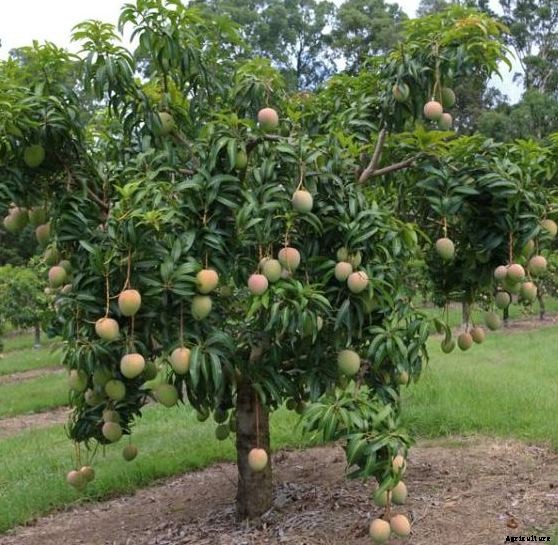
The mango farming project report model shown below is estimated for 1 acre of land. The charge on the land is not included because it depends on whether the land is rented or owned. Also, variable costs like transport, post-harvest management charges may vary depending on the location of the farm and the local transport structure. It is to be noted that there could be other hidden costs of the entire process.
The cost of 1 mango sapling: Rs 50/piece (1 acre of land can accommodate 100 saplings).
Cost of 1 kg of urea: Rs 6.00.
Cost of 1 kg of superphosphate: Rs 20.00.
Cost of 1 kg of potash: Rs 8.00.
Labor cost for 1 day: Rs 200 to 250.
Cost of arranging the drip irrigation system for 1 acre of land: Rs 35,000- 55,000.
Cost of 1 unit of power: Rs 2.50/unit < 30 units; Rs 3.70/unit for 31 – 100 units; Rs 4.85/unit for 101 – 200 units and beyond this it is Rs 5.85/unit.
Bordeaux mixture cost per kg: Rs 250.00.
Sulphur spray cost per kg: Rs 50.00.
The average cost of other insecticides and pesticides per kg: Rs 600.00.
The average cost of centrifugal pump settings depends on the manufacturer and the capacity of the pump: Rs 5000.00.
Cultivation Material And Labour Charges Investment (In Rs) 5000.00 Manure and fertilizer cost 7000.00 Insecticide and pesticide cost 4000.00 Labor cost @ 30 days for 3 persons 18,000.00 Power requirement @ 6 units per day 8000.00 Tube well pump cost for one acre 35,000.00 Drip irrigation arrangement 50,000.00 Pumphouse 20,000.00 Agriculture equipment 10,000.00 Soil preparation 8000.00 Fencing the farm 35,000.00 Total cost 2,00,000.00
There could be some extra charges included for labor tents and extra labor employment, which are not included in this mango farming project report model.
Mangoes yield per acre in 1 year: 2.5 to 3 tonnes (Cost: Rs 2, 70,000.00).
Cost of 1 kg of mango: Rs 100.00 (average cost, but may change depending on the variety).
Total profit from the venture: (Rs 2, 70,000.00 – Rs 2, 00,000.00) = Rs 70,000.00.
As the tree ages, the yield of the tree increases to 9 or 10 tonnes per acre; thereby, increasing the profits every subsequent year.
Mango farming in rocky areas has provided a subsidy of 1.5 lakh rupees from the agricultural department of Mapusa, Goa. Non-rocky areas would also be considered for the subsidy scheme, but the amount will be lower, around Rs 68,000 per hectare.
Telangana government is also providing the subsidy for mango farming project report and it amounts in between Rs 9840 to Rs 26,880 per hectare.
Ministry of Agriculture has implemented a central sector scheme under which subsidy of 25% (maximum Rs 50 lakhs) on the capital cost for marketing and 33.3% (maximum 60 lakhs) of capital cost for each farming project in northeastern states, hilly areas, and scheduled castes and tribes is sanctioned.
Also, there is one scheme called the mango weather insurance to provide risk management service to the mango cultivators. You must understand the mango farming project report before you enter into commercial mango cultivation in India.


