
Welcome to Modern Agriculture!

Many people are asking about cultivation process and Azolla Farming Project Report and cultivation process. Let us get into the details.
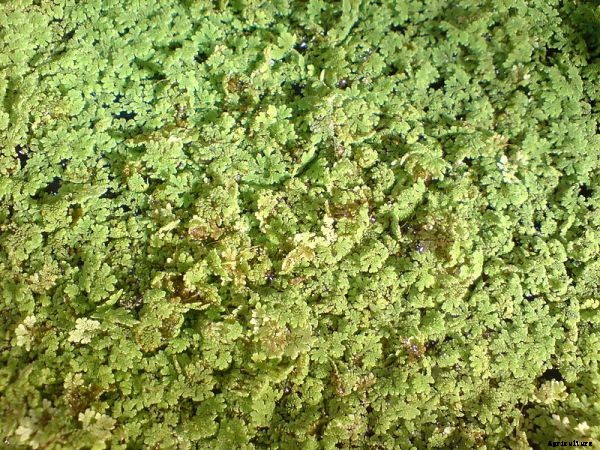
Azolla is an aquatic fern, which resembles duckweed or mosses. It is addressed with other names like mosquito fern, duckweed fern, fairy moss or water fern. The name Azolla is derived from two Greek words, i.e. ‘azo’ means dry and ‘ollya’ means to kill. Therefore, this name Azolla indicates an important property of the fern that it would be killed by drought. Azolla is native to Asia, Africa, and America. Azolla is believed to float on the surface of the water with roots hanging underneath. These plants have leaves which are small in size and overlap on each other. The leaves or fronds are water repellent and sometimes red in color. This plant is popular as ‘super-plant’ because of its great speed of growing and doubling its biomass within 2 or 3 days. Currently, the plant genus has 6 species of which A.pinnata is mostly found in Asia. Some other species are A.filiculoides, A. nilotica, A. caroliniana, A. Mexicana, A. microphylle. Each species has different frond size and frond colors may vary from green to purplish-red. The indication of different coloured fronds is described as three morpho- physiological strains; where red is considered to be resistant to high salinity, purple is resistant to acidity and green is resistant to high temperatures. The length of the roots for Azolla is around 1 to 2 cm and the leaf size is about 1 to 2 cm. The fern has a sporophytic cycle and is generally associated with cooler temperatures. The difference in the strain and environmental factors can alter the nutrient composition of Azolla. Azolla is considered to have the following nutrients, which is why it is greatly used as animal or livestock feed (For dairy animals, poultry, sheep and goat). Dried Azolla has:
This Azolla Farming project report presents details about Azolla, it’s uses, requirements, and Farming methods. At the end of the report, one can find the details of the cost structure for a small Azolla Farming area and profits associated with it.
Generally, it is known that Azolla helps in nitrogen fixation, but the truth is that Azolla is believed to live in association with blue-green algal species which fixes the atmospheric nitrogen for the rapid plant growth. The algal species live in the upper lobes of the fern and is named as ‘anabaena Azolla’. The algal species is a source of organic nitrogenous fertilizer and is used aquatic green manure especially during rice Farming. The symbiosis of anabaena Azolla is estimated to produce 1 tonne of green manure from a hectare of land each day and is considered to contain around 3 kg of fixed nitrogen, which is approximately equal to 15 kgs of ammonium sulphate or 7 kgs of urea. Cultivating Azolla can produce 1½ million tonnes of nitrogen. When grown on a nitrogen-free substrate Azolla can double its weight within 3-5 days and can contain almost 0.1-0.2% nitrogen. Dry Azolla contains 3-5% nitrogen. It is important to note that the color of Azolla doesn’t indicate its nitrogen content. The reason for red-colored Azolla is described in many ways, such as phosphorous and calcium deficiency, summer temperature, etc. Both green and red Azolla strains have almost the same nitrogen content.
Land should be selected such that monitoring and regular upkeep must be possible. Water supply to the land should be adequate and the land should be able to get the partial shade or shade arrangements have to be created for cultivating Azolla. The site should not have stones, thorns or pointed elements otherwise the sheet could be punctured.
The growing area of Azolla may differ depending on the requirement for the farm. A pond size of dimensions 6 x 4 ft can produce 1 kg of Azolla each day for one year. The land should be thoroughly cleaned and levelled. The pond can be created with bricks or with a raised embankment by evacuating the soil. The area should be covered with silpauline, a polythene tarpaulin which is durable and should be secured by bricks on all sides so as to protect it from blowing away during strong winds. Care should be taken such that the sheet doesn’t have any holes to prevent water leakage. Wooden poles or bamboo sticks should be placed around the pond to support the shade net.
Procedures for initiating the sporophytic cycle of Azolla haven’t yet evolved so Azolla reproduces vegetatively and it is necessary to maintain viable stocks all around the year. Preserving the species during very hot and very cold temperatures is a problem and should be handled with care.
Azolla is grown in the shade of rice plants spaced 1 m apart during summer months (July-August) otherwise there is a risk of pest infestation. An organo-phosphorous compound is added to the growth to preserve it and protect it from pests.
Preserving Azolla during winter months can be done in several ways, such as: placing Azolla in a pit with 25 cm of water and covering it with plastic to keep it air-tight; storing Azolla in a three-layered form within a 30 cm deep pit and covering it with straw, aeration is provided using bamboo pipes and humidity is provided by water at a shallow depth; supplying industrial waste hot water to the Azolla growing areas and protect it in winter due to the rise of water temperature. During winter Azolla should not be touched or transported otherwise it would die.
To grow Azolla two main methods are used: one is to grow them in nurseries and then sow then onto rice fields for further propagation and second is to grow Azolla independently over large areas as a green manure crop. There are a few problems in Azolla propagation such as:
Read: Azolla Benefits, Uses, Role, Importance In Rice Production.
Pests are a serious problem for the growth of Azolla as they can completely damage or destroy Azolla mostly during the summer season. The major insect pests that feed on the leaves of Azolla are the larvae of lepidoterous, dipterous, pyralis, microspecta, nymphila and chiraonoma. They mainly attack the fern during may-august. They can be controlled by spraying DDT emulsion @ 25% or moment @ 20%. Some of the larvae also feed on the roots of Azolla which can be treated by spraying parathion or toxaphene. Snails also feed on the roots and young leaves of Azolla and can be controlled by use of proper insecticide.
Azolla can be attacked by rymanae, a fungus especially during high temperatures and can be controlled by spraying diluted defusit or dipterex with Malathion.
The following materials are required for Azolla Farming:
Producing Azolla is a simple process and can be easily done by an ordinary farmer. Basically, there are two ways of Azolla multiplication process. They are the standing water method and the nursery method.
Azolla can grow completely within 2-3 weeks time and after its full growth, it can be harvested daily. The biomass is collected into plastic sieves. Presence of any litter should be immediately removed from the area. The average yield of Azolla is 1 kg per day from an area of dimensions 6 x 4 ft. Excess production can be dried under shade and stored for future use. It can be used as a livestock feed either in fresh or dry form. After harvesting it has to be washed thoroughly with water to remove the smell of cow dung. The water used for cleaning can be reused in the pond for Farming.
The estimation for two small fodder plots has been described here. The no. of cultivating units can be increased or decreased depending on the need. If it is used for animal food, then the quantity sufficient for the cattle can be produced else if it is for commercial purpose then a minimum quantity is produced. The materials required and their price is listed here, but these may vary depending on the location and availability of materials.
Cost of 1 kg of fresh Azolla: Rs 100.
The rate of labour per manday: Rs 250.
Cost of silpauline tarpaulin sheet: Rs 400.
Cost of 1 kg of fertile soil: Rs 150.
Cost of 1 kg of superphosphate: Rs 80.
Cost of 1 kg of cow dung: Rs 15.
Cost of a poly net: Rs 35/sq m.
Material required Investment in Rs Cost of making two trenches of dimensions (2.25 x 1.5 x 0.2 m) @ 250 for 2 mandays 500.00 2 Silpauline tarpaulin sheets 800.00 Fertile soil @ 15 kg per trench 4,500.00 Cow dung @ 5 kg per trench 150.00 Super phosphate fertilizer @ 10 kg 800.00 Fresh Azolla culture @ 2 kg 200.00 Shade or poly net 1000.00 Wooden sticks or bamboo 2000.00 Micronutrients 100.00 Total investment 7,350.00Sale price of Azolla leaves per kg: Rs 300.
After 20 days Azolla is harvested @ 1.5 kg/day.
So the monthly income from harvesting Azolla is estimated to be: Rs 13,500.
The profit from the farm is around: Rs 6,150.
The values can be taken as a reference only because there may be a slight deviation in the original set up cost. The cost of the land, transport, electricity, etc. have not been included in this estimation, but have to be considered while implementing the structure.
NABARD provides some sort of assistance for Azolla Farming and it was known to have encouraged Azolla fodder plots in various watersheds under the watershed development fund. People who need assistance may contact or visit the nearest NABARD office for exact information.
Azolla Farming is helping women improve their socioeconomic status. Rural women are being trained in Azolla Farming methods by the ICAR-Krishi Vigyan Kendra so that they can start the business on their own.
Azolla culture can be obtained from trusted nurseries, agricultural departments or research organizations.
Read: Kadaknath Chicken Farming Project Report.
Read: Spirulina Farming.


