
Welcome to Modern Agriculture!

The following information is about Dairy Farming FAQ.
The minimum space required by a cow in a closed area like a shed is 40 sq ft whereas in an open area, the space required by a single cow is 80 sq ft. Overall, in a small cattle farm of 20 animals, the minimum land area required is around 3000 sq ft and if the number of animals is around 100 then the farm area should be increased to 15000 sq ft. Dairy buffaloes need a little more space when compared to the cows i.e. a single buffalo may need 40-45 sq ft of area.
The sale price of a cow depends on the type of breed the cow belongs to. If it’s an indigenous cow then the average price per cow is Rs 25,000, but if the breed is a hybrid variety then the average price per cow could be around Rs 50,000.
The cost price of calves is also dependant on the type of breed one selects to buy. The average cost of a single calf in India is Rs 15,000.
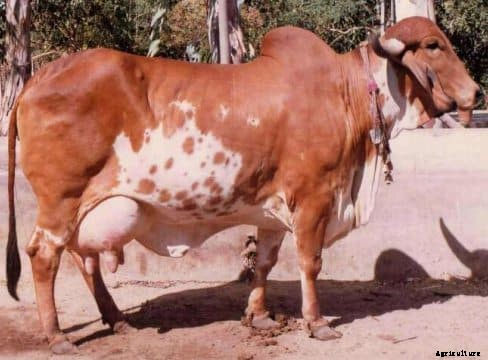
The breeds of cow famous as milk breeds in India are:
For more information on Indian milk breeds and their properties one can read the details at Cattle Farming Breeds.
It is estimated that the average milk produced by a Jersey cow each day is around 30-35 liters. The average milk produced by the Jersey cow in a year is around 5000-8000 kg.
The amount of milk produced in a day by a cow depends on the breed of the cow. The capacity of production is different for all breeds. But for all milk cattle the amount of milk produced in a day may range around 0.2 to 60 litres. It is expected that a hybrid cow produces more milk than indigenous cows.
The general rule is to put 25 to 30 cows per bull in a pasture, however, this may be increased to 50 cows per bull without any negative impact on breeding, but a thorough breeding soundness test must be done before such step.
It is considered that for a dairy cow to continue producing milk, the minimum number of calves it should have in a year is one. Generally a dairy cow gives birth to a calf every 12 or 14 months. Considering the present life span of a dairy cow or cattle to be 6-8 years, it can be estimated that the cattle would give birth to 4-6 calves during their lifetime.
Domestic cows are expected to live for 20-26 years on an average, but with commercial dairy farming practices the natural average life span of a cow has reduced drastically and it is around 6-8 years only.
Once a cow delivers a calf, it can produce milk for 10-12 months. The production of milk increases after every calving. The cow can produce milk as long as they live.
The cow is estimated to sleep for 4 hours approximately. Sometimes a cow can doze off while standing, but for the rest they generally lie down in a leaning posture.
The cost of the feed for a dairy cow depends on the amount of milk that is expected to be produced. The average cost of feed per day to produce 20 liters of milk for a cow weighing 500 kg is estimated to range in between Rs 250 to Rs 500. The value of each item of the feed may vary depending on the location of the farm.
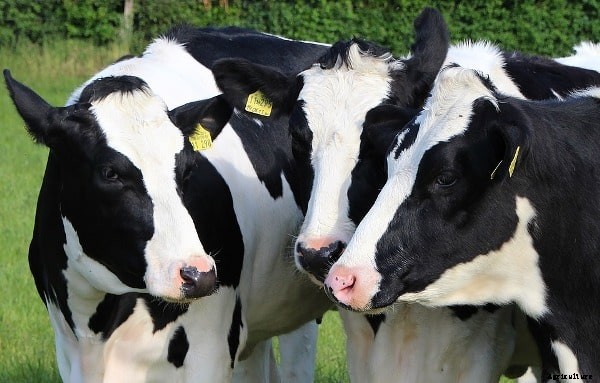
After the birth of a calf, it roughly takes around 2 years to raise the calf such that it becomes a mature dairy cow depending on what gender it belongs.
The feed given to a cow depends on the fact whether it is lactating or normal. In general a dairy cow eats between 25 to 50 kg of feed each day. Again, this depends largely on the weight and breed of the cow. The estimation of feed can be made from a simple formula which tells that; ‘the feed of the cow per day is equal to one-tenth of its weight’.
The feed for cow are generally green grass, dry fodder, bran, chunnis, oil cakes, hay, silage, leaves, maize, cane tops, etc. There could be a supplementary feed for better nutrition like the crop residues and concentrate mix.
A cow that is lactating needs 68-155 litres of water each day. During high heat stress the need for water may double. The intake of water is also estimated by the weight of the cow. Dry cows and calves require less water when compared to milking cows and it is around 40 l/day and 9 l/day respectively.
Initially for the first three days after birth a calf needs 2 to 2.5 litres of colostrums (milk produced by the cow after calving). Ground grains, protein feeds, minerals, vitamins and antibiotics together (about 50-100 g per day) make a calf starter feed and is slowly inculcated into the diet after 2 weeks of birth. After 4 months the calf can be fed with the grain mixture of about 750-1000 g a day. The calf should be given milk until about 12 weeks after birth.
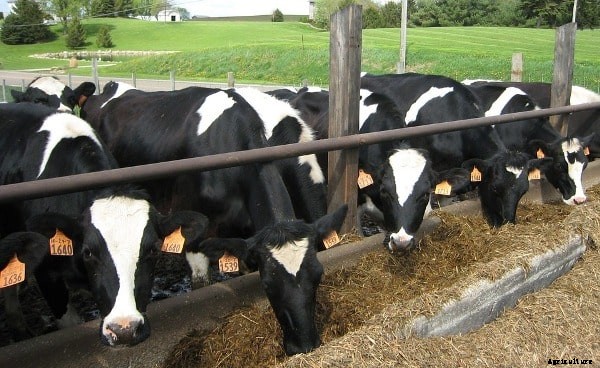
Age of calving depends on the type of breed one selects. For Indian indigenous breeds the age of first calving is 3 years, but for hybrid dairy cows the minimum age of first calving is 2 years. Dairy buffaloes have a prolonged age for first calving which is estimated to be around 3½ years
Yes, for most of the Indian dairy breeds the best season for breeding is September to February and the calving season is from July to November.
The gestation period of a cow is estimated to be approximately nine months. This period varies slightly for different dairy animals; indigenous breeds and exotic breeds have a gestation period of about 280-290 days, buffaloes have a higher gestation period of about 305-318 days.
‘Absolutely NO’, the cows produce milk only after having their first calf. There are certain ways to artificially induce lactation in the cows, but these methods are illegal and harmful for the animal health.
While monitoring dairy animals, care should be taken to milk the animals regularly. If the milking animals are not milked for long periods say more than 2 days, then they become ill and develop mastitis, an inflammation and infection in the udder. This period of not milking is different from the dry periods in dairy animals.
The total dairy animals are categorized as indigenous breeds, exotic breeds and buffalo breeds. Indigenous exclusive dairy breeds are Gir, Red Sindhi and Sahiwal. Exotic dairy cattle breeds are jersey, Holstein Friesian, brown swiss, red dane, Ayrshire, guemsey. Buffalo breeds are Murrah, surti, jaffrabadi, bhadawari, niliravi, mehsana, nagpuri and toda.
The weight of the cows varies for different breeds. Also the weight of the cow changes during time of calving. The average weight of indigenous dairy cows is 250 kg at the age of first calving. Similarly, the weight of exotic breeds is 180-275 kg during first calving age and for buffaloes the weight is 300-340 kg when they are ready for calving.
Some extraordinary dairy breeds from other countries were introduced into India such that they could be crossed with native Indian breeds to produce increased levels of milk. These foreign breeds are termed as exotic breeds. For e.g. Jersey, Holstein Friesian, brown swiss, Ayrshire, Guernsey etc.
Gir cow in India is considered to produce milk with high levels of A2 beta casein. Other dairy cattle which contain this protein in their milk are Guernsey and Jersey.
The most commonly occurring cattle diseases are:
There are certain zoonotic diseases which get transferred to humans from cattle. They can be listed as:
There are several categories into which the diseases are categorized and there is a possibility that the cows in the farm may get affected by these.
It is a metabolic disease of lactating cows commonly noticed during 10 to 60 days after calving. The most important period is the first three weeks after calving and there is a possibility of low blood sugar levels in the cow’s blood, which may release ketone bodies. The sweet smell in the breath, milk and urine of the affected cow is due to ketone bodies or acetone. The symptoms of the disease are:
Milk fever occurs in high producing cows generally on the 3rd to the 6th lactation stage. This condition develops due to high milk production and the demand for calcium. Extreme low calcium levels in the blood cannot release acetylcholine at the neuromuscular junction, which causes muscle weakness in the cows. The symptoms of the fever are:
Inflammation in the uterus due to bacterial infection after calving is called metritis. The symptoms of the infection are fever, foul vulvar discharge, low feed intake, etc. This generally occurs during the first 10 days of calving. This can be prevented by having a clean environment for the cows during calving.
Mastitis is characterized by the inflammation of the udder, which results in a change of the udder tissue and its secretion. Fever and change in the quality and quantity of milk produced by the cow indicate the disease. Cows and dairy buffaloes both are susceptible to this disease. Infection of the udder occurs due to certain organisms associated with the cattle.
Depending on the breed one selects the cost of a dairy buffalo may range from 65K to one lakh rupees. The calf of a buffalo may cost around 3000-15000 for different breeds.
Each breed of buffalo has its own milk producing capacity. Generally the range of milk produced per day is around 8-16 litres, but a certain breed of buffalo called the Murrah breed is considered to produce around 18 litres of milk each day.
A buffalo generally starts calving at the age of 3 years and above. The minimum time period between each calving is estimated to be 400 to 500 days and the lactation period lasts for a minimum of 230 days. Some breeds show even higher lactation periods such as the Murrah.
There are many differences between both the milk, some of which are discussed here:
The cost of 1 litre of buffalo milk ranges from Rs 45-55 depending on the location and quality. Similarly, the cost of cow milk is Rs 40-50 per litre and this also depends on the quality of milk produced and the breed of the cow. Special quality milk containing the A2 protein is considered to cost even more around Rs 110 per litre.
To promote and strengthen the dairy farming business in India, NABARD provides subsidies to the dairy farmers and has the following specifications:
NABARD provides subsidy to people and groups of people or associations such as farmers, individuals, NGO’s, dairy cooperative units, milk unions, organized and unorganized groups, etc. The subsidy is available to each person for all the components, but only for a single time. Two people from the same family should possess different farms to avail the subsidy separately and the minimum distance between their farms should be 500 m.
The process of applying for the subsidy is outlined here in detail:
There are several categories under which assistance is provided to the eligible people or groups, they can be listed as:
Small dairy units
Calf rearing units
Transporting facility unit
Cold storage units
Similarly, the same percentage of subsidy is available for people in other categories of dairy farming business such as veterinary units (Rs 2.4 lakhs for mobile units and Rs 1.8 lakhs for stationary units), dairy milk parlours (Rs 56,000), setting up of milk processing units (Rs 12 lakhs), setting up of milking machines or bulk milk cooling units (Rs 18 lakhs), vermicompost unit (Rs 20,000) etc. The subsidy is granted on the total investment into the business and it is important to note that every business has its own investment structure and plan. The amount of investment may vary depending on the structure, but for a general reference the permissible investment amount is given in the brackets.
Read: Dairy Cow Farming Project Report.
Read: Murrah BuffaloInformation.
Read: Tuna Fish Farming.


