Welcome to Modern Agriculture!

Do you cringe every time it rains, knowing the pooling water will leave your yard a soggy mess?
Don’t let a waterlogged yard dampen your spirits. In this post, we’ll show you how to tackle the problem of pooling water, so you can enjoy a beautiful yard again.
From creating a rain garden to installing a French drain, we have all the expert tips and tricks you need to say goodbye to soggy lawns.
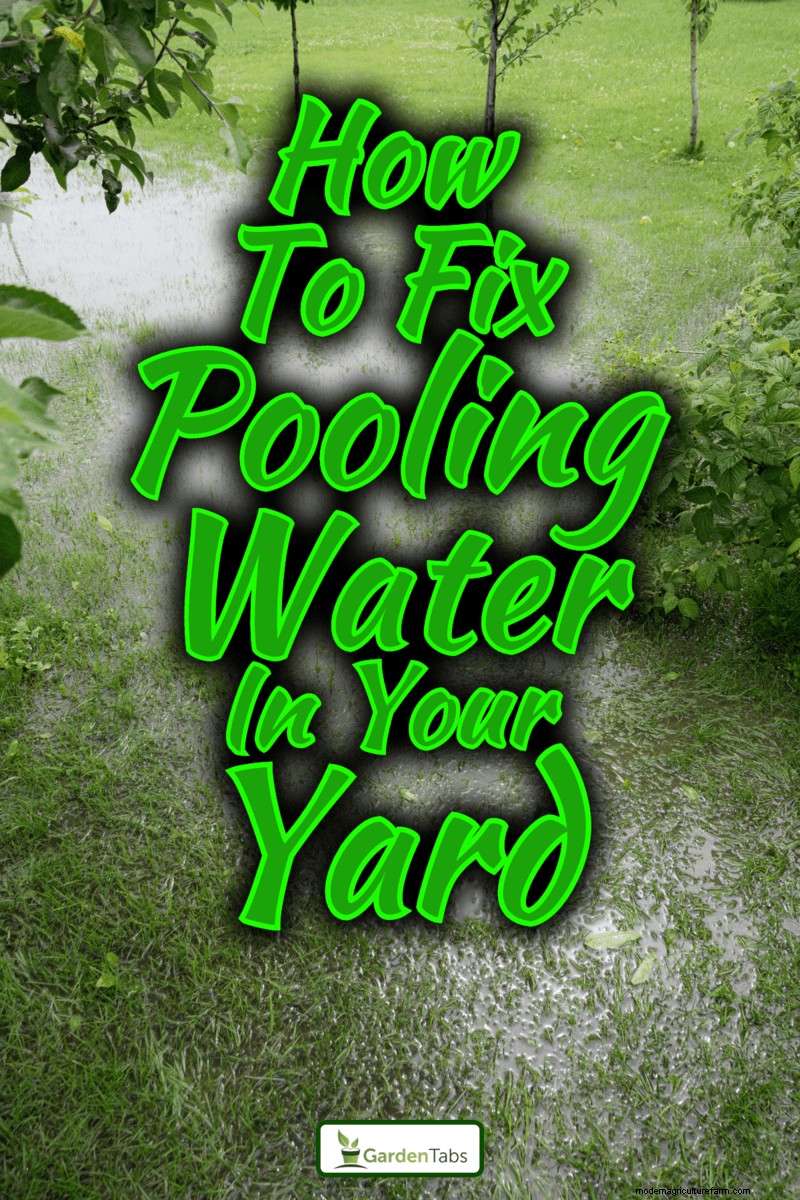
Here are some common factors that contribute to water pooling in your yard.
When water has nowhere to go, it naturally pools in low-lying areas. Poor drainage is one of the most common causes of water pooling in yards.
Typically, the water pools when the lawn is sloped towards the house or the soil is compacted and unable to absorb water.
The type of soil in your yard can also contribute to water pooling.
Clay soil, for example, is known for its poor drainage and can easily become waterlogged. On the other hand, sandy soil drains quickly.
The design of your landscape can also play a role in water pooling.
For example, if your yard has a lot of hardscaping, like patios or walkways, water may not be able to penetrate the ground and instead pools on the surface.
Additionally, if your yard has many plantings or landscaping features, they may be blocking the natural flow of water.
Although pooling water in your yard can be problematic, there are several steps you can take to fix the issue.
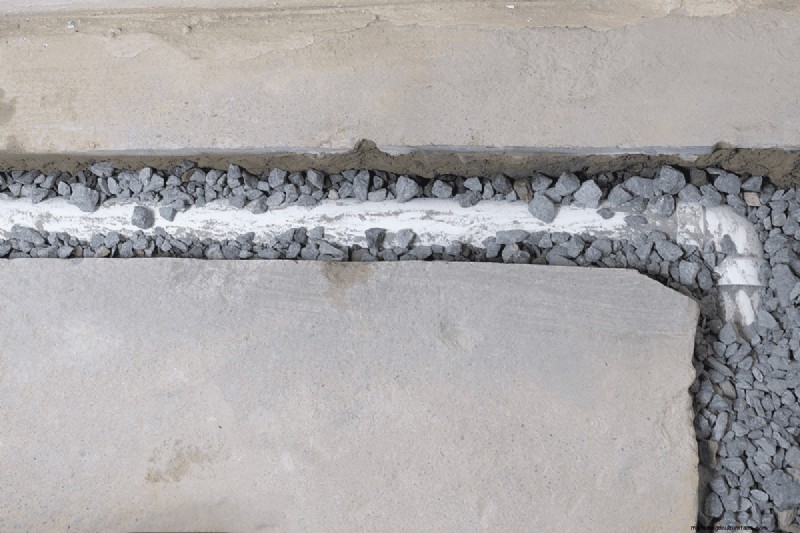
Installing a French drain is one of the most effective ways to fix pooling water issues in your yard.
A French drain consists of a trench filled with gravel and pipe that directs water away from your yard.
To install a French drain, you need to:
Even though installing a French drain can be a bit of work, it is an effective long-term solution for pooling water issues.
Another way to counter pooling water issues in your yard is by creating a rain garden.
A rain garden is a shallow depression in your yard that is planted with native plants that can tolerate both wet and dry conditions.
When it rains, the rain garden collects water and allows it to seep slowly into the ground.
To create a rain garden, you need to:
The rain garden is functional and can add some beauty to your yard.
Another way to fix pooling water issues is by grading the yard.
This involves sloping the ground away from your house so that water flows away from your yard.
To grade your yard, you need to:
It is important to ensure that the slope is not too steep, as this can cause erosion and make it difficult for plants to grow.
Because grading your yard can be a bit technical, you may require the help of a professional.
If you are unsure how to slope the low spot in your yard, consider consulting a professional landscaper or drainage specialist.
It is important to note that sloping the low spot in your yard may require a permit from your local government.
Be sure to check with your local zoning office before starting any work.
Another solution for pooling water issues in your yard is to use a dry well.
A dry well is a hole in the ground filled with gravel and surrounded by landscape fabric. When it rains, water collects in the dry well and slowly seeps into the ground.
To install a dry well, you need to:
Building a dry well may require the help of a professional. Also, the dimensions of your dry well will largely depend on the run-off volume.
We'll email it to you so you can read it later!
By saving, you agree to receive occasional emails. Unsubscribe anytime.
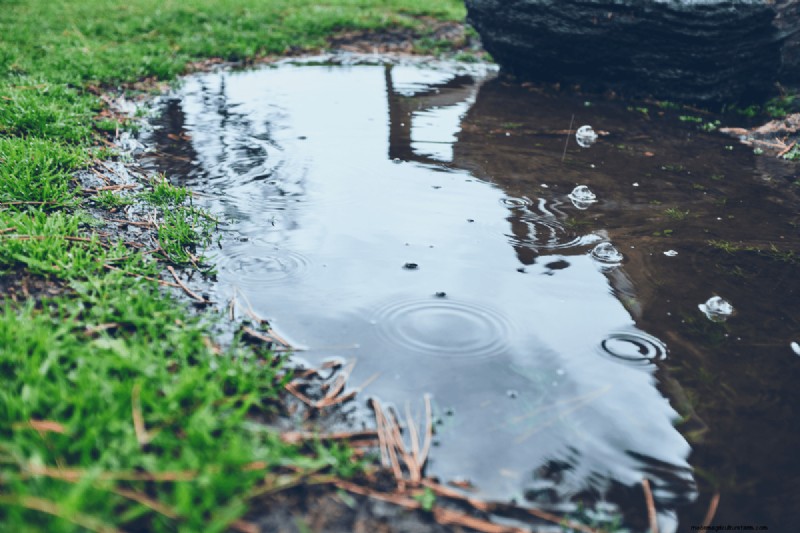
While fixing your current pooling water issue is important, it’s equally important to take steps to prevent it from happening again in the future.
Here are some preventative measures to consider:
Regular yard maintenance can go a long way in preventing pooling water.
The maintenance practices include keeping your gutters and downspouts clean and debris-free and regularly removing leaves and other debris from your yard.
Regularly aerating your lawn can also help improve drainage and prevent water from pooling.
If you live in an area with a high water table or get a lot of rain, installing a sump pump can be an effective preventative measure.
A sump pump works by pumping excess water away from your home’s foundation into a drainage area, preventing it from pooling in your yard.
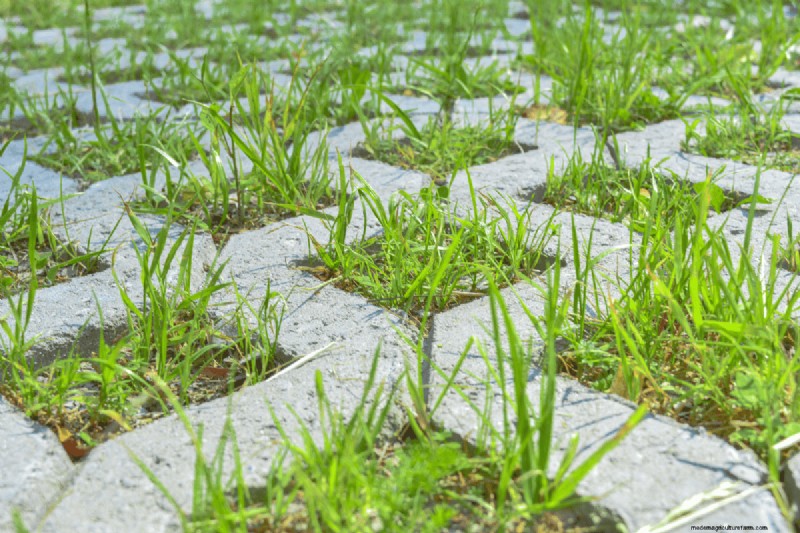
Another preventative measure is using permeable pavers for your driveway or walkway, especially in areas with heavy rainfall and poor drainage.
Permeable pavers allow water to seep through the surface and into the ground below, preventing it from pooling on the surface.
Pooling water in your yard can be a frustrating problem, but it’s not impossible to solve.
Here are some key takeaways for fixing pooling water in your yard:
Remember that fixing pooling water in your yard is an ongoing process that requires regular maintenance.
Keep an eye on your yard after rainstorms, and address any problem areas promptly to prevent further damage.
We hope these tips will help you to take control of your yard and enjoy a healthy, beautiful outdoor space.
These posts may pique your interest:
Water Pooling On Patio Pavers – What To Do?
Soggy Soil Vs Moist Soil: What’s The Difference?