
Welcome to Modern Agriculture!

Nematodes are a fairly broad class of tiny worm-like creatures which live in most soils, and while some species in the group are welcome in the garden, others can cause serious problems.
Read almost any article on organic control of garden pests, and the subject of nematodes will usually come up. Most often, beneficial nematodes are suggested as a solution to slugs, snails, and other common problems, avoiding the use of chemicals and other potentially harmful treatments.
Some species of the worms are known as plant-parasitic nematodes, and as their name suggests, they feed on live plants with potentially catastrophic results for your gardening success. Some of these nematodes feed by piercing the plants' roots to drain off nutrition, weakening the plant and providing an entry point for fungus, bacteria, and other pathogens.
Other species take a much more invasive approach. After nematode eggs in the soil hatch, the larvae tunnel their way into the roots themselves, where they'll remain for the rest of their lives, feeding on the plants from within.
This parasitic weakening of the plant is bad enough, but the damage gets even worse. At the point where the larvae break into the roots, hard knots or weals form which prevent that part of the root from doing its job of absorbing water and nutrients (these knots in the plants roots are where nemotodes get ones of their common names, ‘Root Knot Nematode’). When enough larvae have infested a plant, the root system can be so damaged that the plant is badly weakened or even killed off altogether.
Most parasitic nematodes are microscopic and virtually impossible to identify first hand, so their presence is more easily discovered through the effects they have on your plants. As the affected targets gradually lose their ability to take on water and nutrients, they can start to wilt, turn yellow, and show stunted growth. Fruiting plants will show reduced yields, or even fail to set fruit at all.
Plants commonly affected in this way include tomatoes, peppers, and corn, while salad leaves and soft herbs can also become inexplicably yellowed or bronzed. Healthy seedlings grown indoors can suddenly fail to thrive once transplanted to an infested vegetable patch.
While these are all common signs of deficiency or disease, those problems tend to affect all plants in a patch. With nematodes, single plants can be badly affected while their neighbours are completely unharmed. If one or two plants in a group are ailing and don't respond to increased watering or feeding, a nematode problem is a strong possibility.
If you suspect your plants are suffering from nematode attention, carefully lift a specimen plant and check the roots for lesions, galls, or deformed growth. These problems will be particularly clear on the below-ground parts of radish, potatoes, carrots, and other root veggies, along with excessive root branching and deformation.
And lastly, while most nematodes feed below ground, some feed on plants above the surface, leaving twisted and distorted leaves, stems, or flowers in chrysanthemums, onions, alfalfa, and others.
However, while all these are strong clues to a nematode problem, the only 100% effective way of identifying an infestation is to have a soil sample analysed by a commercial lab, which for most home gardeners is perhaps a hassle too far.
If a nematode infestation is left untreated, the pests will slowly spread from plant to plant as new larvae seek fresh root systems to colonise. And considering that complete removal is difficult, it's important to act quickly and control the spread as early as possible.
Chemical control is available using products called nematicides, which are often used in intensive farming. However, these treatments are highly toxic and not completely effective, so for most home gardeners other methods of controlling numbers and limiting damage are preferable. Some approaches to try include:
Nematodes of both welcome and unwelcome varieties are present in most soils, and are part of a healthy eco-system. But if the parasitical population gets out of hand, your plants will suffer. If you suspect a problem, take action as soon as you can - and seeing as most control methods have additional benefits for your soil and garden, you'll be building for future growing success whether or not nematodes are the underlying issue.
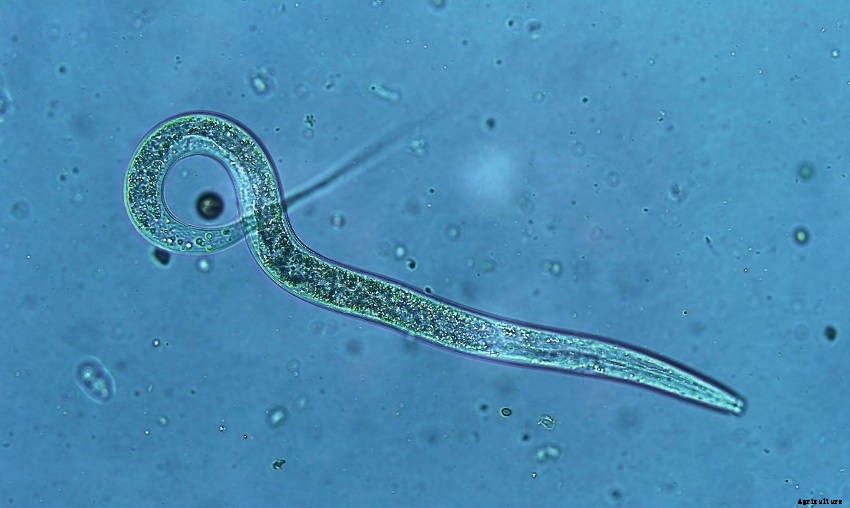
Above: Nematode under microscope
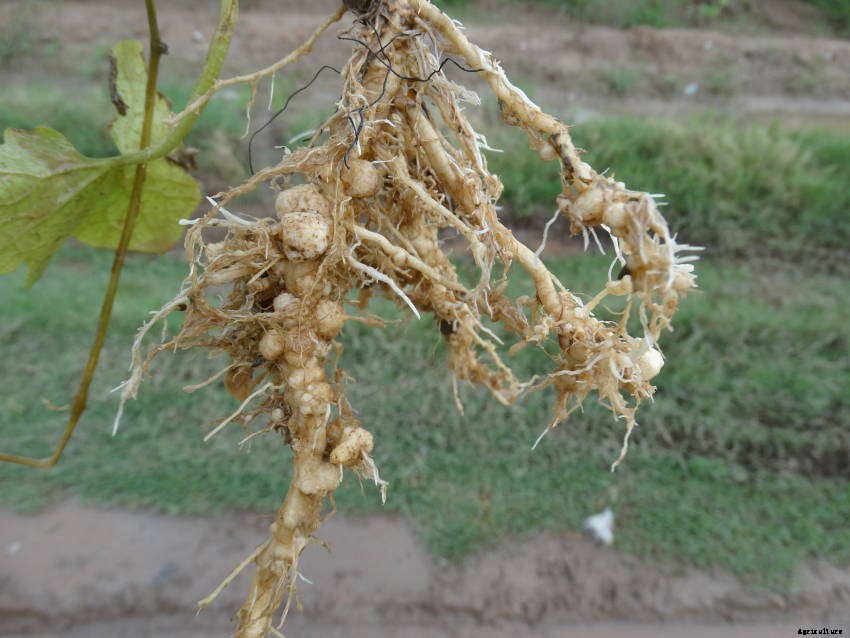
Above: Nematode damage to gourd roots
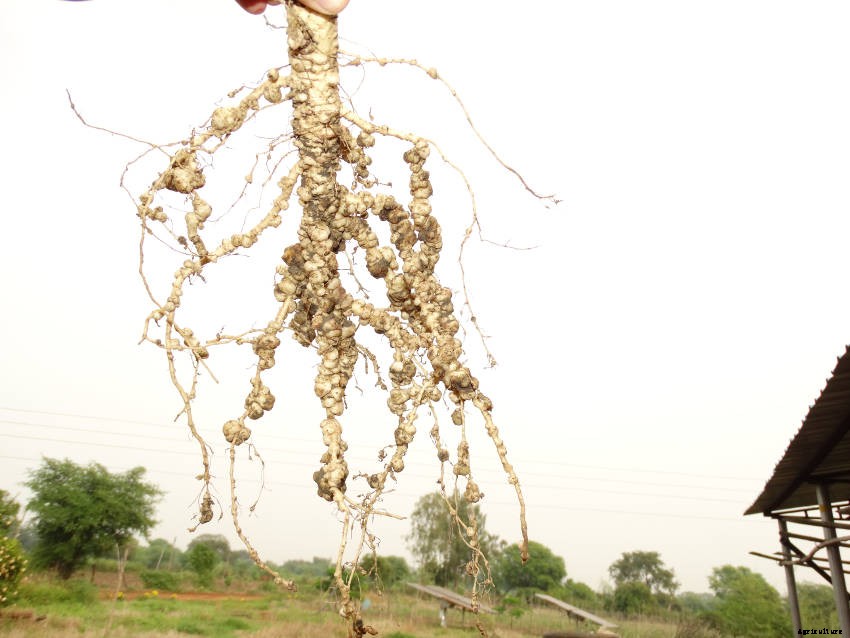
Above: Severe nematode damaged okra roots


