
Welcome to Modern Agriculture!

The fine-wool breeds are chiefly Rambouillet and Debouillet. The fine-wool breeds can withstand heat, cold, and drought, and produce satisfactorily under harsh conditions. They produce a more desirable, finer grading fleece that is more uniform than fleeces from other breed types. Additionally, they are more likely to breed out of season than are many other breeds.
The medium-wool breeds are white-faced crossbreeds that include the Columbia, Corriedale, and Targhee. These breeds are very productive when feed supply is ample. However, their breeding season is more restricted than that of fine-wool sheep, and their fleeces usually vary more in fineness of grade.
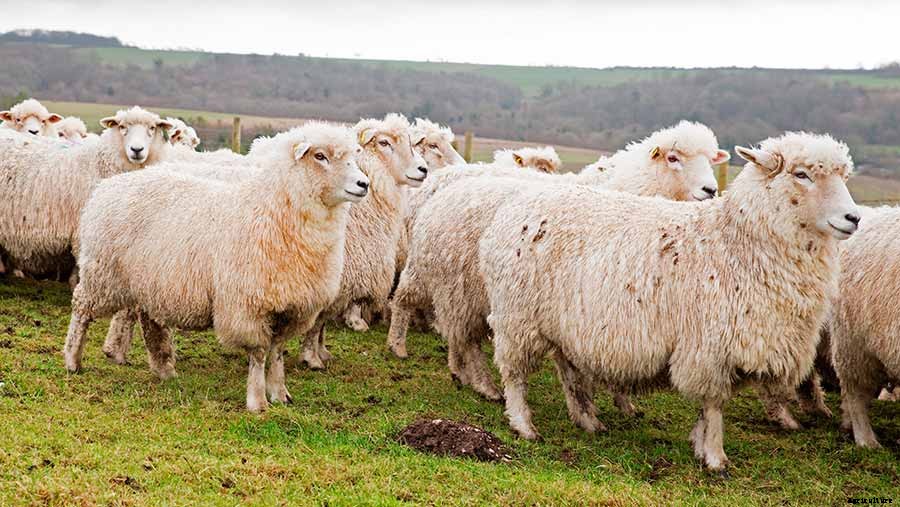
Suffolk, Hampshire, Dorset, Southdown, and Shropshire are some of the more common meat-type (or mutton) breeds, and they are best adapted to farm-flock production. Except for the Dorset, these are more restricted in their breeding season than fine-wool sheep.
These breeds are commonly crossed with commercial white-faced ewes to produce market lambs. Wool from these breeds lacks the fineness and often the length of staple found in fleeces from the fine- and medium-wool breeds. Quite often, wool from these breeds is discounted on the market because of poor purity (they contain black fibers).
One breed with potential for use in accelerated sheep production management systems is the Finnish Landrace. The greatest and perhaps only contribution of this breed is its reproductive capability and early maturity.
Finnish Landrace are small, white-faced sheep that produce little wool. Additionally, the carcass quality of this breed is somewhat below standard. Finnish Landrace are used in crossbreeding programs to increase lamb crop percentages and to initiate out-of-season lambing.


