Welcome to Modern Agriculture!

Choosing lights is one of the most important decisions that farmers make when planning and setting up farms.
After all, lighting is responsible for a large percentage of both CapEx (capital expenses, or “upfront” costs) and OpEx (operating expense, the cost of running the equipment).
Lighting is also directly tied to production, and most farmers want to give the best light to their plants. Growers usually approach the lighting choice with both costs and production in mind.
Unfortunately, hasty decisions often leave other factors, like efficiency, by the wayside. This can lead to unexpected consequences that limit farmers and set them up for losses in the long run.
Dr. Nate describes the factors of a well-rounded decision for two of the most popular crop lighting options: HID (high-intensity discharge) and LEDs (light-emitting diodes).
HPS (the bulb on the right in the picture below) is high-pressure sodium, one of the most commonly used HID lights in the world. A few pros of HPS lights are:
HPS lights produce wavelengths more in the yellows, greens, and reds, so they have a very warm color to them. This means that they’re great for vegetative growth.
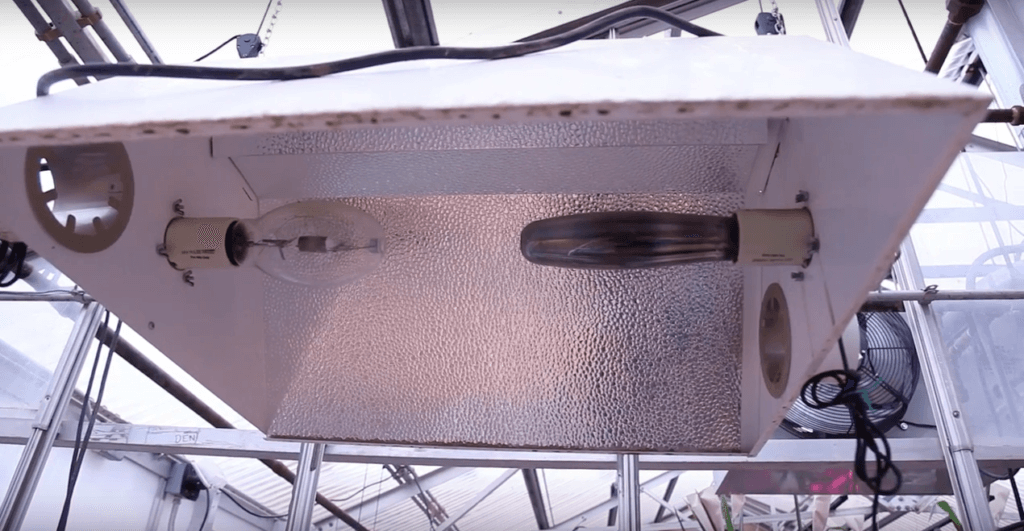
Metal halide is another type of HID lighting which runs slightly bluer.
The difference between metal halide and HPS lies in the efficiency. There are two main types of efficiency that growers are concerned with when they buy lights: energy efficiency and photosynthetic efficiency.
Energy efficiency asks the question, “How much of the electricity put into the lights is turned into light as opposed to heat?”
Photosynthetic efficiency asks a different question: “How much of the light produced can be used by the plant in photosynthesis?”
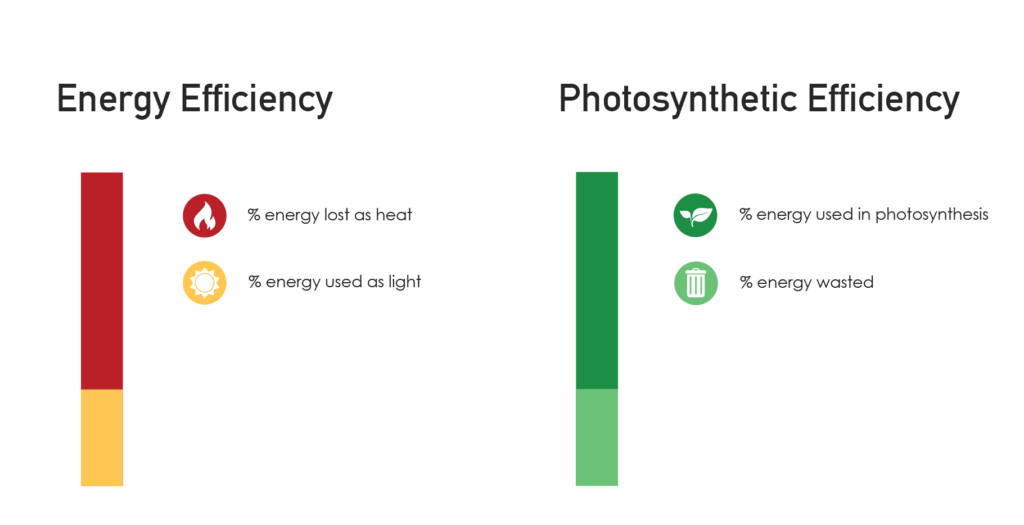
The energy efficiency of metal halide lighting is roughly equal to that of HPS, but most people go with HPS because it is slightly more efficient in terms of photosynthesis.
The drawbacks of HID lights are:
Overall, the most cost-effective application for HID lamps is as supplemental lighting in greenhouses.
That said, growers can’t know what the best lighting type is until they crunch the numbers for their specific situation.
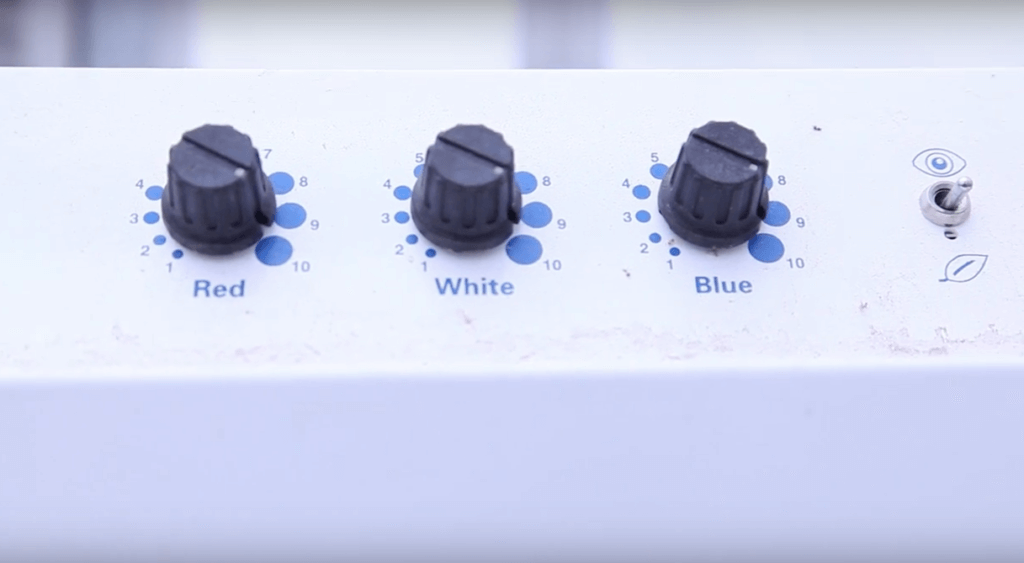
The other lighting type that we’re going to talk about is LED. If you’ve watched our other videos, you know that we believe that LEDs are the future of lighting. Here’s why:
Of course, in some situations where heat removal isn’t a big problem, HID can still be better. See the questions below to work through the needs of your situation.
Although LEDs are much more energy efficient than other lighting types, they aren’t 100% efficient. Some energy is still lost as heat. This means that regardless of HID vs LED, you’ll want to have some kind of plan for dealing with heat.
Over the years, growers have used a few ways to deal with that heat before it becomes a problem.
One way to deal with heat produced is using an HVAC system.
HVAC moves, removes, and conditions the air in the system. A well-designed HVAC system can do wonders for growing environments. Unfortunately, sizing and running an HVAC system requires a significant portion of the budget to be effective.
A second way—and our preferred method—is water cooling.
Water is better at absorbing heat than air, and using this more efficient heat removal makes the efficiency of the system overall go up. This also means that we can pull more heat away from the lights themselves which does two things:
1) gives them a higher lifespan and
2) allows us to get the lights very close to the plants.
These are all things to be thinking about when you’re choosing lighting for your farm.
Before you do anything else (including researching equipment options!), define your needs and constraints:
When it comes to artificial lighting, things can get confusing in a hurry.
The Modern Farmer’s Guide to Artificial Lighting is our straight-forward, no BS guide to help you make informed decisions about your lighting needs.