
Welcome to Modern Agriculture!

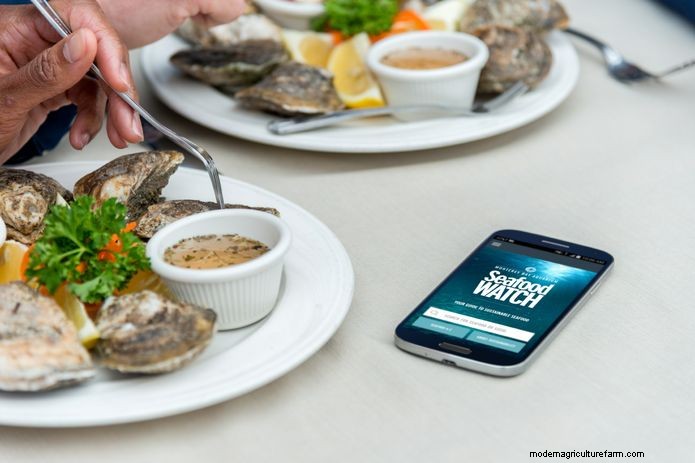

It’s incredibly easy for consumers to gain insight into which fish live up to Seafood Watch’s strict standards. The simplest way is through the Seafood Watch app, which is downloadable for Android and iOS systems. To date, the app has been downloaded over 2.3 million times, and its easy-to-use interface helps consumers identify the best seafood choices at their fishmonger or in their supermarket.
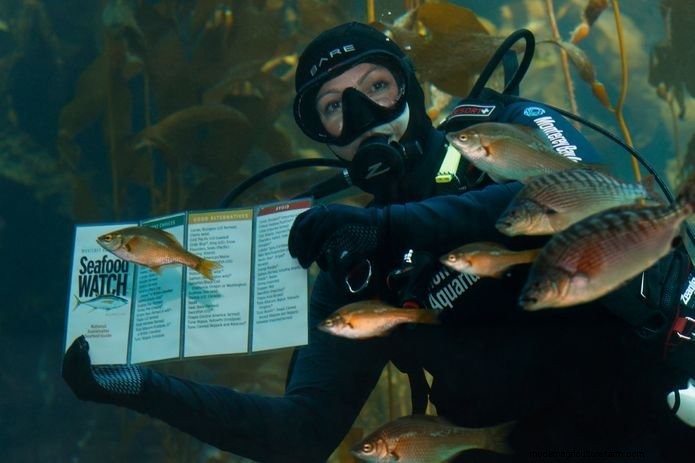
But consumers can also gain access to this information by consulting one of several consumer guides, created specifically for each individual region to give consumers the tools to make smart seafood choices. These guides have long been the main way for people to gain access to Seafood Watch recommendations, with more than 60 million guides distributed since 1999. While the app gives users the most up-to-date information, consumer guides are also updated frequently—once in the winter, and again in the summer.
Seafood Watch also partners with more than 300 businesses to help bring better seafood to American consumers. Today, more than 13,000 locations across North America use Seafood Watch standards to keep “Avoid” items off of people’s plates, and more restaurants and distributors are joining the cause every day.
Seafood Watch doesn’t just want to give consumers the ability to identify the best and worst seafood choices; it also wants to reduce the availability of items on its Avoid list worldwide. To this end, Seafood Watch has made a commitment to advance policy aimed at improving seafood supply chains the world over.
Key issues the organization has identified include improving global seafood traceability, ending illegal and unregulated fishing and restoring populations of key species like shark and Bluefin to the oceans. What this means for you: you can feel good about purchasing seafood with this logo on the package.
To find out more about other trustworthy certificates that consumers can use to ascertain the relative sustainability of the seafood they choose for their families, check out our profile on the Marine Stewardship Council.
Photo Credits: Monterey Bay Aquarium


