
Welcome to Modern Agriculture!

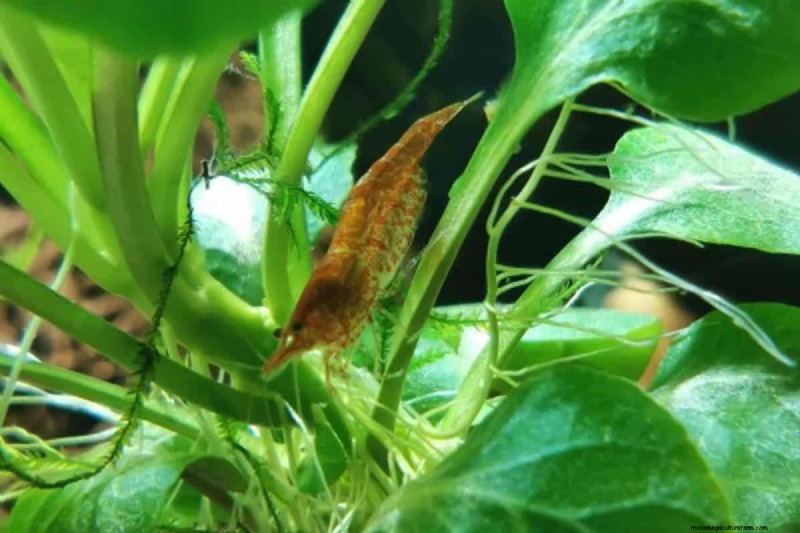
The condition and lifespan of dwarf shrimp can be significantly impacted by starvation. To sustain their energy levels, growth, and general well-being, these tiny crustaceans need a steady supply of food. Lack of food might cause them to become weak, stressed, and more prone to illness and other health issues.
These generalizations are undoubtedly accurate and relevant to all living things, but what about specifics?
Speaking of numbers, studies have revealed that mature dwarf shrimp can go up to 10 days without eating without suffering much. Prolonged starvation, in addition to starvation throughout the growth phase, can result in significantly longer recovery durations and generally have a considerable impact on them.
If you are interested in shrimp keeping hobby and want to know more in-depth knowledge, this article is a must-read. Here, I will go into more detail (no fluff) on the findings of scientific experiments on how starvation can affect the health of shrimp, as well as their nutritional vulnerability in the early stages.
The survival time of dwarf shrimp without food can vary depending on three main factors, such as:
Prolonged starvation will significantly shorten the lifespan of dwarf shrimp. Their immune system weakens and, as a result, they become more prone to illness and diseases. Starved shrimp also reproduce less or stop reproducing at all.
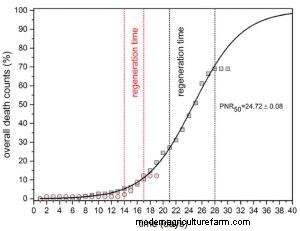 The effect of starvation and re-feeding on mitochondrial potential in the midgut of Neocaridina davidi
During my research on this topic, I came across several interesting studies conducted on the Neocaridina shrimp. Researchers have looked at the internal changes that take place in these shrimp over the course of a month without food in order to estimate how long it will take them to recover after eating again.
Various changes were observed in organelles called mitochondria. Mitochondria are responsible for producing ATP (a source of energy for cells), and triggering cell death processes. Studies have shown that ultrastructural changes can be observed in the intestine and the hepatopancreas.
Experiments showed that the process of starvation caused the gradual degeneration of mitochondria. As a result, the recovery process varied in duration among the shrimp.
Starvation period:Note: No differences were observed between males and females, and therefore the description concerns both sexes.
The survival rate of shrimplets and juveniles during starvation varies depending on their life stage.
On the one hand, young shrimp (hatchlings) rely on reserve material in the yolk to grow and survive. Thus, the early stages of the life cycle are more tolerant to starvation. Starvation does not hinder the hatched juveniles’ capacity to molt.
On the other hand, once that is depleted, mortality increases significantly. This is because, unlike adult shrimp, the rapid growth of the organism requires a great deal of energy.
Experiments showed that the point of no-return was equal:
In the case of adult specimens of Neocaridin davidi, the demand for food is significantly lower than for shrimplets because growth and moltings are severely limited. In addition, adult dwarf shrimp can store some reserve material in the midgut epithelial cells, or even in the fat body, which can extend their survival compared to younger specimens.
Dwarf shrimp must be fed in order to survive, stay healthy, and reproduce. Their immune system is maintained, their growth is supported, and their bright coloration is enhanced by a well-balanced diet.
This can include commercial shrimp pellets, algae wafers, and fresh or blanched vegetables such as spinach, kale, or zucchini.
Overfeeding, however, can lead to water quality issues, so it’s essential to feed the shrimp in moderation and remove any uneaten food promptly.
Related articles:
Knowing how long shrimp can survive without food can be helpful for an aquarium owner when planning a vacation.
If you are aware that your shrimp can last a week or two without food, you can make arrangements in advance to leave them safely during your absence. For example, you can:
Related article:
Prolonged starvation can have a significant impact on the lifespan of dwarf shrimp. Depending on the age of the shrimp, starvation has different temporal effects.
Newly hatched shrimp are more resistant to starvation because they utilize reserve material in the yolk. However, after several molts, the need for food greatly increases in juvenile shrimp, and they become the least tolerant to starvation. On the other hand, adult shrimp are the most resilient to starvation.


