
Welcome to Modern Agriculture!

Chinese mitten crabs (Eriocheir sinensis) are robust, burrowing crustaceans native to East Asia. While they can add intrigue to freshwater aquaria, they are widely harvested for food and have become a notorious invasive species worldwide.
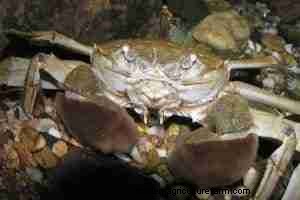
Originating from the rivers of Hong Kong to North Korea, the species was first introduced to Germany in 1912. It has since expanded across Northern Europe, including Finland, Sweden, Russia, Poland, Germany, the Czech Republic, the Netherlands, Belgium, England, and France. In North America, it has established populations in the San Francisco Bay, Chesapeake Bay, and along the mid‑Atlantic coast.
As one of the world’s top 100 invasive species, Chinese mitten crabs have significant ecological and economic impacts. Never release them into the wild.
These crabs thrive in a wide variety of freshwater environments—rivers, streams, creeks, marshes, lakes, and estuaries up to 10 m deep. They show no strict preference for substrate and can be found in rocky, muddy, or vegetated areas. Adults reside in freshwater, migrating to brackish waters for reproduction.
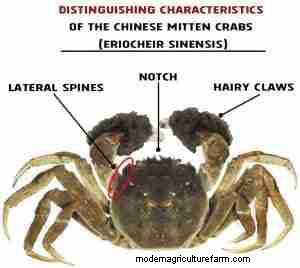
Adults reach a carapace length of 3–3.5 inches (7–8 cm) and a leg span of 7–8 inches (18–20 cm). Their weight can exceed 0.5–0.6 lb (250–300 g). Colours shift from brown‑orange in juveniles to greenish‑brown in adults, especially after molting.
Diagnostic Features:
In China, they are prized for their culinary value and nutritional profile.
Females and males live 1–3 years in China and 3–5 years in Europe. Crabs typically die shortly after reproduction.
Chinese mitten crabs are fully aquatic but can traverse land, enabling rapid colonisation of new water bodies. They are most active during daylight, less so at night, and are strong burrowers. Juveniles construct burrows up to 20 inches (50 cm) deep.
They are highly territorial and aggressive, especially males. However, adequate shelter and food can reduce aggression.
Behavioural Traits:
Dietally, they are omnivorous and detritivorous, feeding on aquatic plants, algae, detritus, fish eggs, insects, and small invertebrates. Their diet becomes more carnivorous with age.
Suggested aquarium foods include:
Feed 3–4 times weekly for adults, daily for juveniles. Crabs are slow eaters; leave food for up to 24 hours before removal to avoid waste buildup.
Calcium is essential for exoskeleton integrity and overall health. Sources include kale, broccoli, spinach, cuttlefish bone, eggshells, figs, nuts, seaweed, and oyster shells. Keep a small piece of cuttlefish bone in the tank at all times.
Chinese mitten crabs are not plant‑safe. They will chew, shred, or uproot plants. Avoid them in planted tanks; if used, opt for plastic or floating plants only.
Because of their growth potential and active nature, a 15‑gallon tank is the bare minimum. For a single male and female, 40 gallons (≈180 L) or more is ideal. Two adult males require even larger volumes to minimize aggression.
Key points:
After cycling the tank, maintain:
Adult crabs can survive several hours out of water, demonstrating remarkable desiccation tolerance.
Sponge filters are unsuitable; the crabs will damage them. Use hang‑on‑back or canister filters that can withstand chewing.
No special lighting is required; standard aquarium lights suffice.
Provide small gravel or sand for mandibles and mandible‑protected areas. Add leaves, rocks, wood, PVC pipes, and plants to create hiding spots, which reduce stress and aid molting.
Crabs molt to grow. The cycle has four stages: pre‑molt, molt, post‑molt, and inter‑molt. During pre‑molt, keep food plentiful, add calcium, and leave the old exoskeleton in the tank.
Do not disturb crabs during molting; this is their most vulnerable period.
Females are generally smaller; mandible hair (setae) is fuller on males; abdomen shape distinguishes sexes after ~1 inch carapace width.
Mandates catadromous life cycle: freshwater adulthood, brackish spawning, marine larval phase. Maturity at ~1.5 inches carapace. They typically spawn once or twice, then die.
Eggs: 250,000–1,000,000 per clutch; two clutches possible within a month.
Development: 3‑week incubation at 60–70 °F (15–21 °C), salinity 20–25 %. Five zoeal stages and one megalopa stage. Survival to megalopa ~10–15 %.
Due to their aggression, they are best kept alone. Avoid crabs, crayfish, dwarf frogs, freshwater snails, and bottom‑dwelling or slow fish. Dwarf shrimp may be at risk.
Chinese mitten crabs are hardy and can thrive in home aquaria, yet their territorial nature and invasive potential demand careful management. Never release them; they pose ecological and economic threats wherever they establish.


