Welcome to Modern Agriculture!

How to feed table size catfish to juveniles catfish.
Catfish farming has grown in popularity in recent years. This is because of the huge demand for fish and dwindling natural resources
The fish is now grown in urban areas in simple plastic or block ponds.
This is done by small hold farmers or hobbyists. The amount of capital depends on the size of the enterprise. In catfish production, the most expensive aspect is feeding.
There are different types of foods catfish eat. The fish are capable of consuming pellet feed, raw meat, grains, and some leafy greens. There are many supplementary food for catfish farmers.
Different types of catfish feed are commercial grade pellet feed, earthworms, rice, blood meal.
The fish are confirmed cannibals and are known to eat themselves. This is a survival strategy to reduce food competition, kill weak ones and a source of protein.
It is not an uncommon sight to see large fish devour smaller fish. However you will hardly see juvenile fish eating larger ones. Not because they don’t have appetite for the large fish, it is because they don’t stand a chance against the large fish.
If you grow different sizes of fish there is a chance some of them will die. Instead of disposal, the dead fish is a good source of protein.
Not every dead fish is suitable for feeding juveniles. If the large fish died of a disease, promptly throw it away.
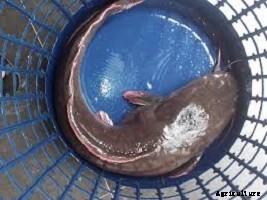
Most times catfish attack each other causing fatality. A good practice is to remove the injured fish. However some will die in the holding tank or bowl. This type of fish is perfect for feeding your stock.
Ras Fish Farming