
Welcome to Modern Agriculture!

Freshwater pond fish culture:
Fish cultured includes wild harvesting, intensive, semi-intensive culture. The type of water the animal thrive is either fresh or sea water. Intensive usually refers to pond culture. The pond culture depends on different systems like earthen, rice/fish culture, plastic pond, concrete, cage or block.
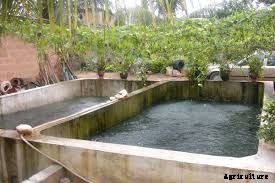
Freshwater Pond Fish Technology
Freshwater pond culture technology refers to 80:20 pond fish culture. It involves growing a single sized feed taking species in ponds for commercial purposes. The single sized fish comprises of the main stock and accounts for 80% of total fish in pond.
Another way to estimate the fish crop harvest is based on weight. Once the fish farmer achieved 80% harvest weight he’s reached his goal of 80%. Other requirements include 20% non-feed taking species weighing 20% on harvest day.
Freshwater Pond Culture
Culturing fish in ponds is an aquaculture practiced from ancient times. Modern aquaculture has evolved because of advancement in technology, feed and knowledge of different fish species. Old techniques include immersing a basket in water, trapping, damming. Fish farmers before setting up the pond take into consideration topography, availability of water, feeding.
Things to Consider
Things to consider before establishing the pond is startup capital, topography, weather conditions, type of pond system, fish stock, feeding. Others are availability of water, pond safety, distance from market, price.
Different culture system
There are many types of culture system practiced by farmers. We have the integrated agriculture-aquaculture, brackishwater pond. Others are pen/cage culture, coastal bivalve culture, seaweed culture, marine ponds and raceway system.
Culture Systems
The 80:20 pond fish culture
Operating an 80:20 pond fish culture is highly efficient and profitable. Made popular in China the technology is intensive pond production for freshwater fish. Unlike monoculture commercial pond farming 80:20 supports one feed taking species and one non-feed taking species. This effectively increases profitability and productivity.
How does 80:20 pond fish culture work?
A pond system raises a single feed taking specie that accounts for 80% of the stock. While the non-feed taking species account for 20% of stock. Non-feed taking species are either filter feeders or predators. Predator fish are generally used to keep population in a pond under control. Non-feed taking service fish on the other hand are specialized filter feeders.
Feed Taking Species
Freshwater pond fish culture rely on a primary stock and secondary fish stock. The primary stock are feed taking species to achieve expected weight. Most fish crops achieve full weight from 4 to 6 months depending on the species. Popular feed takers are tilapia, catfish and grass carp production.
Tilapia
A general practice in tilapia production is stocking single gender fish in pond. This is because tilapia are prolific breeders and birth easily in pond system. To keep the numbers down in a system with both gender predator fish is introduced.
Catfish
Catfish are both predatory and feed takers. If hungry they are capable of feeding on each other for survival. Therefore farmers should promptly remove injured or sick fish and provide regular feeding.
Filter feeders
Filter feeders refer to suspended feeding animals that feed on food particles or suspended matter. Animals who display such adaptation are shark, sponges, and different boney fish species. We have baleen whales, some types of herring krill and sponges.