
Welcome to Modern Agriculture!

The Raft System of aquaponics, also known as deep water culture (DWC) or floating system, is one of the most efficient aquaponics techniques. This system is generally implemented in large-scale or commercial aquaponics because of their mass production capability.
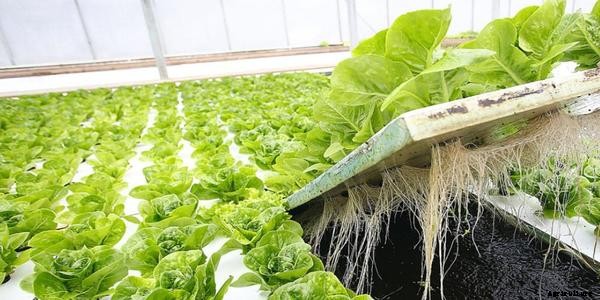
In a raft system, the nutrient-rich water circulate through the long canals, usually at a depth of about 20 cm, while rafts (polystyrene or foam board) float on top. The plants are grown on the raft boards that are supported within holes by net pots. Plant roots hang down in the nutrient-rich, oxygenated water, where they absorb oxygen and nutrients to grow rapidly. The nutrient-filled water flows continuously from the fish tank through the filtration process, then to the raft tank where the plants are grown, and finally back to the fish tank. Most often, the raft tank is separate from the fish tank.
The beneficial bacteria primarily live in the biofilter, in the raft tank, and throughout the system. Since the development of aquaponics raft systems (DWC) on a commercial scale by Dr. Rakocy at the University of the Virgin Islands. Many commercial aquaponics farms use this type of system because it allows the plants to grow faster and yield more crops.
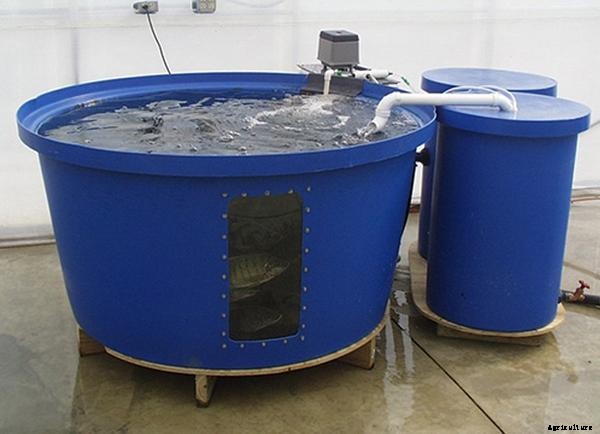
A fish tank is essential in any aquaponic system. The fish tank is where your fish will live, and the tank acts as the collection reservoir for fish waste. The fish waste and water will be pumped to the plant beds, providing them enough moisture and nutrients for their growth.
Like the fish tank, canals can be made out of any strong, inert material that can hold a large water volume. Canals can vary in lengths, but it is generally recommended that the width should be the standard width of a polystyrene sheet. The recommended depth is 30 cm to allow adequate plant root space. The canals' retention time should be 1 to 4 hours, regardless of size, to allow adequate replenishment of nutrients in the canal. Plants grow faster from a faster water flow rate because the roots will be hit many more ions.
This is the place for the plants to grow. Floating rafts are constructed from styrofoam or other lightweight material lined with foam. Plants are placed in holes on the rafts, allowing their roots to dangle into the water. Net pots are often used for added stability and to prevent the plants from falling through rafts into the system.
A biofilter is a place for the bacteria to colonize. This is where the beneficial bacteria turn fish waste into usable, nutrient-rich food for the plants.
The filters capture the solid waste from the fish, plant material, and anything that might find its way into the system. Filtration in aquaponic systems is essential because the solid particles, fish residual foods, and fish waste can create a severe problem in your aquaponic system. They can clog your piping, nozzles, and plant roots and cause unwanted damage to your system.
The water pump pumps water from the fish tank, through the filters, and into the grow beds. Pumps are used to recirculate the water in raft systems and keep the water moving.
Aeration is the addition of oxygen into the water with the use of ambient air. Adding more oxygen to the water is essential for both the fish and the plants' health and growth. Air pumps, diffusers, air stones, or other methods can also aerate the system.
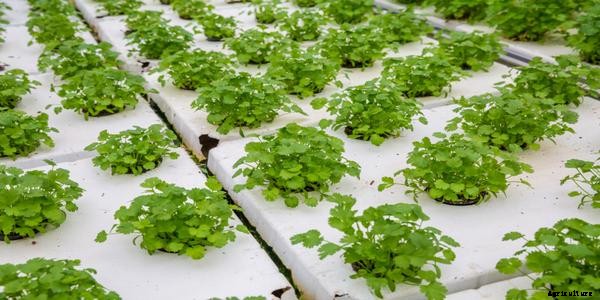
Planting in a raft system of aquaponics involves suspending plants in the floating rafts (foam or polystyrene sheets), with their roots hanging down in the water. The floating rafts have holes drilled to fit the net cups used for supporting plants. The amount and location of holes depends on the vegetables and the distance between plants. For a successful aquaponics system, it is important that you know what is the best plants to grow in aquaponics.
Seedlings can be started in a plant nursery. Once the seedlings are large enough to handle, they can be transferred into net cups and planted in the floating rafts. The net cup should be filled with grow media such as gravel or expanded clay to support the seedling. Seeds can also be planted straight into the net cups on top of the media.
It is important to remove the whole plant during harvest, including roots and dead leaves, from the canal. The rafts should also be cleaned but not left dry to prevent killing the nitrifying bacteria on the submerged surface of the raft.
Small and lightweight plants are the most suitable for growing in a raft system. Vegetables that grow best in this system enjoy a moist environment and have a small root system and structure.
 Lettuce and Leafy Greens
Raft Systems are ideal for growing lettuce and leafy greens since they love moisture and have a minimal root system. Lettuce has a short growing cycle and a relatively low height. They don't need staking to support them—growth time 5 to 6 weeks from seeds.
 Basil
Basil Basil is a unique plant and allows growers to get a higher yield. By pruning basil regularly, growers increase the branch's production and control the plant's shape—growth time 8 to 10 weeks from seeds.
 Kale
KaleAlthough Kale is a healthy leafy vegetable, it doesn't grow tall. Kale is not a nutritionally demanding plant and hardy enough to match any fish in the system. Kale likes cool temperatures and can be harvested either fully or partially. Growth time 5 to 6 weeks from seeds.
 Collard Greens
The collard greens family refers to either cabbage or broccoli; both plants are durable—growth time broccoli 7 to 8 weeks from seed, cabbage 7 to 8 weeks from seeds.
ChardWith little temperature regulation, chard will produce delicious, buttery-tasting leaves and can be harvested either fully or partially. Chard makes for a durable, tasty, and easy to grow plants in a raft system. Growth time 4 to 6 weeks from seeds.
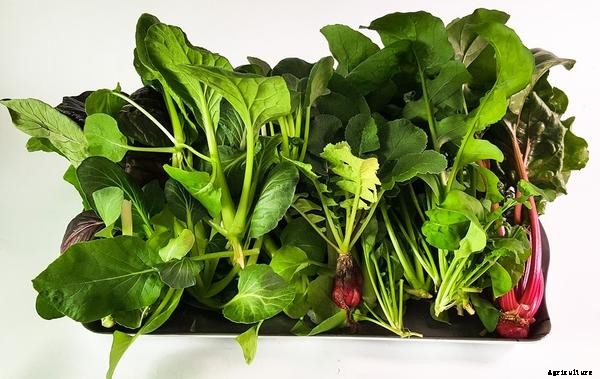
The best plants for the raft system or DWC are small and lightweight. The rafts are generally durable and affordable, but they can only support limited weight. Top-heavy plants can fall over or break at the stems without root anchoring provided by a dense media.
Raft systems function on a single horizontal plane since they are too heavy to stack. If you have limited space, consider an approach that can facilitate denser growing plants. Be sure to match your plant site spacing on your rafts to your plant size.
Choose plants that are thirsty plants that will thrive in a raft system, so pick seed varieties that love water like lettuce. Drought loving plants will not do well in this system.
Ensure that the plant will provide you with a profit if you're growing commercially and a good harvest if you're growing for home use or as a hobby.
With these simple tips, the raft system can be excellent for mass production and easy to maintain. Here are a few tips on running and maintaining a raft system.
Raft systems are one of the simplest aquaponics systems to set up and are most promising for commercial and mass production. The rafts can be reused for many cycles of planting once the plants are harvested. The raft system method is an easy method that a beginner in aquaponics can build. In the next article, we will discuss the "Media-Based System of Aquaponics." Subscribe to our newsletter to be notified when we publish new articles..


