Gardening, fishing, canning, and preserving are a few of our favorite activities. We love taking control of our own food supply and sharing
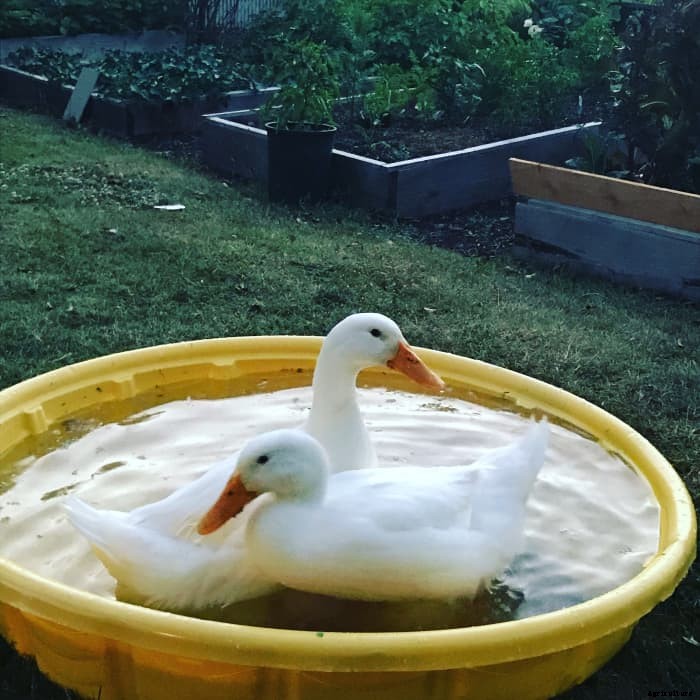
Why Raise Pekin Ducks
Pekin ducks are one of the best breeds of ducks to raise. For this reason, they are one of the most popular ducks. Specifically, Pekin ducks are raised as meat birds commercially. However, they make for excellent egg layers as well. They also have a ton of personality making them the perfect backyard pet.
Pekins are one of the breeds that are considered a high egg-producing breed. As an example, they consistently produce well over 200 eggs per year. Through extra work and preparation, it is possible to push a Pekin duck to lay upwards of 300 eggs per year with a high-quality feed and supplemental light during the late fall and early spring.
As a meat bird, Pekins are easily the preferred breed. Both the standard Pekin duck and the Jumbo Pekin duck are raised as meat birds. They will reach nearly 90% of their mature adult weight within 7 to 8 weeks of growth. For this reason, they are the preferred breed by commercial meat duck producers. They grow incredibly fast, similar to a cornish cross chicken that is bred and designed to grow rapidly and be harvested at a young age. Obviously, this fast growth can cause some problems to ducks that are kept as pets due to the extreme weight that their young body has to support.
What Do You Need to Raise Pekin Ducklings?
If you have ever raised chickens ducklings are very similar, but even if you have not they are not too difficult to raise. The following supplies are the bare essentials to care for baby ducklings.
Duckling Supplies
- Brooder: This can be a plastic tub, a kiddie swimming pool, or a wooden box enclosure. It is important that it is about 12 inches tall initially in order to keep them inside.
- Heat source: A heat bulb lamp is the most common source of providing heat to your little ducklings. There are heat pads and heating plates that are adjustable to keep your new flock happy and warm. A baby duck would normally have their mother to keep them warm, so it is important to supplement that heat.
- Water: Ducks do not need water to swim in. Even as adult ducks it is not necessary. However, they will need water to drink, and it should be at least deep enough that they can stick their head underwater. Ducks have to clean their nostrils on their beak out by submerging it underwater. If they are unable to do this it will lead to problems very quickly.
- Water drip pan: Ducks do enjoy playing with their water. They also eat food mixed with water, so needless to say they can make a mess with the available water. One to help keep the brooder clean is to create a tray with some hardwire cloth or a screen that sits above a tray that collects the water below. We use a paint tray and screen and place the water on top of this so that when they splash and spill the water goes into the tray and not into the rest of the brooder.
- Pine shavings or straw: The bottom of the brooder should have a layer of pine shavings or straw for the ducks to sit, stand, and walk on. This also helps absorb their poop.
- Duckling starter food: Ducks need to have a high protein starter food in order to achieve the rapid growth that their bodies are designed for. It is possible to start a duck on chicken starter feed. However, it is essential to make sure that the food is not medicated. Medicated chicken feed can kill your baby ducklings by consuming too much of the medication.


