L. Holloway is an experienced keeper of chickens and other fowl who has spent nearly a decade educating others on their habits and care.
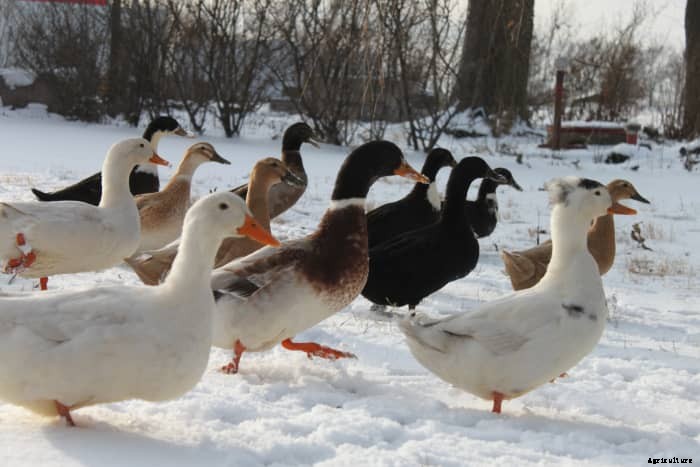
The Pros and Cons of Ducks
If you already own chickens, adding ducks to the flock may seem like the next logical step. If you are considering purchasing ducks this season, it's important to know as much as you can about them—the good and the bad. For some, owning ducks is the worst experience of their lives, but for many others, ducks are wonderful, productive, and economical additions to the farm. A great deal will depend on your specific needs, layout, and abilities. Since I believe in starting with the bad news first, let's take a look at the "cons" before moving on to the "pros."
The Cons of Owning Ducks
- Ducks are wet animals. This can also be a pro if you live in a humid climate, but if you are trying to house ducks with your chickens, you will need enough space to place the water far away from the coop to avoid the ducks muddying up the inside of the coop.
- Ducks poop a lot, and violently. Whereas chickens drop a plop as they go, ducks projectile-fire their droppings with reckless abandon. This isn't a problem when they free-range, but if you are trying to keep them in close quarters it will make some interesting cleanup.
- Ducks are not agile creatures and will be easy targets for predation. Although they are avid free rangers, they must have a secure place to sleep at night, or they will be literal "sitting ducks."
- They eat a lot. Ducks eat far more than chickens, in part because they are larger. As with other cons of duck ownership, this is not as much of a problem if they are allowed to free range during the day, but in confinement, they will need to be fed more.
- They are not the same as chickens. Ducks operate differently from chickens, so the things that work with chickens won't work as well with them. Ducks are less likely to want to be held and cuddled than a chicken, and will express their fondness for you very differently most of the time. There will be a learning curve when it comes to understanding your ducks.
- Ducks can kill chickens if they are housed together. A little-known fact about chicken anatomy is that roosters do not have a penis, so chicken hens do not have a space to accommodate one. Drakes however, do have penises, and as such if they try to breed a chicken (male or female), they are likely to kill it. That said, this has not been a problem for the majority of duck owners, especially those that have female ducks in their flock. It is something to keep in mind as a potential danger, however.
The Pros of Owning Ducks
- Ducklings grow very fast and need less supplemental heat than baby chickens. Ducklings will outgrow their brooder in roughly half the time of their chicken counterparts.
- They're good free-range. Although ducks eat more than chickens, they love to free range and are master dabblers. Given access to muddy earth, such as a pond or bog in your yard, they will hunt for—and find—tasty insects, crustaceans, earthworms, and other invertebrates in large numbers. They will also happily devour weed seeds on the property, and if allowed to roam will do so—unlike chickens who will congregate in one spot and obsessively destroy the ground there with their scratching.
- Ducks are better garden companions than chickens. They will eat many of the same things, but don't scratch and are less likely to hop over barriers, so you can pen off your garden plants and let the ducks roam between the rows to catch pests or eat weeds without losing your entire garden.
- They're hardy. Ducks are hardier animals that are susceptible to fewer illnesses than chickens, especially in damp or humid climates. While chickens suffer during long periods of wet weather, ducks will celebrate it.
- They're easily trained. Ducks are easier to herd than chickens, and can be trained in just a few days to move to a new location on command (especially if there is food in the new location.) When my ducks escape their enclosure, all I have to do is clap my hands and say "Ok, Ducks—Go in!" and they will line up and march back to their pen. This also gives us greater flexibility to allow the ducks to free range, because when it is time to go in, we know they will do so. With chickens, this isn't as much of an option.
- Ducks are generally very easy to integrate into a new flock. Although ducks have a pecking order of their own, it is not as aggressive as chickens', and ducks meeting a new duck are generally happy to allow it into the flock. My ducks even adopted a goose with a leg deformity who was not able to keep up with her own kind.
- There is far less danger from an aggressive duck than an aggressive rooster. Although aggressive roosters are actually pretty rare, the few that are can do a significant amount of damage, sending even grown adults to the ER with serious injuries. Ducks lack the spurs or agility of a rooster, and so even if they have a bad attitude (which I have yet to encounter), they can do far less damage. This makes them a safer option for families with very small children, but it does mean ducks will not be able to defend themselves from attacking predators while free-ranging.
- They're great egg-layers. Some varieties of ducks are as prolific at laying eggs as chickens, and the eggs are vastly superior for baking. Additionally, individuals who have an allergy or sensitivity to chicken eggs may find that they can eat duck eggs without a problem. The eggs are richer than chicken eggs, and produce fluffier baked goods. They range in size from medium to jumbo, often depending on the breed.
- Meat and eggs. Ducks can be dual-purpose, just like chickens, or raised exclusively for eggs or meat. Like chickens, there are many breeds and color varieties of duck available, ranging from the super-stocky Rouen to the lean egg-laying machines that are Khaki Campbells. Call ducks are the "bantams" of the duck world, and so cute you could die. Whatever you need in chickens, you can probably get from ducks.
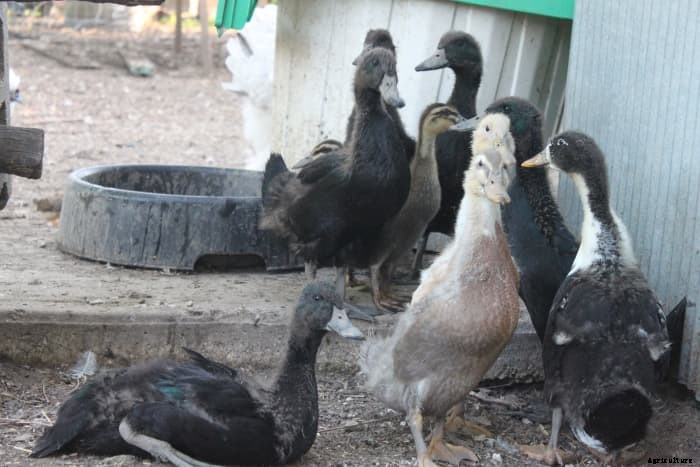
Preparing for Ducks
Although it is possible to house ducks and chickens together and have them thrive, you may find it to be less work to allow them to live separately. As stated before, ducks are "wet" animals while chickens are "dry," meaning that ducks thrive in humid and wet environments while the same environments can make chickens very sick.
What kind of enclosure a duck needs:
- If you have the opportunity to prepare a living space just for your ducks, you may want to consider a coop or shed with a dirt floor and good drainage.
- Elevating your living space around the surrounding ground is advisable for any farm animal, but especially for ducks who will produce tremendous amounts of moisture that you will want to be able to drain away to keep odors down.
- They do not need a pool or pond, though they will be happier with one. All ducks really require is water deep enough to dip their heads in so that they can clean out their bills, nostrils, and eyes. It may be tricky to provide this water in a chicken coop without also creating a drowning hazard for the chickens, so that is one of many reasons to consider housing them separately.
- Giving ducks ample space to roam is the best way to keep odors down and minimize the work you have to do to clean up after them. Because they are vulnerable to predation, they need secure housing, particularly at night, but can usually free-range during the day provided you do not have active day-time predators in your area.
- A livestock guardian dog will deter most predators, while an electric fence should keep ground predators at bay. Closing the ducks up in their shed or coop at night is easy to do, because ducks will habitually return to the same place every night to sleep, and can easily be herded in if they don't do so on their own.
- Since ducks are not as agile as chickens, they are easier to pen to a specific area. A low fence is all you will need to keep them confined to where you want them, as long as they are able to squeeze through it or climb over. You can plan a spacious duck run to give them exercise and room to range (and spread out their poo) without having to invest in a massive covered run or towering fence.
What to Feed Your Ducks
Ducks can be fed a commercial all-flock or flock-raiser feed from the moment they hatch, but they may need supplemental niacin if they do not have access to free range. I manage this by feeding my ducklings peas in addition to their feed, and allowing them to free-range as adults. Just remember to provide grit to any bird you have in confinement that you are feeding treats to so that they are able to properly digest their food.
Varieties of Ducks
When choosing the ducks you wish to add to your flock, there are several varieties to choose from, including proprietary hybrids offered by some hatcheries that are promised to lay abundant eggs, or breeding lines of meat varieties that are so plump they seem to drag on the ground. Determine what you need from your flock, including the aesthetics you are looking for, and from there find the breeds that will be a good fit for your needs.
Muscovies
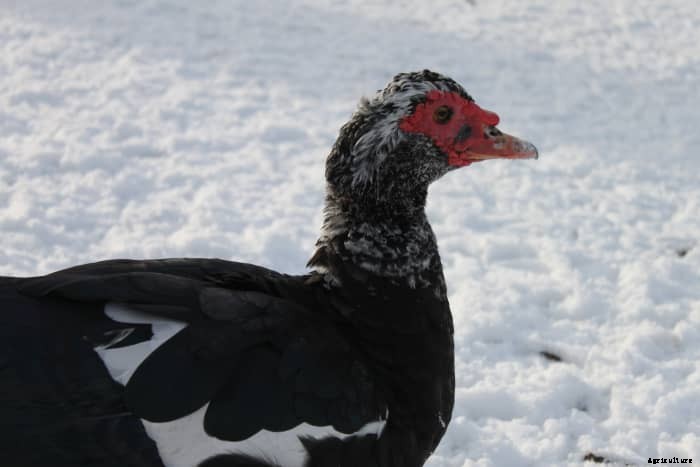
The majority of duck breeds you will encounter are descendants of mallards. Whether it's Pekins, Cayugas, Indian runners, Call ducks, or Khakis, they are all part of the same mallard species. One variety of duck however, is descended from a different species: Muscovies. Unlike mallards, which are very vocal (the hens especially so), muscovies are virtually silent and make little more than a hissing whisper or peeping noise. Domestic muscovies are heavy, with the hens capable of limited flight, but the drakes unable to leave the ground. Feral and wild muscovies are more agile, and can easily reach the roofs of houses, making them harder to confine than most ducks.
All muscovies are reputed to be extremely diligent parents and will self-propagate given the chance. Because they are a different species from other ducks, they can interbreed, but the offspring is typically sterile. Additionally, muscovies have different secondary sex characteristics from other varieties of ducks, so instead of listening for the loud "QUACK" for hens or looking for the curling tail feather of drakes, you will want to monitor the development of the caruncles on their faces. Drakes have red, prominent caruncle growths while hens are less pronounced in the face. Although wild muscovies are black and wide, domestic can come in a wide range of colors.
Call Ducks
Call ducks are "mini" ducks, developed to easy for duck hunters to carry with them on trips and use as living decoys, hence their name. Their quack is much louder than normal ducks, due to their original purpose, but they are otherwise smaller than normal ducks in every way. They come in a wide variety of colors and include crested varieties.


