SinDelle runs the Georgia Herb & Egg Co. in Dublin, GA, and has lots of experience doing DIY around the farm.
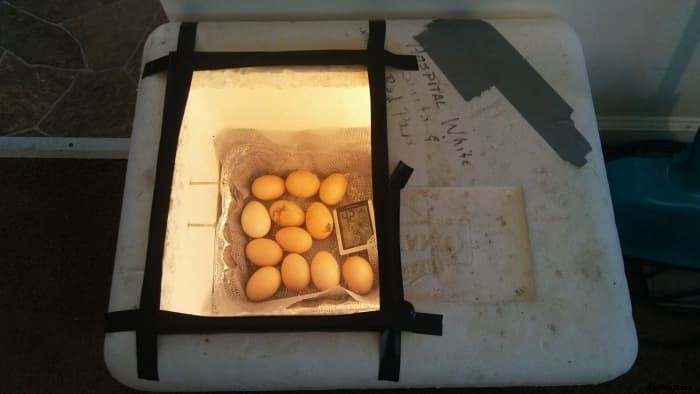
How to Build an Incubator
Backyard chickens are all the rage! Hatching your own run of chicks is a lot of fun, but good incubators are expensive. Luckily, incubators are not hard to make, and with a little bit of sweat equity, you can have your own DIY incubator up and running in no time at all.
You will need:
- Styrofoam cooler
- 25 watt lightbulb
- Picture frame
- Mesh or chicken wire
- Dimmer switch
- Thermometer/Hygrometer
- Aluminum baking pan
- Sponges for humidity
- Heat lamp or extension cord
- Silicone or rubber dish mat
Instructions
- Cut a hole in the lid of the cooler. This will be the window into the incubator so that you can see what's going on without opening it. Make sure the hole is slightly smaller than the size of the picture frame.
- Place the glass from the picture frame over the hole and tape it down with duct tape. Now there is a window in the incubator!
- Splice the dimmer switch into the cord. (There are how-to videos on YouTube.)
- Cut a hole in the side of the cooler that is large enough for the cord to fit snugly. The bulb should not touch the sides of the cooler.
- Use the wire or mesh to create a cage around the bulb so that the chicks don't get burned by it when they're born.
- Cut the dish mat to fit into the bottom of the aluminum baking pan, then place both into the incubator.
- Wet the sponge until soaked and place into the incubator.
- Place the thermometer/hygrometer into the incubator and close the lid. Over a period of about 4 hours or so (longer if necessary), manipulate the dimmer switch and the sponges until the constant temperature is 99F and the humidity is between 40% and 50%. This must remain constant for the entire incubation period.
- Once the internal environment of the incubator is stable, Mark the eggs on one side (we mark them with a number) and place them into the aluminum baking pan. Be sure to place them on their sides, the way their mother would do. Marking them helps you to be sure you are turning them correctly.
Things to Remember:
- Don't open the incubator for the first 24 hours
- Adjust the temperature and humidity as necessary
- Mark these days on your calendar: 1st day, 18th day and 21st day
- Turn the eggs 3-5 times a day until the 18th day
- Don't open the incubator after the 18th day unless absolutely necessary
- The humidity must be raised on the 18th day to 60%-70% until hatch
- Don't help struggling chicks hatch
- If the temperature fluctuates, don't panic! Just fix it
- If it's been longer than 21 days, don't panic! Some chicks take a little longer
This article is accurate and true to the best of the author’s knowledge. It is not meant to substitute for diagnosis, prognosis, treatment, prescription, or formal and individualized advice from a veterinary medical professional. Animals exhibiting signs and symptoms of distress should be seen by a veterinarian immediately.


