
Welcome to Modern Agriculture!

SinDelle runs the Georgia Herb & Egg Co. on her homestead in Dublin, GA.
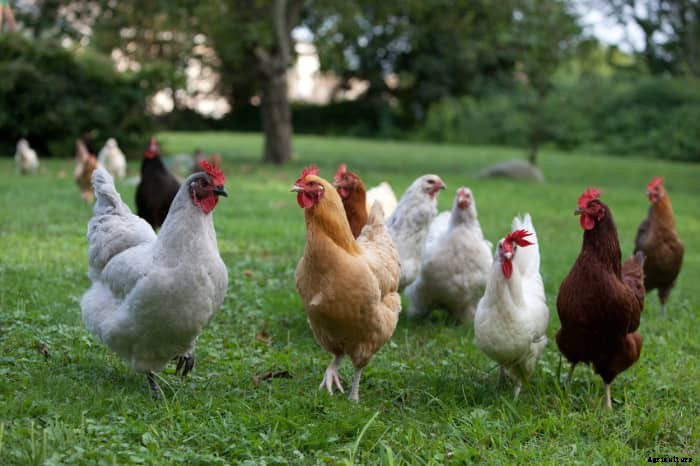
One of the most important parts of any homesteading situation is the decision to raise animals or not. If your family eats meat, you've probably thought about raising chickens. But what kind of chickens? How do you get started? Well, like any great venture, you start at the beginning!
After you've researched the best chicken breeds for your homestead, the next step is actually building your foundation flock. You'll need to figure out what you want your chickens to do, how many you need and how many you can afford.
To start a foundation flock, you need to figure out how many chickens you will need and how many you can afford to keep. (Remember: Even free-range chickens need chicken feed.)
How many chickens you need depends on what you want them for. If you want them simply for eggs, then you would figure how many eggs your family will eat in one day and calculate how many chickens you would need based on that. Chickens lay one egg per cycle. Some breeds lay almost every day, others less frequently.
For example, Black Star hens often lay more than 300 eggs a year. If you have a family of four who each eat three eggs per day, you would need 12 eggs a day. To meet that demand, you would need at least 12 Black Star hens. This is a very general formula, as all hens take days off and not all hens lay every day, regardless.
If you want to eat the chickens, you will likely need a lot more of them. Most chickens are between 5 to 8 pounds when they are grown. You would need to figure out how much chicken your family eats and how many chickens it would take to feed you.
For example, if your family eats a whole roasted chicken three times a week, you'd need at least 156 chickens a year to support this. Again, this is a very basic, general formula because different families' needs vary. However, don't forget that you can eat roosters, too! Most roosters hatched by homesteaders end up in the freezer after living a good life foraging and playing.
After figuring out your needs, it's time to find out what you can afford. Regardless of whether you start with chicks or adults, out of all the costs associated with keeping chickens, the biggest is feed. Adult chickens eat roughly 1/4 pound of food a day. If you have four chickens, that's 1 pound. If you have 16, it's 4 pounds, and so on. Chickens that forage for a large part of the day will probably require less feed but they still require some.
So let's say you have 16 chickens that don't forage very often. They eat 4 pounds of food a day. That means a 20-pound bag of feed will last five days. A 40-pound bag of organic layer pellets (what you'd want for your egg-laying girls) costs about $25. That will last 10 days and then you will need to buy more. That adds up to about $100 a month in chicken feed if you choose to feed your chickens organic feed. (Standard feed is cheaper, both in price and quality.) If you had 30 chickens, that would double.
In this way, you can calculate how many chickens you can afford. The key is to create a system where you get out what you put into it. For example, if your family eats a dozen organic eggs a day (like ours does!), then paying $100 a month for organic feed for 16 chickens is less than you would pay if you were buying a dozen organic eggs every day. And fresh eggs are so much better!
An important consideration is how your flock will sustain itself. Birds die or get killed, and if you are eating them, you will definitely need more regularly. Buying chickens can get expensive, and the biggest point of being self-sustainable is not to have to purchase things. Buying baby chicks is cheaper than buying adults, but you need electricity to run warming lights 24 hours a day for at least four weeks and a brooding area set up if you intend to keep chicks.
Many breeds are too difficult to sex when they are young as well, meaning you could end up buying all roosters! Many primitive homesteads are simply not set up for keeping chicks anyway, because it requires a large amount of electricity. So how will your flock reproduce?
Many homesteaders have broody breeds among their flock. If a hen is broody, it means she wants to sit on her eggs and hatch them. Not all breeds go broody as a rule, though any chicken of any breed certainly can. These birds don't always set their eggs as long as necessary to hatch them, however, and even if they do hatch them, they are often not very good mothers.


