Welcome to Modern Agriculture!

L. Holloway is an experienced keeper of chickens and other fowl who has spent nearly a decade educating others on their habits and care.
No one warned me about turkeys.
Like most aspiring homesteaders, turkeys were on my to-do list. Along with chickens for eggs and a garden for vegetables, turkeys seemed like an entirely logical choice for my backyard micro-farm. I did my research, as I always did before starting a new venture, and by the time I purchased my first two turkey poults, thought I was well-prepared for the experience of turkey ownership.
Boy, was I wrong!
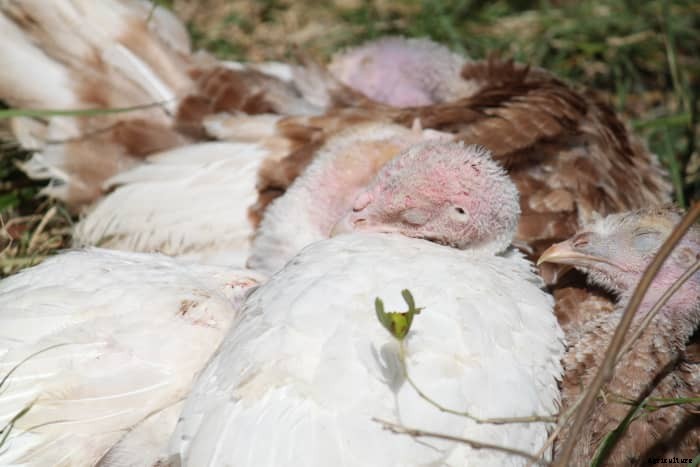
The first thing I discovered upon bringing home my first two turkey poults is that they are not actually turkeys. They are tiny puppies that have disguised themselves as birds, and I will accept no other explanation for their behavior. Wherever I went, the turkey poults wanted to follow. If I was out of sight, they would cry incessantly until I returned to view. At night, the only way to convince them to sleep (thereby allowing ME to sleep) was to wrap them in a towel and cuddle them until they dozed off. Once they were asleep, I would stuff the towel—turkeys and all—under my bed, where they would remain until morning.
Each brood of turkey poults I have purchased or hatched has repeated the same experience—extremely affectionate, needy, loving, and curious birds that want to be wherever you are.
They are not actually turkeys. They are tiny puppies that have disguised themselves as birds, and I will accept no other explanation for their behavior.
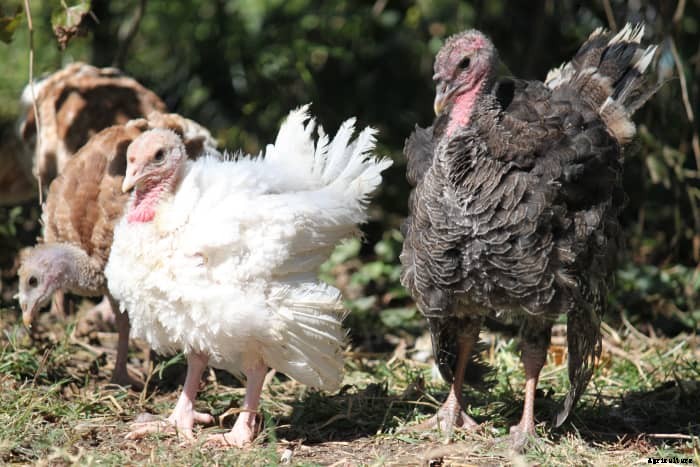
The next terrible truth I learned about turkeys is that they are absurdly entertaining. At just a few weeks old, my tiny toms—and some of my young ladies—would start to strut their stuff in impressive attempts at the tom turkey dance. If you thought for a second that you would be eating these impossible birds, that idea quickly dissipates the first time you see a baby turkey puff his downy chest out as far as it will go, fan out his tiny tail feathers, and extend his wings to the floor in his best impression of a big, grown-up turkey dance.
Something else I learned from all of this: sometimes girl turkey poults will dance too, making it impossible to tell who's actually a boy and who's a girl! Perhaps this is where the term "tomboy" comes from?
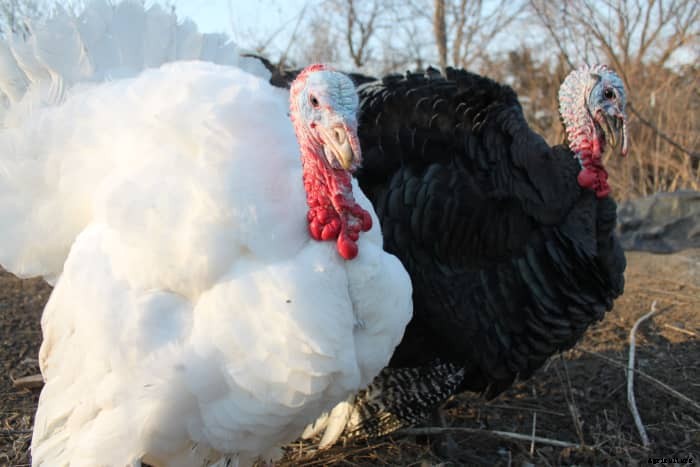
Although every turkey is an individual, and some will be less keen on you than others, the terrible truth about turkeys is that they love people. As a general rule, my turkeys have been affectionate to a fault. As chicks and teenagers, they were satisfied with cuddling into my lap for hugs and caresses, but as adults, my toms got the bright idea to hop the fence and go to a nearby convenience store to make new friends. Although they were only being friendly, the people they were fervently trying to befriend didn't know that, and I did get a letter from the city asking me to keep my birds better confined. As a result of these adventures, my tom turkeys now live in covered runs.
The toms even have a special dance that they do just for people. While the war dance comes with stomping feet and angry vocalizations, and the romancing dance comes with an outstretched wing, the dance the tom turkeys do for people is uniquely for us. It seems to serve no other purpose except to remind us just how gosh-darned excited they are to see us, as though they fear if we see them in a relaxed state, that we will lose our affection for them.
The hens are by no means immune from this fervent quest for our love, either, though they express it entirely differently. Another terrible truth I learned about turkeys after getting them is that the hens bark—loudly and incessantly—and this barking noise is apparently turkey for "I LOVE YOU."
The next terrible truth I learned about turkeys is that it really doesn't matter if you name them or not—it is impossible to ignore their distinctive personalities and character long enough to raise them for meat. Sure, you can try calling them names like "Drumstick" or "Nugget" if you think that will prevent you from becoming attached, but when the big day comes to butcher them, you're probably still going to "chicken" out.
I did go through with processing two of my turkeys. They were broad-breasted whites, and even though they were still young, they were already finding it challenging to walk and function normally. Processing them was the only humane option considering their declining health.
Even though I had never named them, even though I knew what fate awaited them, and even though I had processed many chickens before them, I still felt loss when the day came to have them butchered. No one warned me that turkeys will wriggle their way right into your heart, set up a permanent address there, and refuse to leave.
My heritage breed turkeys, who do not suffer the health maladies of broad-breasted breeds, have settled into the role of family pets rather than livestock. If they ever make an appearance at Thanksgiving dinner, it is more likely to be at the table rather than on it. The thought of butchering them has adopted the same place in my mind as the thought of eating one of our cats or dogs, something I never anticipated happening, considering my experience raising animals for meat.
No one warned me that turkeys will wriggle their way right into your heart, set up a permanent address there, and refuse to leave.