
Welcome to Modern Agriculture!

L. Holloway is an experienced keeper of chickens and other fowl who has spent nearly a decade educating others on their habits and care.
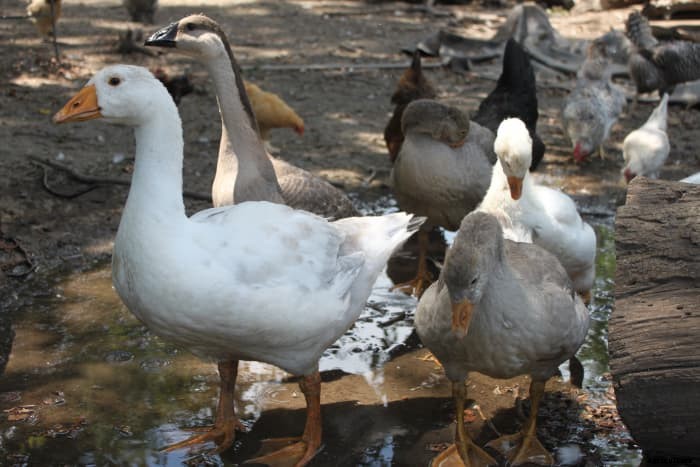
Geese get a bad rap. Almost everyone I know has a story about a goose or gander knocking them silly for getting too close to a nest, "goosing" them for the crime of existing within reach of their biting bills, or otherwise just being a cantankerous critter that doesn't like people. It would never even occur to most people that geese would make a good addition to their backyard flocks, but the truth is, aside from being tremendously useful, geese are also surprisingly friendly—even affectionate—towards their humans.
The fact is, if you were to ask me about the subject, I would say that my only regret about getting geese is that I didn't get them years sooner! They have proven to be the most delightful, economical, and entertaining animals in my flock—not to mention there is nothing in the world as cute or as impossibly soft as a baby goose. Visitors are delighted by their personalities and antics. My students have chosen their own favorites from the flock that they spoil rotten, and even my neighbors throw food out for them to bribe them closer for their viewing pleasure.
My geese have utterly failed to live up to the mean, nasty reputation, and they have surprised and delighted in virtually every possible way. Throw in their value as efficient and economical livestock, and you really just can't go wrong.
One of the strongest cases for keeping geese is that, in spite of their initial cost, they are remarkably inexpensive to care for and feed. They require minimal shelter, their favorite food is grass, and they're very easy to pen into a specific area since they aren't as nimble as other livestock species. With little more than a few stakes and some snow fencing, you can corral your geese in a particular area of the yard and have them feast on the grass and greens that grow there, mowing and fertilizing your lawn even as they nourish themselves.
Geese are seasonal layers, so you won't get eggs from them year-round like you can with chickens or ducks, but because it costs so little to feed them, it's not a problem to keep them on even when they're not producing eggs. When they are laying, they will produce huge, delicious eggs that are similar in richness to duck eggs and excellent for a variety of recipes.
That's assuming you want to eat them, of course. You may prefer instead to let your geese hatch a brood of goslings, or even incubate them yourself. Most geese will try to set a nest if given the chance to do so, so you shouldn't have trouble repopulating your flock with new geese if you have a fertile gander.
As meat birds, they might seem an unusual choice, but until recently in our history, goose was the traditional holiday feast. They are a practical choice over turkeys for a small homestead for several reasons.
For one, turkeys are difficult to sustain in a small space, as they are agile flyers, accident-prone, and susceptible to a variety of diseases. This means turkeys will likely have to be confined to covered runs, unable to take advantage of forage, and requiring that their meals be brought to them. Geese, on the other hand, can be penned easily. They are too heavy to easily take flight, requiring a sufficient running start and favorable headwind to get off the ground.
Geese are not nearly as accident prone as turkeys, and they suffer from very few avian maladies. As a result, you are more likely to see your investment in young birds result in healthy, mature adults, at lower cost than what you could expect from confined turkeys.
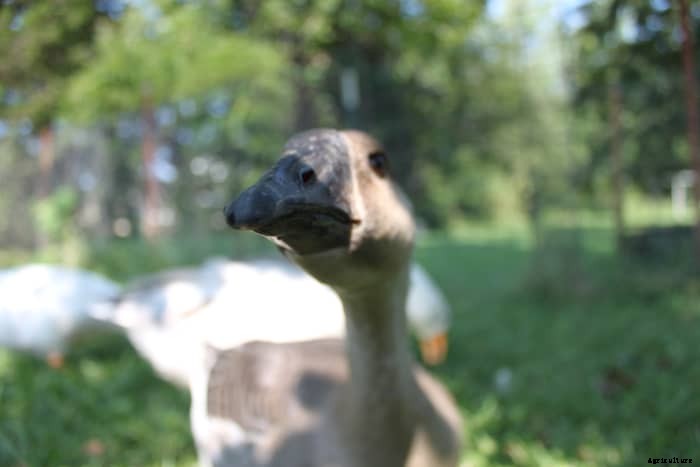
It may come as a surprise, considering the reputations of geese, to learn that they can be friendly. In fact, geese can be so affectionate, intelligent, and loyal that it isn't uncommon for people to keep them as pets rather than livestock—some geese will even seek physical contact, snuggling up to their owners and wanting to be held.
Some breeds of geese are especially people-oriented or docile, such as African browns, pilgrims, and American buff, but most varieties will bond strongly to the people who raise them, even the ones touted as "guard geese" by breeders and hatcheries.
Purchasing the geese as goslings will give you a good start, but it is even better if you can hatch them yourself and handle them from the moment they enter the world. This will cause them to imprint on you, and they will follow you faithfully wherever you let them for the rest of their lives.
This trait of geese (and ducks, too) makes them very easy to move from place to place. If you need to transfer the geese from one pen to another—perhaps to graze, or to isolate them from other animals or guests—all you have to do is call them and they will follow. If your geese have disappeared from the yard and you need them to come home in a hurry, call out for them and they will answer, returning with greater reliability even than wayward dogs.
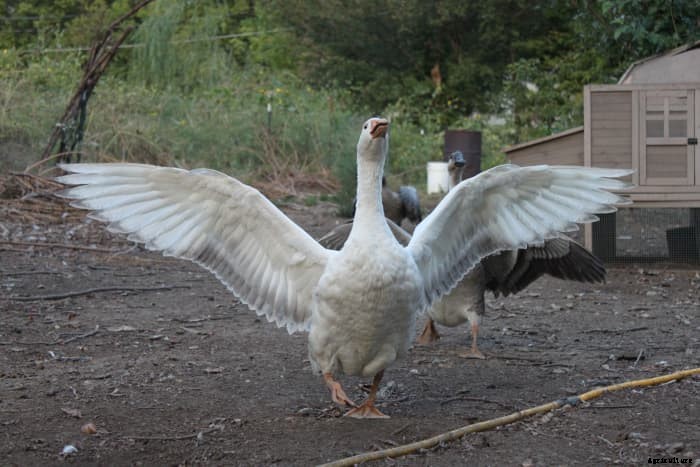
Much like chickens, geese have a variety of uses beyond the obvious tasks of producing eggs and meat. As I mentioned before, they can be pets, but they can also provide some useful services.
Your geese can be put to work as your own personal landscaping crew, mowing down grass and weeds, fertilizing, even weeding your garden in some cases. You won't be able to completely get rid of your lawnmower and weed eater, but they will cut down significantly on how often you have to mow or pull up weed trees because they spend the vast majority of their time wandering around and nipping off grass and other greens.


