
Welcome to Modern Agriculture!

Maggie Bonham, or Margaret H. Bonham, is a multiple award-winning pet author and expert. She has written more than 20 books on pets.
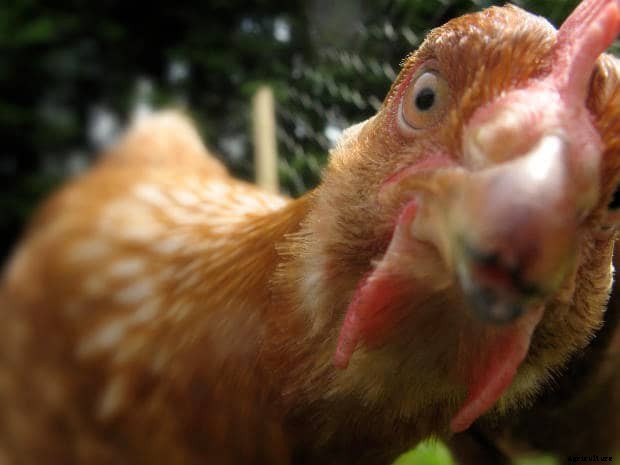
"Hi, I'm Maggie, and I'm a chicken addict."
You may be laughing right now, but I'll admit, I have a chicken problem. Like many of my fellow chicken owners, I've been befuddled by what is now termed "chicken math." In chicken math, 6 chickens somehow equal 24, 15, 57, or 108. Grown adults who have gone to college, and in my case, have engineering degrees, are seemingly befuddled by the concept that we're only going to own 6 chickens (or whatever the number). As a result, we end up owning a whole flock of birds.
Oddly enough, it seems like an innocent sort of hobby. I wanted fresh eggs and maybe some birds to provide meat. I even thought they'd be entertaining. Instead, I found myself purchasing fuzzy-butt chicks for one to five bucks. I told myself that they were cheep, er, I mean cheap, and I could afford them. I also reminded myself that chicks do die and that despite all the best efforts of sexing, some cockerels (baby roosters) get slipped into the pullet (hen) bin.
It's more insidious than that, however. A chicken isn't just a chicken. There are brown egg layers, white egg layers, blue and green egg layers, and even chocolate egg layers. There are bantams (miniature chickens) and standards. Then there are breeds such as Rhode Island Reds, Buff Orpingtons, Leghorns, Ameraucanas, Easter Eggers, Barnevelders, Silkies . . . well, you get the picture.
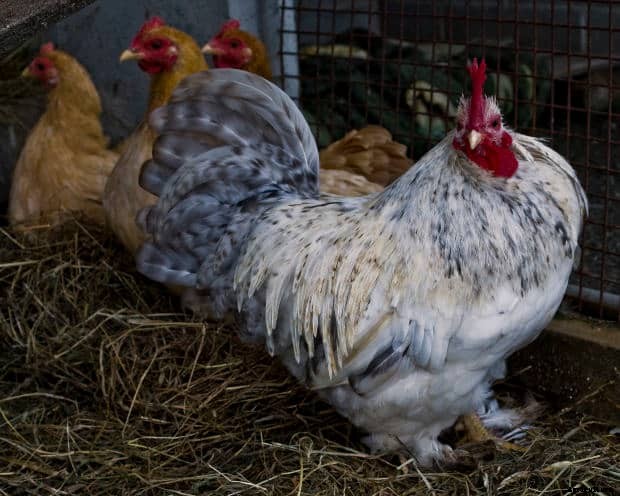
The reality is that chickens have personalities and they're entertaining. You can sit and watch chickens and their flock dynamics for hours with fascination and not be bored. (Try that with television!) Some chickens are friendlier than others, and some, like the bantams, are bred to be pets rather than food or egg layers. Once you get beyond the brooder stage, they're ridiculously easy to care for: feed, water, adequate housing (which includes predator protection, usually a good fence), and space is all they need. Also, they make you breakfast nearly every day—what a useful pet.
Even at the brooder stage, they're pretty simple to care for. You keep them in an area under a brooder lamp, make sure the temperature is right, keep the chicks contained and free from drafts, and add feed and water. They're ridiculously cute, too.
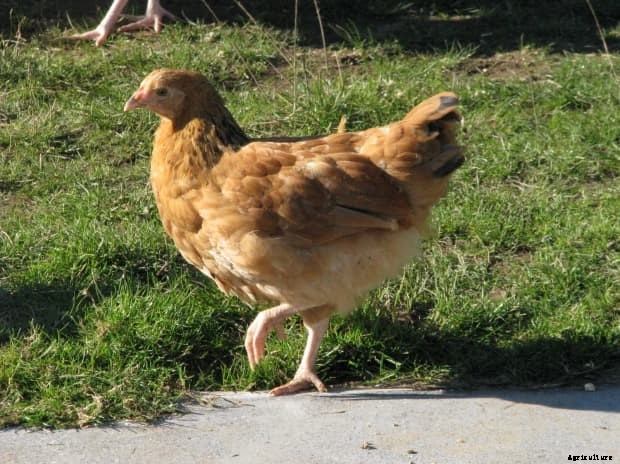
Most people who live in an urban environment can't have as many chickens as I have (24 at present), however, it doesn't mean that you can't have chickens at all. Many municipalities have allowed urban chicken owners to have small flocks. Check out your current laws either by contacting your municipality or look at the laws as they are updated on BYC.
One handy fact about chickens is that they come in two sizes: full and bantam. The bantam chicks lay smaller eggs, but they're a lot smaller than their full-size counterparts (about ¼ the size of a regular chicken). What's more, they're usually friendlier and more people-oriented than the bigger guys. Plus, smaller chickens equal less feed, less poop, and less space needed.
Most municipalities ban roosters (because they're noisy), but those that allow chickens usually allow a small flock. You'll need a coop big enough for your chickens that won't be an eyesore to your neighbors (you can build or buy one), and, of course, you'll need chickens. You can get them at a feed store, or, if you're really an urban dweller, you can order them online from various hatcheries.
If you do decide to get chickens, remember that chickens are plural. A single chicken is an unhappy chook. You need at least a buddy to keep her happy, since chickens are flock creatures. More, of course, is better, provided that you have the space for them.


