
Welcome to Modern Agriculture!

Seafarer Mama/Karen and her family are members of an intentional community in Massachusetts and love the company of their neighbors.
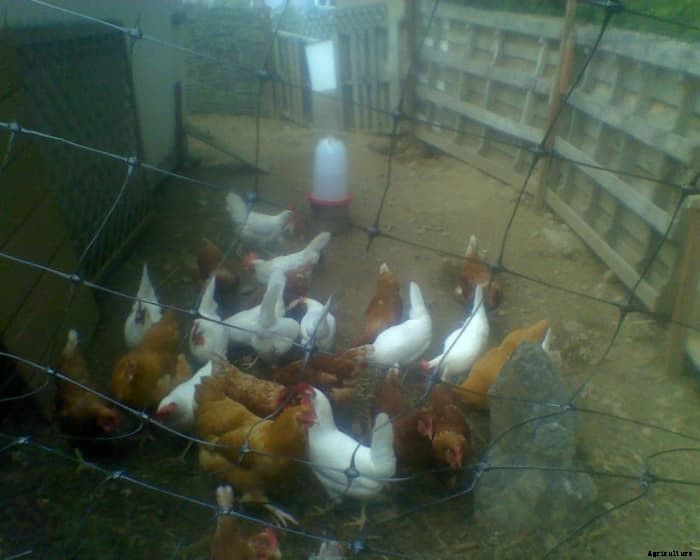
If you've never considered keeping chickens for the nutritious eggs they lay, it is probably because taking care of them can be lots of work and needs its own budget to maintain. I am sure that I would not have thought of keeping chickens before I moved into a co-housing community where there is a group of neighbors ready to help with the chores. The benefits include sharing the work and the financial burden, having fascinating animals to interact with, and enjoying the most nutritious eggs you can ever eat: straight from the hens!
We started with about 35 hens for our coop. There is an abundance of the white Leghorns, some golden Buff Orpingtons, a few Americunas, brown Brahmins, and Jersey Giants.
As you can see in the pictures provided below, there are many materials for food storage that can be recycled/re-purposed, such as water jugs for the grit and oyster shells, and as scoops for pouring food into the feeders.
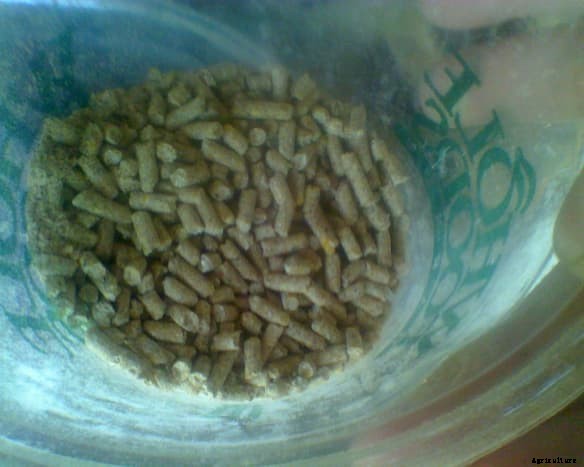


A container of the nutrient-rich food pellets we feed our chickens every day.
1 / 3Chickens love to eat all day. Their diet is mainly organic matter, such as most kitchen scraps (greens are safe, as are most fruits). We supplement with food pellets and corn scratch.
Chickens will eat the bugs out of your garden beds, or the Japanese beetles off your trees. We usually let them roam free for about half an hour or so right before sundown to give them time to do this before they put themselves to bed. They are less likely to spread out so far as to make us need to chase after them to get them into the coop for the night. Since they are little poop factories, they also fertilize the gardens.
The feeders are giant plastic jugs with openings at the top to pour the food pellets in. The base of the jug has spindly "fingers" that fan out to make small sections in the red "saucer" for individual birds to peck from. This allows a large number to feed at the same time. We have 2 feeders to give them more room. Each morning and evening we fill them up so that the chickens can "graze" throughout the day and they have food to start their day with in the morning.
In the winter, when the temperature dips below 20 degrees Fahrenheit, we put the food in the tray and mix it with hot water to make a mash for them to eat. This helps them keep their bodies at the right temperature, in addition to having a heat lamp in the coop for the times they don't get out for enough daylight exposure.
We usually take a handful of scratch when we want to open the coop or run door to fill waterers or feeders. If we throw toward a distant spot away from where we are entering, the birds will be distracted enough to give us space and not try to escape. This strategy saves much time and energy.
The chickens need grit so that their stomachs can grind down the food they eat into usable nutrients. Grit pebbles are usually grey. They also need (white) oyster shells for calcium, so that the shells of their eggs are thick and strong, and don't crack very easily.
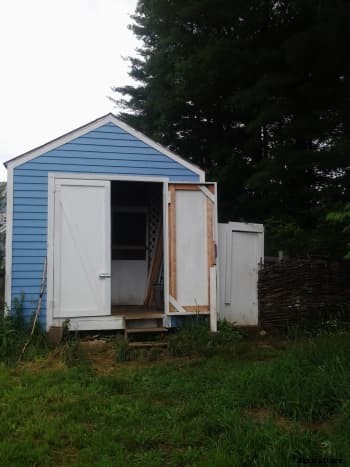


The outside of the coop we built for our chickens. The door to the run is to the right.
1 / 3The coop that our team built for the chickens was the result of many hours of research and labor. Once a location was found, team members spent time building the foundation, run fence, protective chicken wire run covers, sally port, doors, windows, stairs, nesting bucket rack, roosting bars, and the rigging for hanging the feeders. Last summer, we worked to make and paint the siding for the coop that protects the clapboard's inner structure.
There were carpenters and handymen on the team, but most of the team are avid DIYers who love to find the most affordable materials to create a functional home for our chickens to be comfortable living in. A happy hen is an egg-laying hen.
The outside of the coop is insulated, but it also has windows for fresh air circulation. There are doors like the sally port for the chickens to run down, and the door for sweeping out the dirty old hay when mucking out once a week.
The inside of the coop has food and tool storage areas in the front. We use metal trash cans for the food to keep the food fresh after the packaging has been opened, and to keep out foraging critters who may come along at night, such as rats, foxes, raccoons, etc. There is a door with a latch to keep the chickens in their own living room area. That is where they roost for the night, eat, drink, poop, and lay eggs in the hay-lined buckets that are there for them.
It sometimes takes a village to raise a flock of hens for laying eggs. Instead of having to attend to them year-round, we have teams of 2 households per week who split the chores, and the schedule rotates through all of the households involved on the team. In return, there is a rotation that one household has a dozen eggs delivered to them every week or so. The deliverer works down the list until all of the member households are covered.
Below is a table that outlines the chores that need to be completed so that our chickens stay fed with a diverse diet, supplied with fresh water, and given ample opportunity for exercise.
This is a summary of the current breakup of chores for our Co-housing community's Chicken Club Team (really a sub-team). Each household usually has a week of duty every 8 weeks or so.
Throw scratch; let down sally port to give chickens access to the run
Give chickens some supervised free range time in the community garden
Clean out waterers with a bleach and water solution, then fill them with fresh water ~ 1 at a time
Fill waterers (fresh every day) and feeders
Throw scratch; fill waterers and feeders
Close up sally port to keep hens in run; open muck-out door
Collect eggs and note amount on record sheet
Collect eggs and note final count for the day
Move feeders and waterers out of the way; Rake out old hay into a wheel barrow and dump onto designated compost area
Clean some of the poop out of the coop (pile outside)
Count chickens to make sure they are all in
Wash out all nesting buckets with bleach-n-water solution and line with fresh hay
Replace hay in nesting buckets when needed
Close and latch sally port, roosting room door, and front doors
Lay down fresh hay; Fill feeders, grit, and oyster shells; put feeders and waterers back in usual places
Bring kitchen scraps to hens as treats
Deliver a dozen eggs to the next member household on the list
Re-open run door and throw scratch
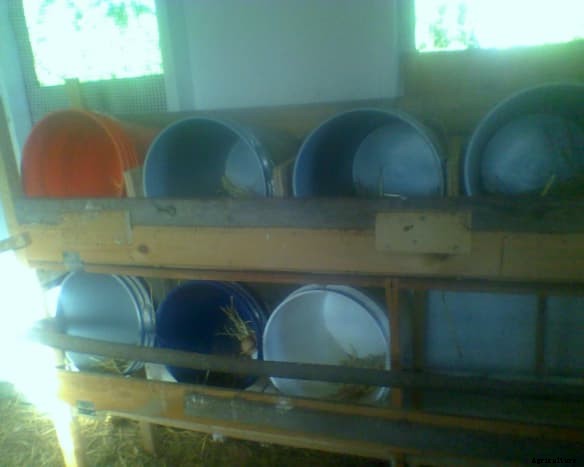


Nesting/Brooding buckets filled with hay
1 / 2Our co-housing community's chicken-keeping sub-team has more than 7 members, so it takes more than a week between each dozen eggs that are delivered to us. When we do have fresh eggs delivered to us, we make egg salad, omelets, or scrambled eggs with cheese. Sometimes we fry them. There is a variety of colors and sizes in each dozen that is delivered, and the yolks are big and deep yellow.


