Welcome to Modern Agriculture!


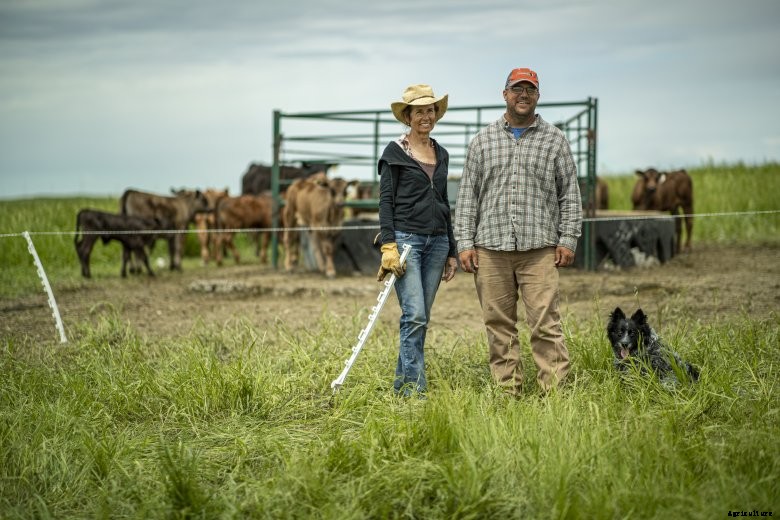
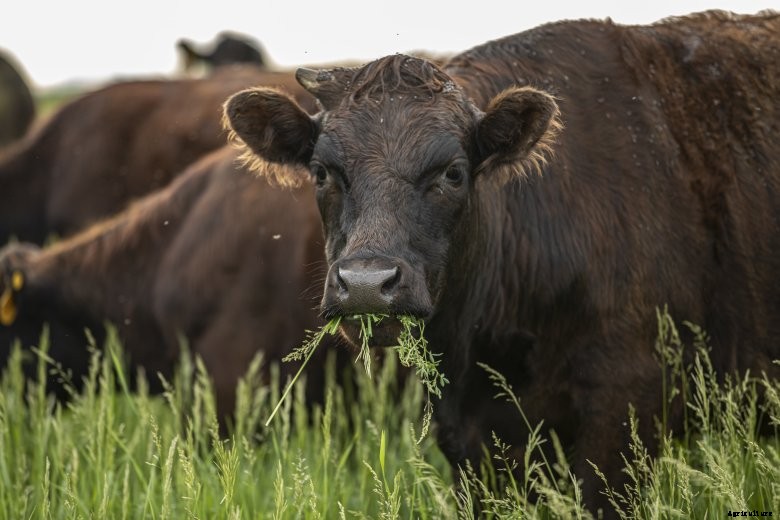
Jeannie Franceus strains against a tangle of poly wire fencing and posts. With nimble bare fingers she untangles strands of the white wire, then whips a short section of fence over a lush growth of prairie grasses, pulling hard and fastening it to a portable post. Curious Angus cows and their calves skitter around her, sniffing. It’s moving time.
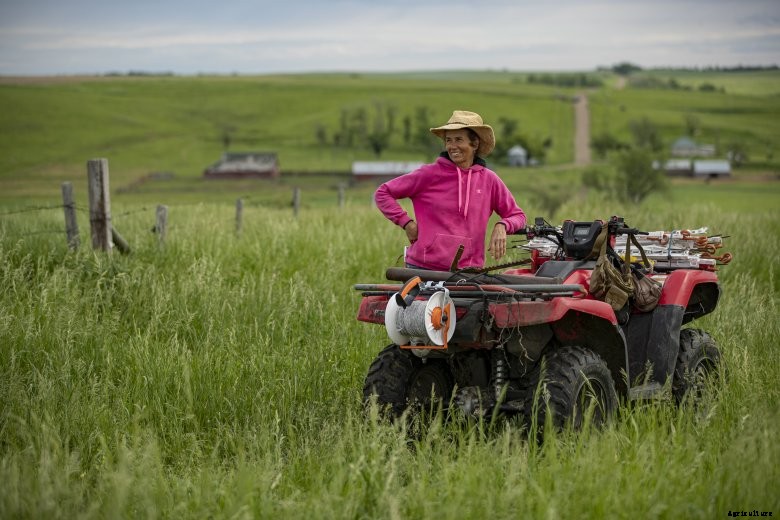
With the fence tight, she dusts off her hands on the short walk back to her four-wheeler. “There’s something about the nurturing aspect of grazing cattle and moving cattle that gives me so much fulfillment,” says Franceus. “I love seeing them go onto fresh grass and I love connecting with them. They were all crowding around my four-wheeler the other night and one was actually nibbling on my hat.”
Franceus’ ranch sits outside Wessington Springs, South Dakota, and consists of about 800 acres. She leases her land to cattleman Mark Guericke of White Lake, South Dakota.
Guericke’s goals with his cattle are close to her goals with the land, says Franceus. One challenge is knowing when in the spring to bring the cow-calf pairs to the ranch. “In the middle of April we could get a blizzard,” she explains. “It’s important for him to keep cows close to his place for calving, and it’s important for me to have cows here early to put pressure on the undesirable brome and the bluegrass, which are cool-season invaders. When we get a late start grazing, we make more bluegrass out here. We don’t want that. So that’s a challenge for us to work together on our goals.”
It’s important for renters to understand her rotational grazing program, says Franceus. “I had a renter who wasn’t happy with me moving his cows so quickly. He just felt like that was affecting their performance. The takeaway in this relationship between landowner and cattleman is that it’s important to be up front with what is important.”
Sometimes there is a tendency for renters to treat you in a certain way because you’re a woman, she says. She’s been at it long enough that the acceptance is there now. “That’s really huge.”
Guericke is a first-generation rancher who has been running cattle for 11 years. He has been working with Franceus for two years. “She’s taught us about soil health and rotational grazing,” he says. “I lease from three people now, but Jean has the most intensive program. My calves come off heavier up here by 70 or 80 pounds every year.”
The rotational grazing means the cows aren’t eating down the same 100 acres day after day, says Guericke. Moving them gets them into mature grass that helps them put on weight, he says. “In fact, I plan on implementing this rotational grazing on some of our other pastures I’m renting – if those other landlords are willing to work with me on it.”
Erosion control and water management is another benefit of rotational grazing, says Guericke.
“I’ve seen big results in the changes in my cattle. The cows stay in shape better. The condition scores went up on my cattle since we started rotating them. The calves are heavier. Fly control is a lot easier with this rotational grazing.”
Guericke says he hasn’t had many sick cattle in the past two years. “My vet bill has gone way down. It’s a little bit more work moving them all the time, but Jean takes care of the vast majority of it. She calls me when she wants help moving them, I show up here, we move them, and I get back on with my work. She’s really instrumental in all this. She takes the majority of the work and puts it on her shoulders. It’s a really good working relationship for me.”
After the first two or three moves, “All we have to do is drive out there in Jean’s red four-wheeler and do a little hollering, and here they come. Open the gate, let them through, close it again, and you’re done.” Fence maintenance is the only chore, he says.
Guericke says his objective is making money and getting bigger calves. “Rotational grazing has cut out all the creep feed for me. It saved me a lot of money on feed costs. And having fresh grass in front of them all the time has really cut back on my mineral use. It works well for the rancher if you just can open your mind to it.”
Looking out over the tidy farmstead in a valley below, Franceus talks about the ranch. Her parents bought the land in the early 1960s. “My mom sold a quarter of land in Illinois in order to purchase this place,” she says. “It was predominantly covered in native grasses. My dad planted a pasture to crested wheat grass so that it would have some cool-season grasses for grazing. And now years later we are predominantly brome and bluegrass, which are cool-season grasses. Our biggest conservation challenge now is limiting the invasive cool-season grasses – the introduced species – and trying to bring back the native grasses.”
Brome and the bluegrass are proliferating, she says. “They’re very aggressive, and they easily overwhelm the native species. We try to get cattle out there early in the spring to use the cows to cut back the brome and the bluegrass.”
When her father ran the ranch, they had it sectioned into five pastures. Now, there are 20 pastures. “We qualified for the EQIP program and now have five watering points for the cattle,” says Franceus. That is a huge improvement to get water out to cows onto those remote pastures, she says.
EQIP is a USDA-funded program that ranchers and farmers can qualify for to aid them in meeting unique challenges on their land, by aiding them with technical assistance and helping deliver environmental benefits. The water assistance was just one.
Franceus’ father died in 1997 and the renter who had been there for 35 years died the next year. “That was my cue,” she says. “I was pretty much left to take care of this place. Found that the thistle overgrowth was huge. Every draw was filled with Canada thistles, and the whole creek was lined with thistles. Musk thistles were coming in, too. They are extremely invasive. If you see one musk thistle you ought to walk a mile to kill it because there are probably 700 out there.”
She was torn as to how to proceed on this conservation challenge. “It was so bad I was told to have the whole place aerially sprayed,” says Franceus. “But then Dave Steffen with the NRCS explained that if we did that we’d lose all the wildflowers and broadleaf plants. All the diversity would be gone. So I started spot spraying with a very effective chemical. I used it judiciously, and very pointedly,” she explains. “It did a fabulous job for us.”
She is grateful to the South Dakota Grassland Coalition for teaching her how to do rotational grazing. “I learned that thistle control is all about competition,” says Franceus. “If you beat the grass up, that gives the thistles an advantage. If you beat the thistles up, that gives the grass an advantage. So if you have a thistle problem, you graze it hard and knock those thistles down.”
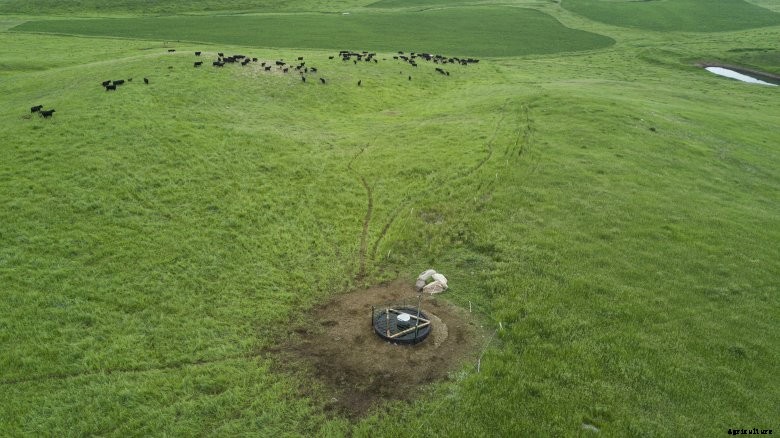
Constantly moving the cattle is a weapon against erosion. “I have seen a cow path turn into a major safety hazard,” says Franceus. “You can drop a four-wheeler in it and flip over. You can drop a pickup axle in it. These hills and too much grazing pressure creates erosion that is potentially life threatening and disastrous. We keep the cows moving and that keeps those cow paths covered with healthy vegetation.”
She gets excited talking about soil health. Saliva, milk foam, feces, and urine feed microbes in the soil, she explains. “Grasses are using carbon dioxide to make root exudates, and those sugars feed the microbes in the soil, and the microbes turn into organic matter. How could it be any more perfect? It’s a self-cleaning system.”
Her new goal is natural fly control. “Mark’s been open to the weird things that I do,” says Franceus. “We’re using vinegar and baking soda to balance the pH in the cows’ rumen, and it’s offered to the cows free choice.”
Rod Voss, a rangeland specialist with the NRCS who did an initial rangeland inventory on the ranch, is impressed with the changes Franceus has made. “She had such a desire to learn and to make the place better,” says Voss. “She is really trying hard to use the livestock as a tool to better manage the grass. She tries to knock back the challenges of invasive species. She tackled the thistle problem and that took a lot of years and a lot of effort to accomplish. Now she’s taken on invasive grasses, which is probably going to be an even stronger challenge.”
As the west wind whips the big brim of her straw hat, Franceus looks off pensively. “I’m not going to be doing this forever. I’m hoping Mark will take over and want to eventually take care of this land the same way that I would take care of it.”