
Welcome to Modern Agriculture!

Dairy farming in Australia
Dairy farming provides a good opportunity for the self-employment of unemployed youth in Australia. Also, it is an important source of income generation to small/marginal farmers. Australia’s 3rd largest rural industry is the dairy sector and the main export destinations are China, Singapore, Malaysia, Japan, Indonesia, and the Middle East. Australian dairy products are trusted by consumers around the world who are looking for premium quality, nutrition, and safety. Then, this global reputation for quality is backed by stringent biosecurity and food safety systems and a transparent supply chain Dairy farming in Australia.
The dairy farming business is a safe business for the below reasons;
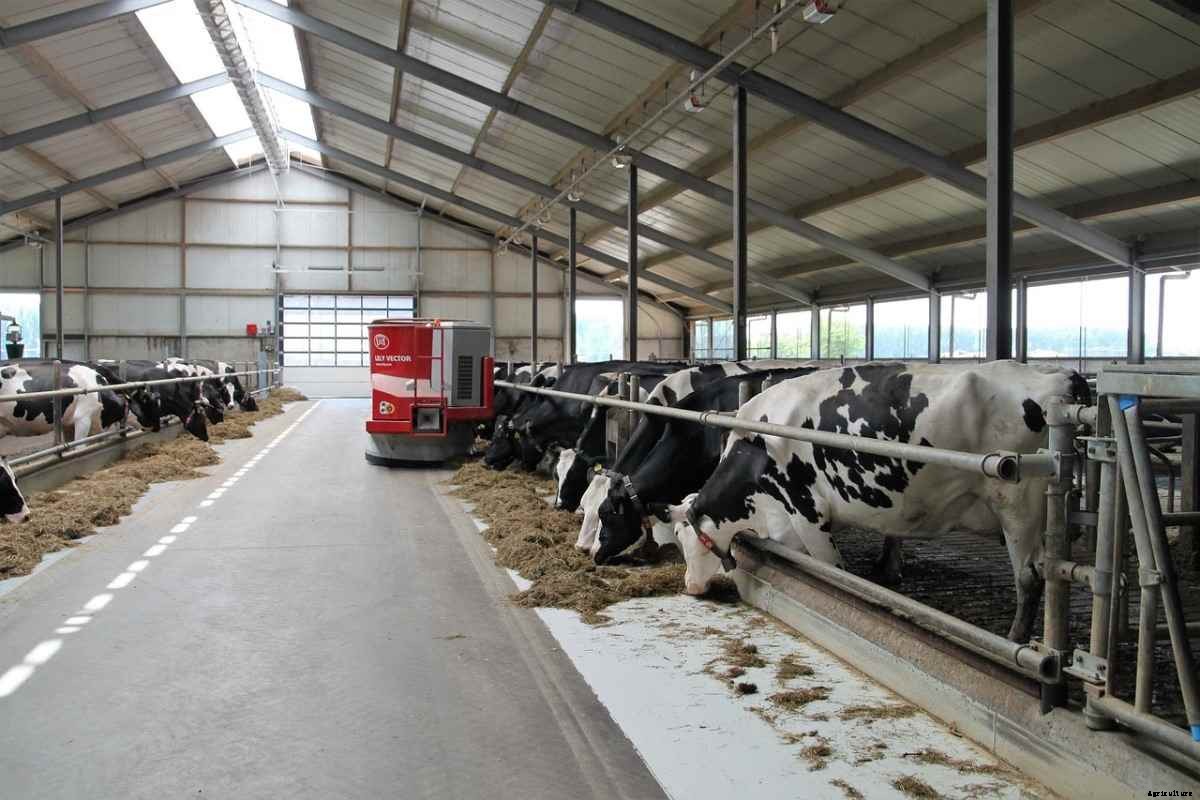
Most dairy production in Australia occurs in south-eastern Australia. Though, all states have dairy industries that supply fresh drinking milk to nearby cities and towns. A range of high-quality consumer products is produced in most states.
Australia’s dairy sector gives fresh and processed milk products. Australia has expertise in temperate and tropical dairy farming, with a particular focus on pasture-fed operations and open, versus shed-based or intensive, herd management. Australian dairy herds are predominantly pasture-fed, and the industry operates with high efficiency. Also, the Australian dairy industry is recognized globally for its expertise in livestock genetic research, breed development, and reproductive physiology as well as food product traceability and electronic farm management methods.
Australian dairy farming services support all necessities of the farming community, particularly dairy productivity, genetics and herd quality, animal health and nutrition, pasture improvement, soil management, waste management, and other specialized farming needs. Usually, Dairy Australia is funded by the Dairy Services Levy, a tax paid by farmers based on milk production and acts as a funding body through which the federal Agriculture Department provides funding for rural research and development in Australia. Australian dairy attracts funding at the project level from state governments, universities, and other dairy support organizations. It was known as the Dairy Research and Development Corporation.
The dairy industry’s key points regarding innovation are that;
A dairy herd is made up of four groups of cattle:
Cows – These are the females, who give birth to calves and produce milk.
Bulls – Only a few are required on a dairy farm, these days most dairy farms use artificial insemination instead.
Heifers – Young female cattle. They are the ‘teenagers’ of the herd and haven’t had a calf or have had one calf only and they are the second biggest group in the herd.
Calves – Baby cattle and female calves grow into heifers and then milking cows. Male calves can be sold for veal production or raised to become breeding bulls.
The popular dairy breed in Australia is the Holstein and Friesian. These black and white color cows which originate from the Netherlands via America are known for their high milk production, large size, and docile temperament. Also, these are the most popular breed worldwide, so farmers have the biggest choice of sires (males) for their cows.
The second most popular breed in Australia is Jerseys. Originating from the English Channel Island Jersey, these cows are smaller in stature and also caramel-colored, producing a smaller volume of milk which is rich in butterfat and protein. These cows are popular and especially in grass grazing farms, because of their hardiness, size, fertility, and again their high butterfat and protein in their milk.
There are many other dairy breeds available in Australia are Australian Reds, Guernsey, Brown Swiss, and many others which all have their benefits. Also, many farmers have cross-bred cows, which may be a mix of two or more breeds. Cross-bred cows are known for their hardiness, heat tolerance, fertility, and good production.
There are several breeds of dairy cows in Australia. Holstein, Jersey, and Aussie Red are the most popular dairy breeds all have distinctive characteristics.
Holstein
Jersey
Aussie Red
Illawarra
Brown Swiss
Guernsey
Ayrshire
The common types of milking sheds in Australia are herringbone and rotary sheds. There are a smaller number of robotic sheds emerging and each dairy farm has a milking shed where the cows are milked by machines. Then, the milk is held in a vat before it is collected each day and taken to the factory by a milk tanker.
One of the most common milk sheds is the herringbone shed, which has a central sunken pit and a raised platform on each side where the cows stand whilst being milked. The milking machines are located within or above the pit and the operators apply one set of 4 cups of the milking cluster to the udder. Although, herringbone sheds change in length depending on the herd size and range from as small as 6 cows per side up to 30 or even more cows per side.
Though a rotary shed is a large circular platform that rotates like a carousel whilst the cows are being milked. The cows walk onto the raised platform at the entrance point and also an operator applies the milking machines. Then, each cow is in an individual stall and the platform slowly rotates so milking is completed by the time the cow has completed the circle.
There are a small number of robotic dairies is also called Automatic Milking Systems in Australia, where a robot milks the cows without human involvement. The dairy cows walk to the dairy at their desire and enter the milking booth where they are rewarded with feed. Then, the robot washes the udder and sensor-guided cups are applied to milk the cow. The robot sprays disinfectant onto the teats after milking and also the gate opens to allow the cow to leave. Robotic milking booths are expensive to install and only handle a limited number of cows each day.
The science of climate change is clear and recognized by governments and industries all around the world. It poses both opportunities and risks to the Australian dairy industry and dairy Australia is committed to supporting the dairy industry respond to the opportunities and challenges of climate change.
Climate change is threatening key resources that support life on earth, with the global warming impacts already being felt. This is recognized by governments and industries all around the world. Though, at the same time demonstration of dairy’s mitigation efforts is non-negotiable and is already becoming a fundamental part of business planning.
Climate change poses important new challenges for Australian agriculture. The dairy industry supports a comprehensive government and industry response to climate change. Though the interaction of any new policy initiatives with commercial markets and existing trade policies will be complex and multi-layered and investing in understanding industry value chains will be important to help avoid unintended consequences. Inadvertent imposts of government approaches on export exposed industries, which do not have the opportunity to recover costs, can significantly affect the international performance and competitiveness of Australian food industries.
Australia exports live dairy cattle mainly pregnant heifers to numerous countries around the world, for example, China, the Middle East, South-East Asia, and Mexico. Australia is recognized as being free of many serious cattle diseases like foot-and-mouth disease and bovine spongiform encephalopathy.
Australia has a different number of live dairy cattle exporters and related organizations who can help with all aspects of the export-import process.
Fresh milk – Australian fresh milk consumption has been steadily increasing and demand is shifting from regular milk to modified milk types such as reduced and low-fat milk.The Australian fresh milk market is now dominated by 2 major milk processors, National Foods andParmalat.
Butter – Australian butter production changes significantly eachyear due to milk availability and internationalcommodity prices. Also, butter includes anhydrousmilkfat (AMF), which is simply dehydrated butter.Anhydrousmilkfat is used for export and domestic foodprocessing.
Milk powder – Australia produces an array of different milk powders and these powders include whole milk powder (WMP) and skim milk powder (SMP). This milk powder production has decreased significantly over recent years due to falling milk production. Though, strong milk powder prices have seen production increase over the last few years. The export market consumes over 80% of Australia’s milk powder production and this is due to the ready supply of fresh milk within the domestic market. Domestically, milk powder is used as a food ingredient.
Cheese – It is a major product of the Australian dairy industry. Although this product is important to the dairy industry its importance is diminishing. Then, due to lower milk availability, production has decreased.
Whey products and Casein – Whey is defined as the residual product after milk is processed. Casein is the chief protein in milk and also it is the essential ingredient of cheese. The domestic market consumes about 30% of Australia’s whey production and the remaining 70% is exported to markets such as China, Singapore, the Philippines, Indonesia, and Japan.
Dairy foods are a main source of nutrients in the Australian diet. Milk is one of the most complete of all foods, that containing nearly all the constituents of nutritional importance to humans. Dairy foods are the richest source of calcium in the Australian diet as well as being important contributors to protein, vitamin A, and B, riboflavin, and zinc.
Usually, Australia has a long history of research and development into the role of nutrition in improving dairy farming productivity. By integrating pasture, forages, and crops with supplementary feeds into the herd’s diet, dairy farmers can achieve optimal productivity, feed conversion efficiency, and health.
Dairy cattle fodder includes cereals like oats, barley, corn, wheat, and cotton seeds. Oaten hay, wheaten hay, and vetch are grown for grazing and fodder conservation along with Lucerne, ryegrass, and clover. Oaten hay has been the most popular fodder export in recent years. Due to its sweetness and soft texture, oaten hay has proved to be readily eaten, highly digestible and a good source of fiber for stimulating rumen function, maintaining animal health, and also increasing milk production.
These have enabled Australia to remain free of foot-and-mouth disease, helping Australian-grown fodder achieve worldwide recognition as a safe fiber source with low fertilizer and chemical inputs. The dairy industry also provides consumers with a safe and highly nutritious food source, embedded in the Australian culture.
Health and nutrition policies must aim to promote the health and wellbeing of Australians. They should encourage consumption of nutrient-rich core foods like dairy foods (which are under-consumed in the Australian diet), that are associated with positive health outcomes and reduced incidence of adverse health outcomes.
Dairy farmers rely on a secure and safe water supply to keep stock fed and watered and to produce safe and healthy food. Water is used on a farm for three main activities like growing pastures, dairy shed operations and cleaning, and for drinking by the dairy cattle.
Key points for the dairy industry include the potential for;
The main consideration with water use and potential contamination is that water resources are not confined to a particular farm or well site. Any contamination of water resources will have a wider regional impact on several farms and potentially a large part of the dairy industry. A milking dairy cow drinks about 30 to 50 gallons of water each day and during periods of heat stress water intake may double. Water weighs about 8.35 lbs/gal, so milking dairy cows consumes as much as 420 or more pounds of water daily.
Water is an important nutrient for the milking cow and water intake is critical to obtain maximum production from dairy cows. Without proper water intake, productivity will decrease, and which can lead to economic loss. The quantity of water dairy cows consume is vital. Limiting water availability to dairy cattle will lower production rapidly and severely. The water quality problems that affecting dairy production in Australia include high concentrations of minerals (excess salinity), high nitrogen content, bacterial contamination, heavy growth of blue-green algae, pesticides, or fertilizer products. Monitoring of water quality during periods of reduced production or nonspecific diseases must be one aspect of an investigation of herd health and production problems.
In case if you miss this: Pig Farming Tips, Ideas and Secrets.
In Australia, dairy farm invests in research and analysis on dairy farm economics, profitability, industry trends, and sustainability. It cooperates with other organizations and the private sector, including Agriculture Victoria and the Australian Dairy Industry Council (ADIC). Bankers have a mutual interest in the dairy business success of farmers. Annual summaries of financial performance plus monthly cash flow statements underpinned by assets, milk production, and longer-term plans are important things to take to a bank meeting.
Other key documents include;
The development of a National Food Plan offers the opportunity to comprehensively and consistently observe the issues affecting the future of the food industry in Australia. Then, this is a joint submission from Dairy Australia and the Australian Dairy Industry Council (ADIC).
The ADIC is the policy for the Australian dairy industry and it represents all sectors of the industry on issues of national and international importance. Its constituent organizations the Australian Dairy Farmers Limited (ADF) and the Australian Dairy Products Federation (ADPF) represent the interests of dairy farmers, manufacturers, processors, and traders across Australia, respectively.
Dairy Australia is a dairy industry-owned service company, whose members are farmers and industry bodies such including the ADF and the ADPF.
The dairy industry believes the National Food Plan should support competitive and sustainable food industries in continuing to provide a nutritious, secure food supply. An integrated government framework will be required, and focusing on factors government can influence while remaining aware of how these actions can affect the viability of food industries. Given the right environment, the dairy industry in Australia will continue to innovate to improve environmental and health outcomes and support prosperous regional communities.
Climate change policies should not discourage food production, but address the challenge of reducing greenhouse gas emissions from food-producing systems and boosting productivity to meet increasing world food demand.
Increasing the flexibility of export markets and improving Australia’s access options and opportunities is critical to give farmers and company’s confidence in their long-term viability and to drive future growth and investment.
Water policy must apply consistently and equitably across all major water users, so land use change does not undermine agricultural productivity.
Farmers want to do what’s best for their cows and ensure that, regardless of the situation, and they are proud of the way they treat their cows. Some common diseases of dairy cattle are Johnes Disease, Facial Eczema, Facial Eczema Spore Count Data, Conditions of the eye, Down cows, Conditions of the reproductive system, Lameness, Botulism, Sudden Death, Calf Scours, Skin Conditions, Sudden Drop in Milk Production, Bovine Viral Diarrhoea Virus, Conditions of the digestive system, and Theileria.
Many animal diseases can be prevented through good herd management, proper nutrition, and vaccinations. Cattle receive specific vaccinations like vaccinations for anthrax, infectious bovine rhinotracheitis (IBR), and many other diseases.
Disease prevention helps to avoid animal suffering and death, transmission to other animals or people, and production losses for farm animals. Also, regular vaccination can help reduce bacterial disease, meaning vets can safeguard precious tools like antibiotics for use only when necessary.


