
Welcome to Modern Agriculture!

Today, let us discuss Small Scale Fish Farming and its requirements.
Fish farming is a structure of aquaculture in which fish are raised in enclosures to be sold as food. It is the fastest rising area of animal food production. Today, about half the fish consumed globally are increased in these artificial environments. Commonly farmed species include salmon, tuna, cod, trout & halibut. These “aqua farms” can take the form of mesh cages submerged in normal bodies of water or concrete enclosures on land.
According to the United Nations Food & Agriculture Association, approximately 32% of world fish stocks are overexploited, depleted or recovering & need of being urgently rebuilt. Fish farming is hailed by some as a result of the overfishing problem. However, these farms are far from benign & can severely damage ecosystems by introducing diseases, pollutants, and invasive species. The damage caused by fish farms varies, depending on the type of fish, how it is raised & fed, the size of the production, and where the farm is located.
Demand is increasing for fish & fish protein, which has resulted in widespread overfishing in wild fisheries. Farming carnivorous fish, such as salmon, does not always decrease pressure on wild fisheries. Carnivorous farmed fish are generally fed fishmeal and fish oil extracted from wild forage fish.
Fish farming could range from large scale industrial enterprises to ‘backyard‘ subsistence ponds. Fish farming systems can be distinguished in terms of input levels.
In extensive fish farming, (economic) inputs are generally low. Natural food production plays an especially important role, and pond productivity is relatively low. Fertilizer may be used to increase pond fertility & thus fish production.
In semi-intensive fish farming, a moderate level of inputs is used & fish production is increased by the use of fertilizer and/or supplementary feeding. This means higher labor & food costs, but higher fish yields more than compensate for this usually.
In intensive fish farming, a high level of inputs is used & the ponds are stocked with as many fish as possible. The fish are fed supplementary food, & natural food production plays a minor role. Because of the high production costs, you are forced to fetch a high market cost in order to make the fish farming economically feasible.
In many parts of the world, fish have presented an important part of people’s diets for centuries. During the last hundred years, fish catches have increased rapidly due to technological improvements, including more powerful engines & solar equipment.
The term ‘aquaculture’ involves all forms of culture of aquatic animals & plants in fresh-, brackish and salt water. Aquaculture has the same objective as agriculture to increase the production of food above the point which would be produced naturally. As in agriculture, fish farming methods include the removal of unwanted plants and animals, their replacement by desirable species and the improvement of these species by crossbreeding & selection, and the development of food availability by the use of fertilizers. Fish farming can be combined with agriculture, animal husbandry & irrigation practices which can lead to better utilization of local resources and ultimately to higher production and net profits.
The selection a suitable fish species will depend on various biological & economic factors, such as;
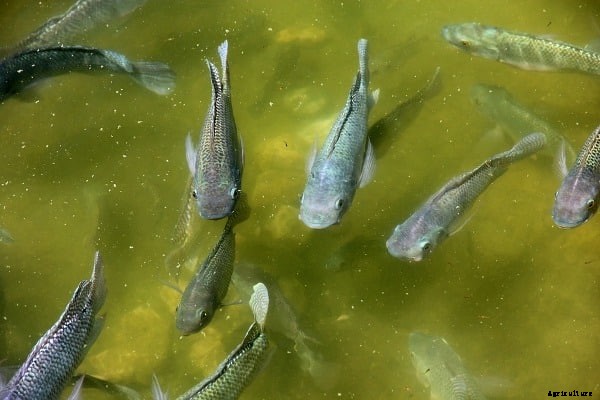
The main types of cultivated fish are Carp, Tilapia & Catfish. The other fish right to cultivate is eel, tawes, mullet, snakeskin, catla, and rohu.
Small-scale fish farming is reported to be the main source of animal protein to nutritionally deficient nations. The main objectives of small-scale fish farming in rising nations are too
1) Supply protein-rich food to rural people at a reasonable cost
2) Provide limited, steady income & employment.
The two approaches generally implemented on a small scale are:
The benefit to low-income farmers is that they are capable to invest in fish cultivation when there is sufficient income, which will then be able to generate additional income & food when other sources of income are limited.
Site location will be dependent on many factors:
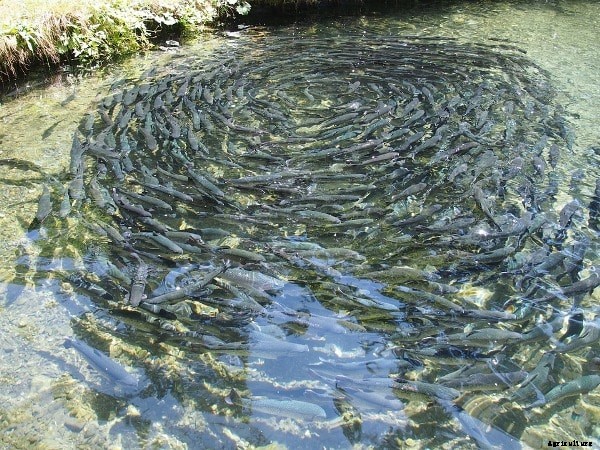
Source of water to fill the pond & how the same water will be brought to the pond: The general rule is that the pond water inflow & outflow should equal the pond volume over the time of a month. Stocking rates range from two to six fingerlings/m2, depending on the stage of management. Male tilapia is identified to grow almost twice as fast as females. The fish should be fed between 10 am & 4 pm when the water temperatures and dissolved oxygen content are reasonably high and the fish are active.
When deciding on the pond site & design, there are some factors to be considered. Some of these are:
The soil where you build your pond must not be too sandy. Soil with too much sand in it will not hold water. In sandy soil, the water will sink into the ground & there will not be enough water for your fish. If the banks of the pond are built on sandy soil, they will not be strong enough to keep the water from flowing away.
One of the main trends in fish culture over recent years has been towards capital-intensive, very high-input high-yield systems, which can dramatically improve the rate of production if operated in ideal conditions. The development of practical hatching process has vastly improved fish cultivation and allowed careful breeding and selection of desired species to take place. But intensive cultivation processes, increase the cost of fish production beyond the reach of poorer farmers. Therefore, alternative low-cost approaches have been promoted by NGOs working in the country.
Sample your fish every month to find the total weight an individual weight. This allows you to calculate the growth, daily feeding rations & food conversion ratios (FCR). You can only find the population of your fish after sampling.
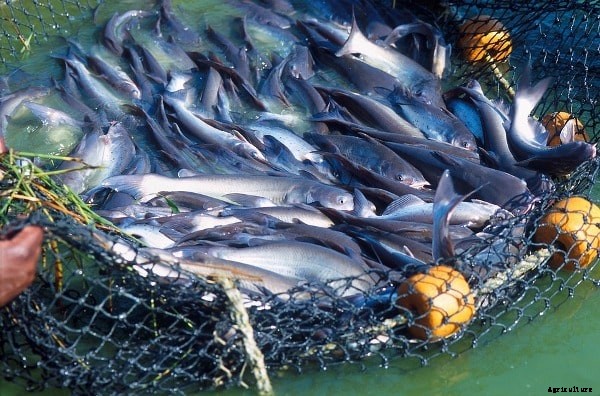
Fish should be organized to harvest within six to nine months. Stop feeding the fish 2 days before harvest. Prepare the tools seine net, plastic buckets, weighing scale & labor for harvesting. Harvesting is completed early in the morning. During harvesting, handle fish with care to avoid damage & post-harvest losses; always wet your hands or equipment and keep the fish as long as possible in the water. Moderately drain the pond very early on the day of harvest.
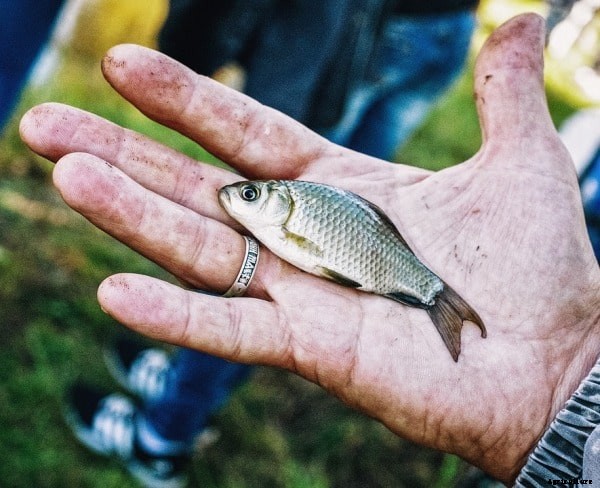
When selecting fish species suitable for farming various biological & economic factors are important to pay attention to:
It will often be possible to choose from locally occurring species & avoid the introduction of exotic ones for culture. The most important biological characteristics that are growth rate, reproduction, size & age at first maturity, feeding habits, hardiness & susceptibility to diseases find the suitability of a species for culture under local biological conditions.
Although certain slow growing species may be candidates for culture because of their market rate, it is often difficult to make their culture profitable. It is better that they reach marketable size before they reach maturity to ensure that most of the feed is used for muscle growth instead of reproduction. Early maturity, on the other hand, ensures easier accessibility of young fish.
A fish species that are hardy & which can tolerate unfavorable culture conditions will survive better in relatively poor environmental conditions. Besides the effect of the environment on the fish species, the influence of the species on the environment should be considered when introducing a new fish species. These newly introduced fish species should be:
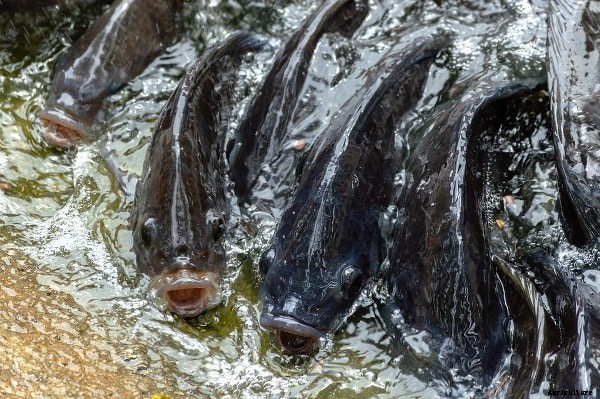
With the non-intensive approach, it is probably to feed fish on nothing more than scraps & waste, duckweed, oil cake, kitchen waste, rice bran & snails which will provide all the required nutrition. Some low-cost feeds are brought in by the households, typically rice bran & oil-cake, but these costs are minimal. Occasionally, the diet may be supplemented with commercially existing compound feeds. In most cases, a mixture of diets is offered, according to the availability & needs of the fish.
Make sure you check the feeds before you agree to delivery or before you buy.
There are many feeds that can be offered to the fish in the pond. Some commonly existing feeds include:
The feeds can be formulated so as to assemble the body requirements of the fish species. This can be done as follows:
iii. Fresh shrimp— 6%
Feed ingredients can be hand ground and a manual grinder can be used. It’s important to adhere to the 4 fixes when feeding fish. These are:
The fish should be fed between 10 am and 4 pm when the water temperatures & dissolved oxygen content are reasonably high and the fish are active. Small scale Fish farming is an extremely profitable enterprise if done with good management. Farmers should build up passion towards those less exploited agricultural opportunity.
Always try to provide your fish fresh & nutritious foods. It will be better if you can modify water from the pond occasionally. If not possible can use some chemicals, according to the suggestion of an expert. Monitor the health of fish on a regular basis. Do all necessary farm tasks timely. Keep the pond environment clean & suitable for proper growth. Test the water & soil quality of your pond on a regular basis. Always stock necessary drugs on your farm. Prevent all types of predators, including frogs and snakes etc.
Diseases can be classified in infectious & nutritional ones: infectious diseases can be carried from one pond to another by the introduction of new fish or by the farmer & his equipment while nutritional diseases are caused by dietary shortages. There are also diseases caused by pollutants and bad water quality & there is evidence that most fish deaths probably result from these types of problems. The fish farmer should focus on the prevention of diseases as the treatment of fish diseases is often difficult, time-consuming & expensive.
Good nutrition & proper water quality are the most important factors for good fish health needed to cope with diseases. Many of the potential pathogens of fish species are generally present in the water waiting to ‘attack’ when environmental conditions become bad & subsequently fish are stressed causing a decreased resistance to diseases.
There are several basic rules which must be observed if outbreaks of disease are to be prevented or, if they occur, to be controlled. Ponds must have divide water supplies. It is not recommended to supply a pond with water from another pond since this water may carry diseases & the level of dissolved oxygen may be lower. It is so wiser not to design ponds in series.
The fish have not been stressed. If you handle the fish, but when you are taking them to the market, take great care so that you upset them as little as possible. Extreme stress can be the direct reason for fish death. Damage to their skin, or rubbing off the scales & the protective slime layer, means disease causing animals can enter the fish more easily. So, fish must be kept in good condition at all times by using water with plenty of oxygen, with the correct pH & with low ammonia content.
Great care must be taken when mixing fish from special ponds, or when introducing new fish into the farm, that no sick fish are introduced. Fish new to the farm site should be reserved in a separate pond until it is certain that they do not carry disease.
Any change in standard behavior may be a sign of disease. Signs to look for containing gasping at the surface for air, rubbing the body or head against the sides of the pond, ragged fins & sores on the body. Something is wrong when the fish stop eating unexpectedly. You must check the fish often, especially in very hot weather when dissolved oxygen shortages happen more often as in warmer water less oxygen can be dissolved than in warmer water. Do not get discouraged if occasionally find a dead fish in the pond. This happens in nature. Watch out, so, for large numbers of dead fish. If large numbers of fish die, try to discover what the cause is.
Read: Tuna Fish Farming Guide.


