
Welcome to Modern Agriculture!

Today, let us talk about Dairy Farm Subsidy In Telangana, Bank Loans for Dairy Farming In Telangana, and Telangana Government Schemes for Dairy farm.
Telangana state has rich livestock resources, especially the Cattle and Sheep population valuing up to 5.52% of India’s population. The Telangana State stands the 10th place in Livestock population and in the place1st in Sheep population, it stands in 12th in Goat population, 5th in the Poultry population, 13th in Bovine population and 17th in Pig population, in India as per the Livestock Census. And about 29 Lakh families of farmers in Telangana State are indulged in the livestock sector for their livelihood. And approximately Rs.12403cores are produced by the livestock. And at the current prices and the livestock sector earns 4.86% to GSDP.
In Telangana, the Annual meat production is up to 5.05 Lakh Mts, Telangana stands the 5th place in the country and the annual production in Telangana is up to 42.07 lakh Mts of milk, Telangana stands in the 13th position in the country in milk production. Department of animal husbandry is introducing many schemes to improve the Animal origin foods like milk, meat, and eggs to human population for consumption through scientific breeding, feeding, and disease management of livestock.
There are many schemes introduced by the Animal Husbandry schemes, that are formulated to pursue the well-laid National policies aimed at improving livestock production, providing them the nutritional feed, upgrading the nutritional standards of the human population, and providing all required technical support for the maintenance and improvement of livestock.
Livestock population in Telangana is Cattle up to 60-70 lakhs, Buffaloes50-60 lakhs, Sheep 200-300 lakhs, Goat 60-70 lakhs, Pigs 4-5 lakhs, and Poultry 1000-2000 Lakhs. And the increase of population, the production, and availability of nutritious food, and supplemental income to farmers have increased. Livestock contributes up to 10-11% to the Gross State Domestic Product and formed 20% of the Agriculture sector.
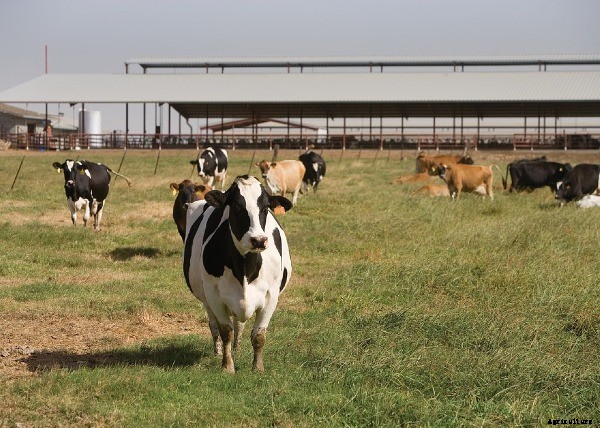
It is well-established fact that India is basically an agricultural country. The majority of the people live in the village and their primary occupation is agriculture. For the small and marginal farmers, dairying is the best subsidiary source of income. It plays an important role in the agriculture economy.
In case if you miss this: Vertical Vegetable Gardening.
– Establishment of the farm
– Constructing the buildings and other fixed equipment.
– Supply of the right type of labour.
– Availability of capital Capability of the farmer.
– The physical condition of the soil.
– Climate
– Water supply
– Size of the herd.
– Level of milk yield.
– Feeding policy and stock density.
– Farm area used completely for the dairy farm and stocking density.
– Housing facilities.
– Seasonal production policy.
– Raising replacement stock.
– Watching milk yield.
– Check on food quantity and quality.
– Labour utilization.
The greater part of variation profits was found to be due to the reduction in costs of labor percent increase in herd size. The size of the herd depends upon the following factors.
– Method of milking.
– Milking of shed facility.
– Milk yield.
– Cowshed layout.
– Labor efficiency.
– An area under forage.
Level of milk yield:
Statistical evidence clearly favors the high-yielding herd. The increase of profit with the increase in milk yield is what one should expect, but up to a certain limit only, because the food cost per cow will increase the extra concentrate of feed with an increase in milk yield
Feeding policy and stock density:
It’s determined that feed accounts for sixty-one in the price structure of milk production in buffaloes, so makes an attempt to lower the feed price will cut back the value of milk production, which might be achieved by the use of fewer concentrates and use of additional inexperienced fodder.
The density of stocking and farm space dedicated to farm: Farm unit of three cows and followers is maintained on one acre of fertile and absolutely irrigated land.
Housing facilities: The yard and parlour system needs less capital investment per cow and less labor/cow compared to the standard cowshed.
Seasonality in milk production: The milk plants supply incentive within the style of or by the manner of upper worth for milk throughout the loan amount of summer months in order that the farmer might get additional milk in those months of upper costs.
Raising replacement stock: Most of the farmers like rearing most of their heifers on their farm to take care of needed range as a result of to avoid the risk of shopping for poor quality stock and also it is proved that use of by-products and unconventional feedstuff heifer can be raised cheaply.
Eye on milk yield: The farm milk yield record of each cow is used as a guide for allotment, an indication of the status of health on faulty feeding, and as a basis culling.
Check on Feed amount and Quality: Feeding is based upon the milk yield and the needs of an animal, farmers must work out the ration for each cow and write it on the chart against the animal. It helps to confirm the provision of the right quantities of concentrated, from time to time depending upon the quality and quantity of roughage.
Labor Utilization: Cost of labor is second to the cost of the feed into the annual cost of keeping of a cow. The Loose housing system saves labor because the cows come to milking parlour instead of a man going to the cow. Manure loader can be used in the loading area.
The viability of small size farms:
For a family with 2 to 4 members having 3 to 6 acres of land for crop production, the economic size of the dairy farm is 2-5 animals, depending upon their interest, capability, availability of fodder, and marketing facilities. These two family members can work for 2-5 animals without engaging in any extra labor and also without affecting the routine farm operations. Cattle husbandry can be a source of employment for most agriculture work.
You may also check this: Hydroponic Fodder For Dairy, Goats, Poultry, Livestock.
Advantages of small farms will be over larger dairy farms:
The viability of large farms: The farms having up to twenty-five animals come under large/commercial farms and the farms with 5-25 animals come under medium farms.
Factors that Influence Large Dairy Farms:
When compared to small farms, survivability of large farms will be difficult as overhead charges will be more in all aspects, in addition to lack of individual responsibility and care of the animals.
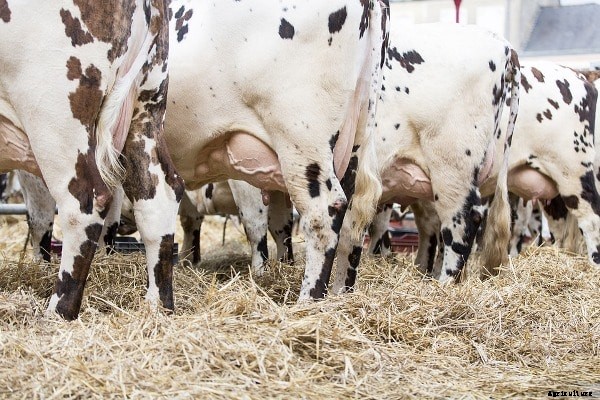
Selection of good animals: You need to select a good lactating breed and a good animal is that breed will yield more milk production.
Balanced feeding: You should feed the animals with standard DCP al TDN content in an optimum quantity which will increase/maintain the milk production levels.
Green fodder feeding: Feeding of adlibitum green fodder v decreases the use of concentrated, which ultimately decreases the production cost of milk.
Conservation of greens: The green fodder will be excess during the flush season. It should be converted into silage/hay, which preserves the nutritive value of green fodder and it can be used during summer in place of green fodder which decreases the cost of milk production.
Formulation of concentrates: Some unconventional feed ingredients which are of no use, are used for concentrates formulation to decrease the cost of concentrate, as the cost of concentrates plays an important role in the cost of milk production.
Uses of agricultural by-products: The use of agricultural products like straws etc will decrease the cost of milk production.
Effective utilization of labour: The cost of labour ranks second after feed cost in dairy farming. The effective use of labour depends on
– Proper planning of cattle housing unit.
– Loose housing system saves labour and energy.
– A system of tieing is a conventional housing system.
Tail-to-tail tieing will decrease the labour requirement as ‘it is man time is spend in back of the animal for cleaning, which spaces in a tail to tail ‘system.
Replacement of the herd: After few lactations, the animals are culled to remove uneconomical animals, which should be replaced by growing their own calves or by purchase. It is proved that the replacement of dairy stock by growing their own calves is more economical and has information about the animal.
Milk price: The profitability of dairy farming, mainly based on the selling price of the milk. Even a marginal extra price per liter of milk will have higher profitability per year. It is recommended to implement home / Institution delivery of milk, which can fetch you more price for milk, even considering the distribution costs.
Advertisement: You also need to advertise about the quality and benefits of the milk which will give more profits, even after deducting the advertisement costs.
Conservation into milk products: During the flush season more milk will be produced and also the factories will pay less price. To get maximum profits some milk can be converted into products like cream, ghee, butter, paneer, etc., which will also solve the problems of marketing of milk and gives 40-50% extra profits over the cost of milk.
Good -management practices: You should maintain a clean environment, which will produce more milk. Proper protection of animals against environmental conditions like heat and cold will helps to maintain the production, otherwise drastic fall in production is not protected. Proper timings of feeding and milking should be maintained, which will help in maintaining optimum production. Cattle health should be taken extra care and maintenance by proper vaccination and treatment will definitely help with the production of more milk.
Telangana Government has initiated a new Buffalo Distribution Scheme for small and marginal Dairy Farmers in the state who run the home by producing and selling milk. In this Buffalo distribution scheme, the state govt. Will offer a 50 % subsidy on the purchase of new buffaloes. And the total target to be distributed is 2 lakh with a total investment of 800 crores.
With this scheme, farmers can purchase a buffalo at a minimal price of Rs. 40,000. And the balance amount, the government will bear. This scheme is initiated after the successful implementation of the Sheep Distribution Scheme all over the state.
This scheme will increase the farmers’ income who runs their house on of milk production. Govt. Had stated the implementation guidelines.
Below we have given the details of the government subsidy and total cost for the purchase of new buffaloes through this scheme: –
Subsidy & Number of Buffaloes – For this scheme, the government has approved an amount of Rs. 800 crore for distributing 2 lakh buffaloes to farmers at 50% subsidy all over the state.
Effective Cost of Cattle After Subsidy – The maximum cost of a buffalo is approximately Rs. 80,000. And in this amount, the state government will pay you Rs. 40,000 for each buffalo (50% subsidy). And the farmers need to pay Rs. 40,000 for the new buffaloes.
This Cattle Distribution scheme will support nearly 2 lakh families of farmers whose major source of income is a dairy farm.
The state govt has opened online applications for this new Buffalo Distribution Scheme. But the modalities are yet to be finalized by the cabinet. They will soon release the eligibility criteria and How to Apply Online for Cattle Distribution Scheme.
This scheme will help the farmers, who generate an additional source of income, it helps to increase the farmers’ income, boosts up milk production.
The state govt. has released Rs. 50 crores to provide an incentive of Rs. 4 on every liter of milk supplied by farmers to the govt. diaries. Vijaya Dairy in Lalapet and other 3 diaries also include in the Government dairies. For this scheme the government spends Rs. 100 crore every year.
In this scheme, for better health care services to dairy animals, the government will provide mobile vans to the existing 100 vans & will also develop 2,132 veterinary hospitals.
SBI is offering two bank loan schemes for Dairy related agricultural projects. The State Bank of India Scheme For Dairy Societies – that provides finance for creating infrastructures like Construction of Milkhouse or Society office, Purchase of Automatic milk collection system, transport vehicles, Bulk chilling unit; and the second one is SBI Dairy Plus Agriculture loan scheme that provides finance for milk-producing societies recognized private milk dairies posting profits in the past two years.
Offer loans for Individuals and groups of farmers for Purchase of high-yielding milch, Construction of cattle shed, Purchase of dairy equipment, chaff cutters, etc.. and provides transportation cost of animals where the animals are not purchased locally.
Offer loans for 1. Construction of cattle shed 2. Purchase of high-yielding milch cattle (yielding not less than 5 liters per day) 3. Purchase of dairy equipment, cattle feed, and the cultivation of green fodder. 4. Expenditure incurred for transportation of animals where the animals are not purchased locally. 5. Initial feed cost for a period of 1 month at the rate of 120 kgs. per animal for the first batch of animals. 6. Setting up on-farm processing and pasteurization plants. 7. Rearing of heifers.
Loan Margin: Loans up to Rs.1 lakh – Nil Loans above Rs.1lakh – 15-25%.
Repayment Period: 5 to 6 years.
Investment: the investment will be Rs 5.00 lakh for 10 animal units – the minimum unit size is 2 animals with an upper limit of 10 animals.
Subsidy: 25% of the investment (33 .33 % for SC / ST farmers,). The Subsidy shall be restricted depending on the unit size.
Investment: Rs 4.80 to 5 lakh for 20 calf units – the minimum unit size of 5 calves with an upper limit of 20 calves.
Subsidy: 25% of the investment (33.33 % for SC / ST farmers. The Subsidy shall be restricted depending on the unit size.
Investment: Rs. 20,000/-
Subsidy: 25% of the investment (33.33 % for SC / ST farmers).
Investment: Rs 18 lakh.
Subsidy: 25% of the investment (33.33 % for SC / ST farmers).
Investment: Rs 12 lakh.
Subsidy: 25% of the investment (33.33 % for SC / ST farmers).
Investment: Rs 24 lakh.
Subsidy: 25% of the investment (33.33 % for SC / ST farmers).
Investment: Rs 30 lakh.
Subsidy: 25% of the investment (33.33 % for SC / ST farmers) .
Investment: Rs 56,000/-
Subsidy: 25% of the investment (33.33 % for SC / ST farmers).
In case if you are interested in this: How To Grow Organic Lettuce.


