
Welcome to Modern Agriculture!

The biggest expenditure of fish farmers is the fish feed. If management of fish feed is done in a good way, the overall culture cost can be decreased and even the environment of the fish farm can be improved which ensures a healthy and perfect growth of fish. Management of fish feed involves selecting the correct feed by using the right method of feeding by considering the cost of feeding and also ensuring the cost-effectiveness of the fish farm.
Nutrients required for the fish:
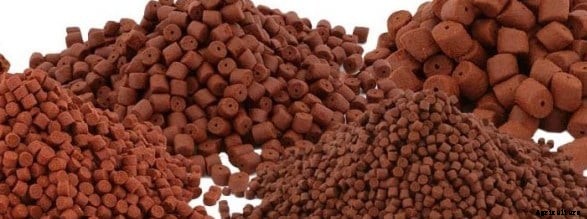
Proteins: Proteins are the ones which build the muscles of the fish and also provide them with sufficient energy. Deficiency of Proteins will result in the slow growth of the fish. Excessive feed of protein is also not good in terms of health for the fish and it also increases the cost of feeding.
Proteins contain 50% of carbon, 16% of nitrogen, 21% of oxygen and 7% of hydrogen. Fishes have the capacity of having a very high content of protein. But the thing is that 65% of protein will be lost as waste to the environment. Most of the nitrogen from the fish is excreted as ammonia (NH3) through the fish gills, and only 10% will be lost as solid wastes.
Fat: Fat provides energy to the fish. If a proper and correct amount of fat is included in the feed, then it increases the taste of the feed, whereas if the fat content is given in a high quantity to the fish, then it leads to harmful health hazards to the fish.
Carbohydrates: Carbohydrates are also considered to be the source of energy to fish. But the disadvantage with these carbohydrates is that most of these will not get digested easily by ordinary carnivorous manne species.
Vitamins:
Vitamins are organic compounds which are very much important for the fish for its health and growth. The fish cannot synthesize them always. Hence, the vitamins have to be supplied to the fish through its diet.
There are two types of vitamins.
Water-soluble vitamins are B vitamins, choline, folic acid, biotin and ascorbic acid (vitamin C). From all these water-soluble vitamins, vitamin C is the most important. Being a powerful antioxidant, vitamin C helps the fish in improving its immune system.
The fat-soluble vitamins are vitamin A, retinol, which is responsible for clear vision, Vitamin D, cholecalciferol, which is responsible for maintaining the integrity of bones; E vitamins, the tocopherols which act as antioxidants; and K vitamins, menadione which help the blood without clotting and also maintains the integrity of the skin. Of all these vitamins, vitamin E is the most important one as it acts as an antioxidant.
Minerals:
Minerals are the inorganic elements which are very much required for the fish to carry out their normal functions of the body. Minerals can be divided into two types depending on the quantity required in the fish’s diet and the amount which is already present in fish.
The more common macro-minerals are sodium, chloride, potassium and phosphorous. These minerals help the fish in regulating the osmotic balance and also helps in the formation and integrity of bones.
Micro-minerals (trace minerals) are just needed by fish in little amounts as components in enzyme and hormone systems. The most common trace minerals are copper, chromium, iodine, zinc and selenium. Fish can absorb most of the minerals from the water directly by using their gills and skin. This helps them to compensate deficiencies in minerals to some extent in their diet.
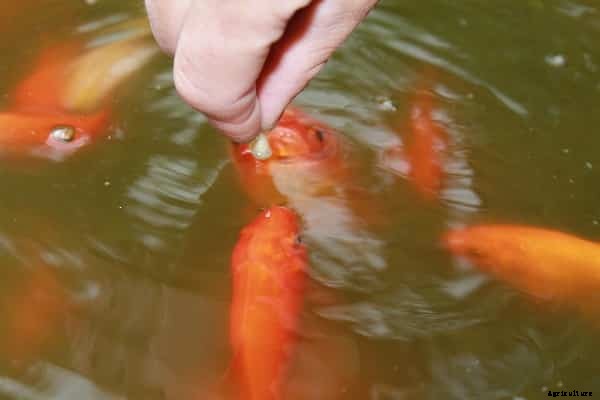
Goldfish should be treated with the right food in order to make sure that they are healthy. Goldfish will keep on feeding until the food is available to them. Because of this, goldfish have chances to get prone to problems of digestion and even death because of overfeeding. Moreover, the more you feed the goldfish, the more waste it produces which results in the excess toxic material in the tanks which would slowly act as poison to the fishes. This will lead to diseases in the goldfish which would make them eventually die. So it is very important to understand what the goldfish eat and feed them appropriately.
Read: Snail Farming Business Plan.
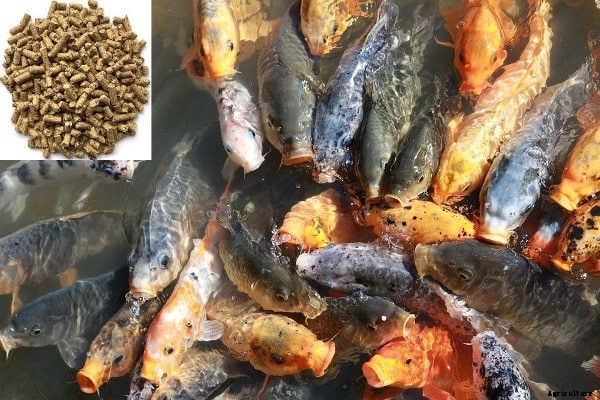
Aquarium goldfish will lead a life which is less active when compared to the wild goldfish. So they have to be fed with less food in order to make them stay healthy. There would be specially formulated food for goldfish which is highly recommended. This food contains less concentration of proteins, keeping in mind the trouble of digestion of the fish, more concentration of carbohydrates. Feed of goldfish is available in flake form and pellet form. You can offer both types of foods to your goldfish depending on their feeding preferences. Flakes float on the surface of the water of the aquarium whereas the pellets sink into the water. If you offer both flakes and pellets, then the fish would get an opportunity to feed at different levels of the tank.
Read: Indoor Aquaculture.
Most of the pond fishes seem to be omnivorous. For example, fishes like goldfish and Koi will eat peas, watermelon slices, orange slices, wheat germs, bloodworms, shrimp etc. They even eat algae. The important factor in deciding the diet of a fish is the temperature of water. If the water is warm, i.e., if the temperature of the water is above 60 degrees Fahrenheit, then the metabolism of fish would be high and they can be fed with the foods which are rich in proteins. If the temperature of the water is below 60 degrees Fahrenheit, then the fish should be fed with a diet which has less content of proteins and higher content of carbohydrates. That is in lower temperatures, fishes should be fed with fruits and vegetables so that the fishes get to digest the food easily even when the metabolism is low.
Read: Fish Pond Design and Construction.
Aquarium fish food is the one which is completely meant for the fishes which are grown as pets in aquariums. Basically, fish foods by default contain micronutrients, trace elements and vitamins which are necessary for the fishes to maintain their health.
The aquarium fish can be fed with the below foods:
Prepared foods are those which are made by the aquarist. These are the ones which are already prepared by keeping in mind, the diet of the fish.
Dry Foods: Flake food is a fish food which is manufactured artificially and is consumed by saltwater fish. These foods remain on the surface of the water, so it is suited for the fishes which dwell on the top of the water. Baking is done for flake food so that the moisture can be removed. Removal of moisture from the flakes helps in the extension of the life of the shell.
Medicated Fish Food:
Medicated fish food is considered to be a safer one to deliver appropriate medication to the fish. The main advantage of this medicated food is that the water in the aquarium does not get contaminated with this food.
Though the techniques for feeding fish keep changing, the basic methods of feeding fish are as follows:
Feed tray: This one is of less cost and moreover, this is very simple to use. Feed tray is a ration which is placed on a fine-meshed net. This net is situated below the surface of the water. In this feeding method, the feed would be distributed in a limited way.
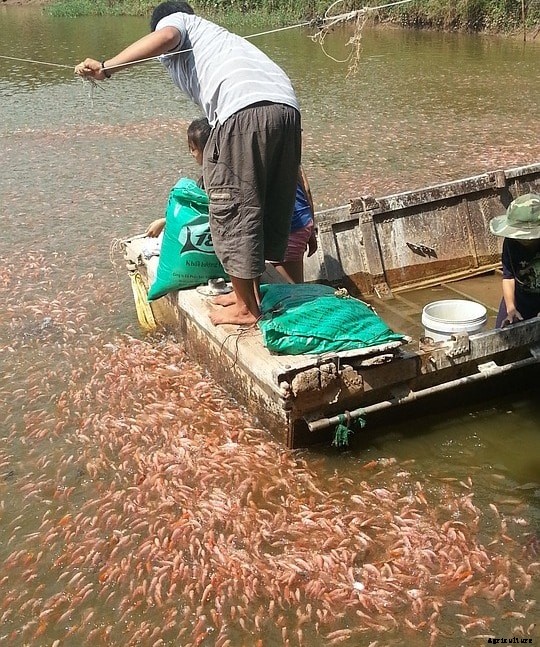
Hand feeding: Feeding is done by hand for approximately 20 minutes. In this method, the feed can be distributed equally and even the person can check if the fish is getting overfed. As it involves manpower, cost of labour will increase.
Demand feeder: This is a mechanism of releasing feed that too on demand by fish. This is a cost-effective method. But the feeder to fish ratio has to be maintained to make sure that the fish are not overfed.
Automatic feed blower: In this method of feeding, the feed is broadcasted by feel blower which is an electrically powered one. One feed blower is sufficient to feed 5000 fishes. This is a high-cost machinery which does not keep the appetite of fish in mind.
Automatic feed spreader: In this method of feeding, the feed is broadcasted by a feed spreader which is run electrically. One feed spreader can feed 15,000 fishes approximately.
Read: Raising Catfish In Tanks.


