
Welcome to Modern Agriculture!

Today, let us discuss Organic Dairy Farming Business Plan and its facts.
The organic movement is the concept mainly based on the fundamental principle of healthy soils which leads to healthy crops, healthy animals, healthy humans, and a healthy planet. Organic crop and livestock production mainly focus on building soil organic matter and biology to create a strong and dynamic environment for producing healthy food and feed.
Organic Dairy farming is the method of raising animals on organic feed (i.e. Pastures cultivated without the use of fertilizers or pesticides), in grazing lands or farming lands, along with the restricted usage of antibiotics and hormones. Products we get from the Organic dairy farm are the organic dairy products. Organic dairy farming is method of production, which sets a goal-based regulation that allow farmers to manage their own situations individually, while maintaining organic integrity.
Organic farming systems rolled out of very high animal welfare standards. An organic standards include living conditions, food quality, transport and slaughter.
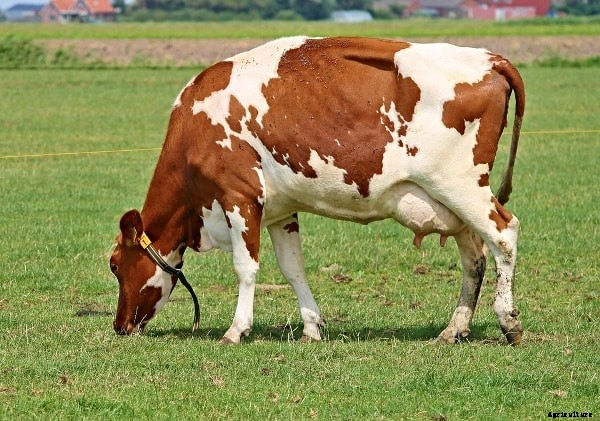
The organic farming method is a unique farming system, where the organic cows spend much of their lives outdoors where they can graze naturally on a diet of grass and clover. On average, organic cows spend, 215 days per year the outdoors, which is more time outdoors grazing than the average amount of time spent outdoors compared to normal free-range cows.
In an Organic farming, keeping cows indoors all their lives are strictly avoided. They just go indoor only during the bad weather, all cows should be housed in well-bedded spacious yards.
Read: Dairy Farming FAQ.
In an organic dairy farming, we should completely strict to some rules like,
In an Organic dairy cows are generally not forced for their milk producing limits in the same way other cows can be. Average yields in milk production by cows in organic farm are around 20% less than in intensive production.
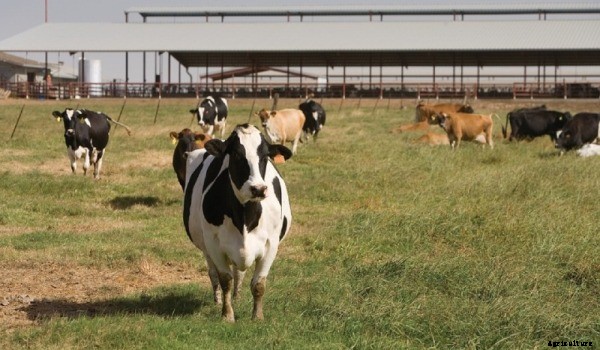
Organic producers of livestock products must not control the disease treatment for representing the livestock product as organic. They should implement a proper herd health program that should include strategies for disease prevention, parasite control and disease treatment. Vaccination schedule for endemic diseases should be implemented without fail. Herbal, Naturopathic, Homeopathic treatments can use on organic animals.
Antibiotic usage should be restricted to 30 days or twice the labeled time off to drawl period. Usage of hormones is completely avoided. Implement good sanitation practices like Teat dips, milking sanitation chemicals regularly. The feeding and other equipment’s should be rinsed with clear (tested) water prior to milking.
Read: How To Get NABARD Subsidy For Dairy Farming.
For an efficient organic farming requires a different production strategy that should include pasture, a high forage diet and a limited role for grains and others concentrates. All the feeds purchased should be certified organic. And for managing all the organic farm operations you require more labor and a certain level of commitment to the operation and to organic principles.
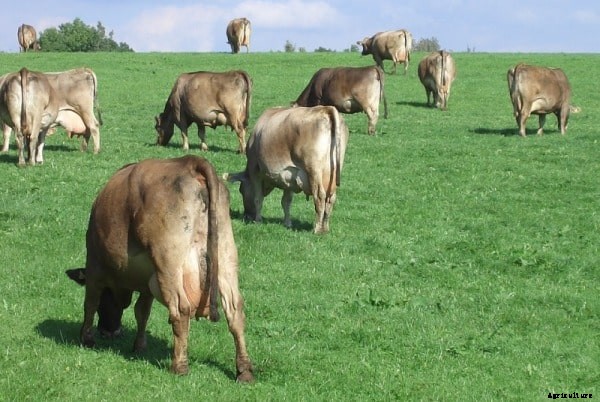
For an organic dairy operation, all cows should have daily free access to pasture, paddocks or runways. Throughout the growing season, cows are allowed to graze outdoors. At least 30% of their dry matter requirements should come from pasture. In case of raw or composted manure is applied to the pasture, the cows are not permitted to graze on the land until the manure breaks down biologically. Some producers compost, manure before field application to speed up this process.
Housing management of the cows should reduce the minimal stress in a facility that meets their normal socialization, feeding and loving behaviors. The housing for the animals should very comfortably equipped stall with soft floors, enough space, adequate floor traction, proper ventilation and access to the outdoors. The house should be maintained very clean, dry and provide protection from the elements. The tie stall barns can be kept in houses, but the animals must go outdoors at least twice a week during the winter months.
The organic farm needs special requirements for feed and water. For their nutritional requirements and ruminant behavior, we should give them a balanced organic feed ration free of any antibiotics, hormones, chemically extracted or genetically engineered components, or substances that are synthetically preserved or colored. The feed should contain substances that are necessary and essential for maintaining the cows’ health, including large amounts of high-quality roughage. All the ingredients you use should be certified as organic and approved for use by a government certifying body.
Read: Reasons For Dairy Farming Failure.
Organic cows need proper health care to maintain animal health and prevent disease. We should use hormone injections for reproductive difficulties, and cows with continued mastitis problems are culled from the organic herd.
We should use preventive health measures without fail, if the cows become sick or injured, and the chemical treatments are not permitted, subject to the standards and approval of a certifying body. Antibiotics and other chemical therapies can be used for treating sick cows, but the milk from the treated cows are not considered organic for 15 to 30 days.
Organic dairy animals that must be treated with products that are not approved for organic production must be removed from the organic herd.
Before selling milk, you must obtain certification from a third-party certifier. The Organic Foods Production Act (OFPA) will perform the certification process. OFPA offers standardized the rules, Organic producers selling less than $5000 of products annually are exempted from certification. They should sell their products directly to consumers and follow the rules of the National Organic Program (NOP).
There are two features for organic milk production certification. One depends on the dairy herd and the other is based on feed production or acquisition.
Dairy cows should be reared organically one year prior to certification. You should maintain the records on the herd health, feed and living conditions.
Feed used in this transitional year can come from feed produced during the third year of the three year transitional period for feed production.
Crop and feed production require three year transition period prior to organic certification. During this period, you should not use synthetic fertilizer, herbicides, insecticides, sewage sludge, or genetically engineered seed and inoculants.
Fields used for hay production for several years are suitable for the three-year requirement quickly if no prohibited products (e.g. Herbicides, etc.) have been applied.
A dairy farm must follow an organic system plan. These are the steps in the process.
Read: Sprinkler and Foggers In Dairy Farm.
Feed costs are the major expense in organic dairy farming, Till the dairy farmers needed to grow their own energy and protein feed sources (e.g. Grain and protein supplements). The recent increase in organic mailbox milk prices, will make it a profitable option for some organic dairy producers. It will be more economically feasible in areas where these feeds are readily accessible and do not require significant transportation cost. Animal health care another aspect the influence the production cost in an organic dairy. Labor cost also plays key role in the expense chart.
Like all organic foods, the demand for organic milk related to the increasing consumer preference for natural and organically grown products. The demand for the organics is due to several factors such as the perception of anything organic as healthy and pure, increasing care for the environment and concern for farm animals. All these factors are crucial for an increased demand for organic milk products, is the popularity of labels such as ‘grass-fed’ and ‘pasture-raised’.
Price is the basic constraint in the organic milk market as organic milk is almost thrice as costly as regular milk. This major high difference limits the scope of the market only to urban and high-aware consumers.
Read: Spirulina Farming.


