
Welcome to Modern Agriculture!

The Silkie chicken is loved by many for their unusual appearance and furry feathers.
They stand alone in the chicken world as being the only breed to have this furry appearance.
She has a long history that runs all the way from the ancient Chinese dynasties, travelling the Silk road to eastern Europe and then across the Atlantic to modern day America.
They have found their way into the hearts and minds of poultry lovers all over the world.
Keeping reading to learn more about this unique chicken…
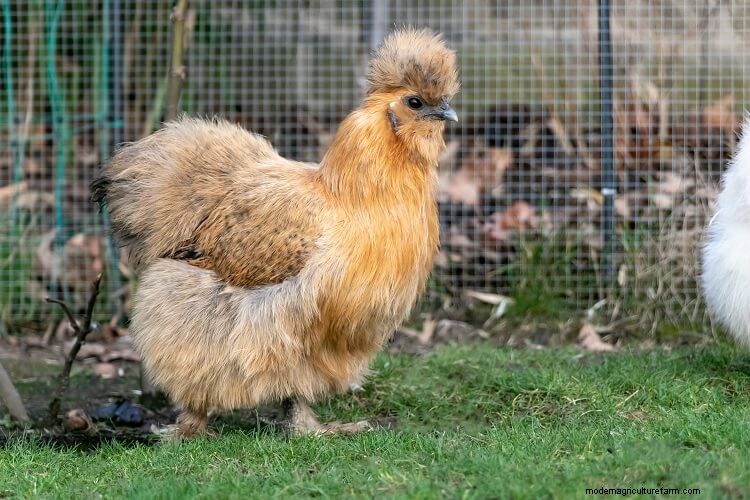
The Silkie Chicken has been around for a very long time.
They were first introduced to Europe in the 1800s and because of their appearance they quickly became a novelty bird.
In their homeland (China and the Far East) the Silkie had been providing eggs and meat for the affluent for many centuries.
The meat is black and is thought to give magical and medicinal properties to those who eat it. Their bones are also used in Chinese medicine.
These days they are more of an exhibition, show or ornamental bird as they are a poor layer. Despite this, they have become a firm backyard favorite as a brooding hen (one of her many positive attributes).
The popularity of this breed is stronger now than it has been in many years! It is not hard to see why the Silkie enjoys a special place among poultry fanciers as she is a reliable broody and a delightful family pet.
| Silkie Chicken | |
|---|---|
| Beginner Friendly: | Ideal (docile and friendly). |
| Lifespan: | 7-8 years. |
| Weight: | Hen (1.5-2lb) and Rooster (2-3lb). |
| Color: | Various (eight recognized colors). |
| Egg Production: | 2-3 per week. |
| Egg Color: | Cream to tinted. |
| Known For Broodiness: | Yes. |
| Good With Children: | Yes. |
| Cost of Chicken: | $5-$120 depending on color and quality. |
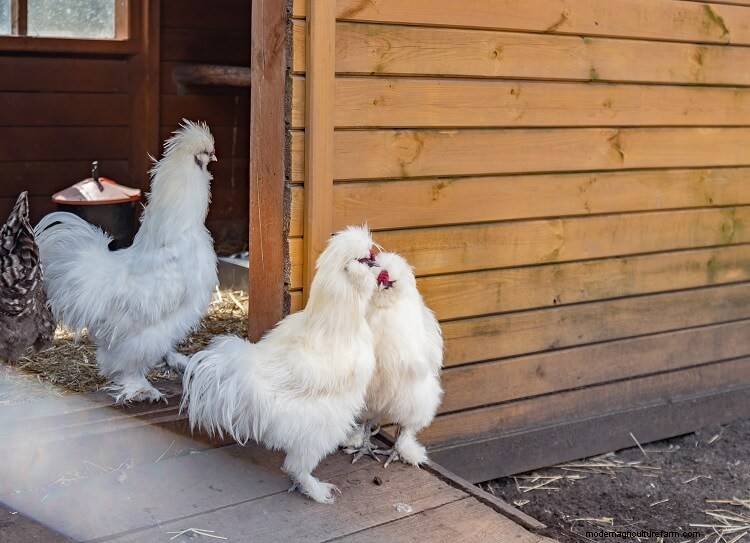
Once you have seen a Silkie, you will not confuse them with another chicken!
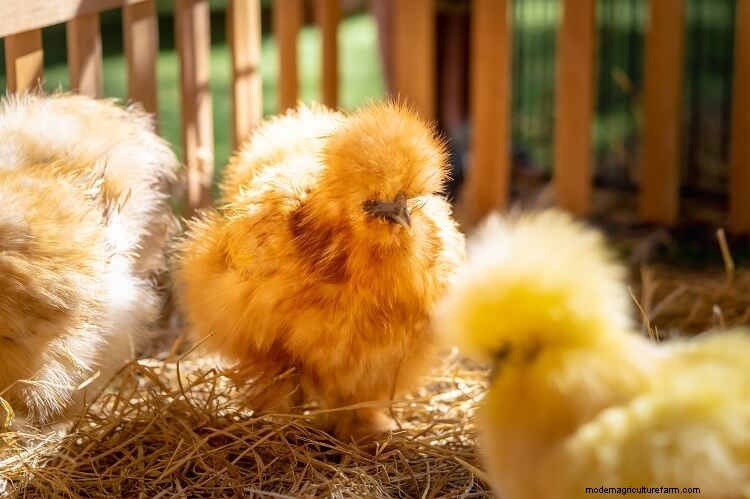
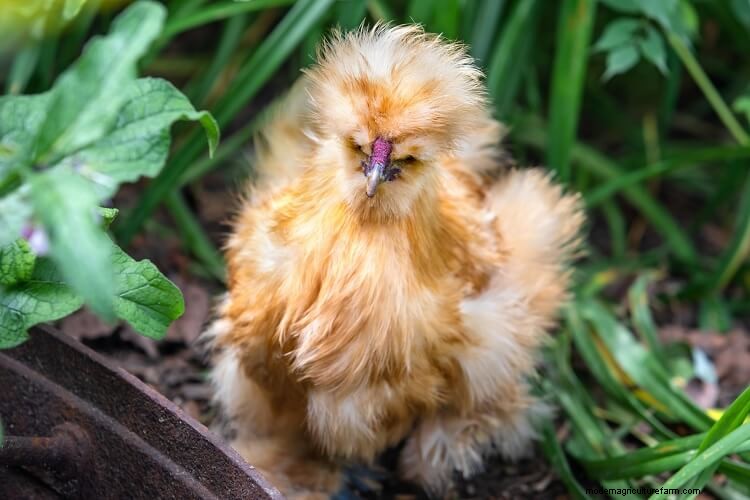
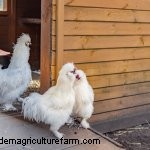
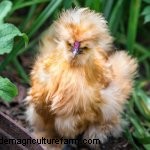
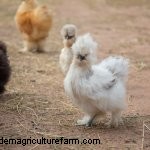
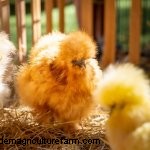
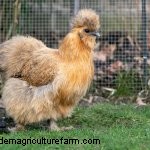
Their feathers appear silk or fur-like.
They have a broad, plump body with a short back and abundant chest. Their legs are short and grey and set wide apart for stability.
The head of the Silkie is a crested pom pom – almost reminiscent of a bad hair day. The rooster’s comb is a walnut shape which is often hidden by feathers. In a pure bred the comb should be mulberry (deep red) in color.
Their face can be bearded or non-bearded and eyes are coal black.
Earlobes are unusual in that they are a light blue in color.
Beneath all their feathers you may be surprised to find that their skin is black – but it does not stop there. The Silkie bird is black throughout: skin, muscles and bones are all black. The only exception is the blood (it remains red).
Silkies here in the US tend to be slightly smaller than their European counterparts.
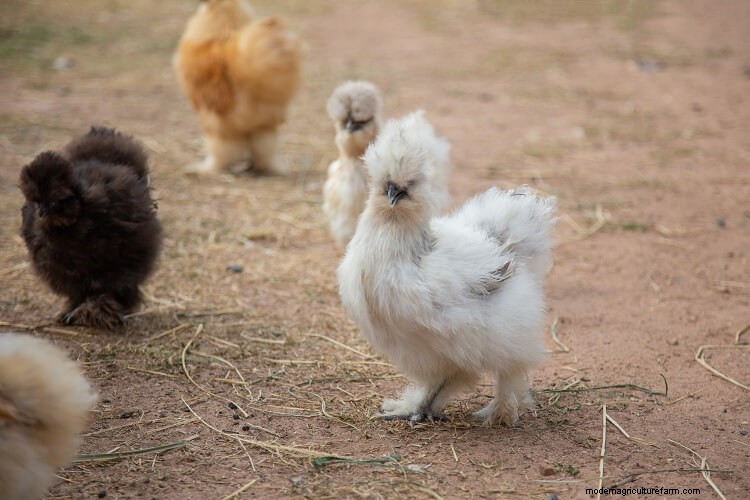
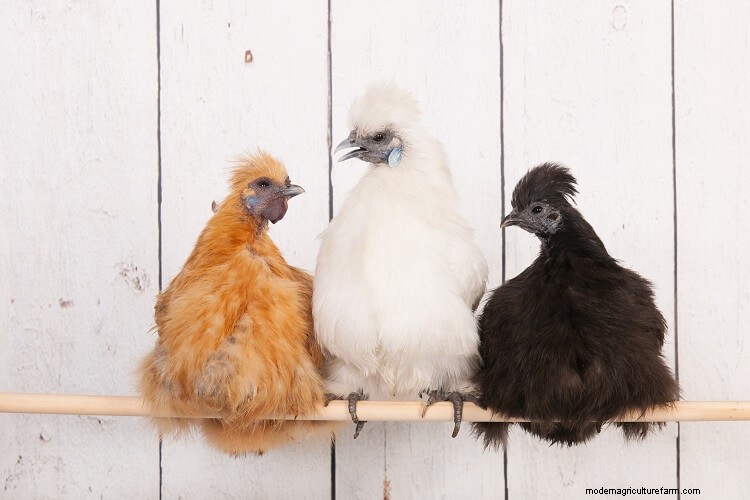
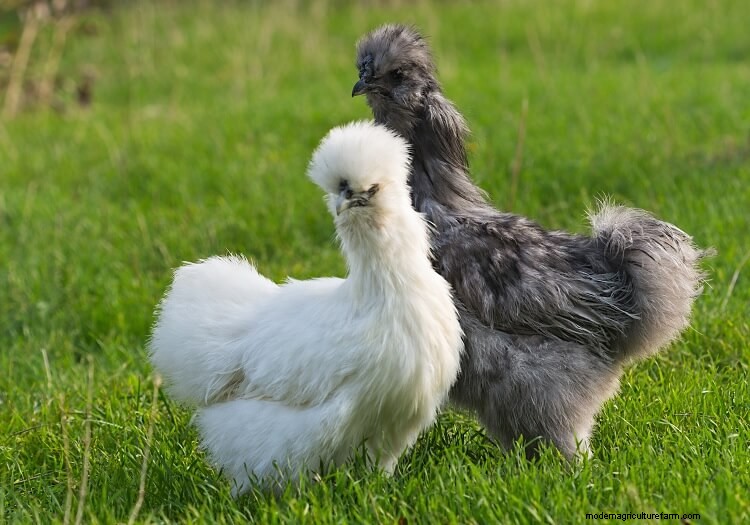
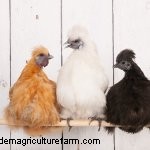
There are several different color varieties of Silkies available. The American Poultry Association (APA) recognizes 8 colors including:
Several more colors are being worked upon and awaiting acceptance by the APA.
Pros:
Cons:
These delightful birds are pretty easy to care for.
They really do not have a lot of demands and always bring a smile to the faces of visitors.
Silkies are relatively calm and peaceful birds.
Like most chickens they do enjoy free ranging, but this needs to be done under supervision since they are such easy prey for predators. A fully enclosed area to keep out hawks would be best since their vision can be impaired by their head feathers.
Silkie chickens excel as house pets and hens in particular are suitable for apartments since they are so quiet.
This is a docile and friendly chicken breed.
In fact they are so friendly they often get bullied by more assertive birds like Rhode Island Reds.
They will do well mixed with other docile breeds (such as Polish, Cochin or similar types) and enjoy a peaceful coexistence.
They really enjoy interacting with humans and are a pushover for lap time, where they frequently have a nap.
Silkies just love being carried around or having cuddles.
I have yet to hear of an aggressive or difficult Silkie chicken – they are laid back and non-confrontational.
It is a lovely bird to have for children since their feathers feel more like fur and lends itself to stroking.
If you want a chicken that lays lots of eggs, the Silkie is not your bird.
They are considered poor layers averaging 2-3 small eggs each week – around 100-120 eggs per year.
However they excel in the broodiness department and are fabulous mothers (more on this later).
| Egg Production | |
|---|---|
| Eggs Per Week: | 2-3 Eggs. |
| Color: | Cream to tinted. |
| Size: | Small to medium. |
These chickens are very quiet birds.
Even their egg song is performed quietly!
The fact that they are so quiet is one of the things that make them perfect for an apartment pet.
Hens will rarely make a fuss but of course the rooster still crows. Some folks feel the Silkie rooster is less noisy than others, but it can still be a nuisance to your neighbors.
Overall the Silkie chicken is a fairly low maintenance breed.
They will tolerate confinement well as long as they have enough room and perches.
One thing you should know is that they lack barbicels on their feathers.
This produces some problems for the Silkie.
Mainly that their feathers do not protect them against bad weather. In wet weather, the bird is likely to get soaked to the skin. So they need to have access to a secure dry place out of the weather.
If they do get wet they will need to be dried off and kept warm until they reach their normal temperature.
Some strains of the Silkie are more prone to Marek’s disease than others. Although you can get your birds vaccinated at source, if you are buying from a private breeder it is worth your time asking about this disease.
Otherwise Silkies are healthy.
Regular health checks for parasites should be part of your daily care. You can treat as needed or schedule regular treatments, the choice is yours.
Silkies will usually live for 7-8 years, but with lots of loving care can live much longer.
Silkies will eat about ¼lb of feed each day.
You can use standard 16% layer feed.
Supplementing their feed with fresh greens and the occasional treat will keep them happy, active and healthy.
You will need a minimum of 4 square feet per Silkie inside your coop.
They are unusual in that they really do not care to roost at night. They much prefer to pile up together on the floor to sleep. To help ensure that rodents or insects do not bother them at night, you might consider building a raised platform a few inches off the floor for them to sleep on.
Now for nesting boxes.
You will need to bear in mind that Silkies cannot fly so the nesting boxes need to be accessible. Placing the nests on the ground is an option for them, as is raising them a few inches and having a small platform for them to access the box.
Outside the coop Silkies do enjoy free ranging, but they are an easy target for predators since they cannot fly.
A good arrangement would be to have an outside area cordoned off and protected. You would also need to provide some overhead protection from hawks or owls.
Standard sized birds will each require a minimum of 8 square feet in the run (bantams slightly less). If you have space to provide more room, do! More is better.
There is no doubt that the Silkie is a very ancient breed.
They likely originated in China around 200BC during the Han dynasty.
For many centuries they remained unknown in the West.
However they were mentioned by adventurers such as Marco Polo (1200s) and Ulisse Aldrovandi (1500s).
Aldrovandi described them as chicken with fur.
Silkies finally made their way to Europe sometime during the 1800s. People were fascinated by this unusual bird – no one had ever seen anything like her!
It was sold by some as a hybrid between a rabbit and a chicken and was a frequent exhibit in circus sideshows as a curiosity.
We may think that is unbelievable now but many people did believe this at the time!
What color eggs do they lay?
Their eggs are a white/cream color with occasional tinting.
How many eggs do they lay?
They are considered poor layers, giving only 2-3 eggs per week.
What colors do they come in?
There are eight recognized colors: black, blue, buff, gray, partridge, self-blue, splash and white.
Are they related to Showgirl chickens?
Yes – a showgirl is the result of crossing a Silkie with a Naked Neck.
The Silkie is one of the most gentle and docile chickens known.
If you want a breed that is good in the egg laying department then look elsewhere.
However, they do have several other traits that have made them a firm favorite of poultry keepers worldwide.
They love human company and enjoy being fussed over – all of which makes them the perfect family pet.
She also makes a fantastic broody hen and will sit on just about anything. They make great mothers too, so if you are looking to hatch some chicks then get yourself one.
Do you keep Silkies in your flock? Let us know in the comments section below…


