
Welcome to Modern Agriculture!

Today’s article looks at some of the more common mistakes people make when feeding their chickens.
Making mistakes is part of the learning process.
Even old hands such as myself had to start somewhere and mistakes were made along the way.
Remember you will find conflicting views on some things – use your common sense if you are unsure!
We are hoping this article takes a little of the pain and ‘duh’ factor out of feeding your hens.
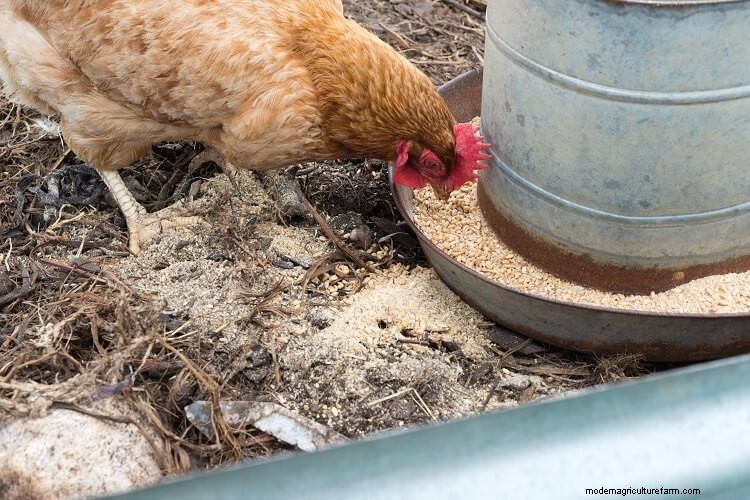
Chickens are intensely curious creatures and will peck away at almost anything.
Surprisingly they seem to avoid many poisonous weeds (such as deadly nightshade)! However one thing they will peck at and swallow if they can are things like screws, nails and staples. Veterinarians call it hardware disease and yes, it is a real thing.
Common toxic food for chickens includes:
In addition to the above avoid giving them things that are overly sweet, salty or fatty.
Try to make sure that anything you give them has been washed clean of any residual pesticides before feeding to your birds.
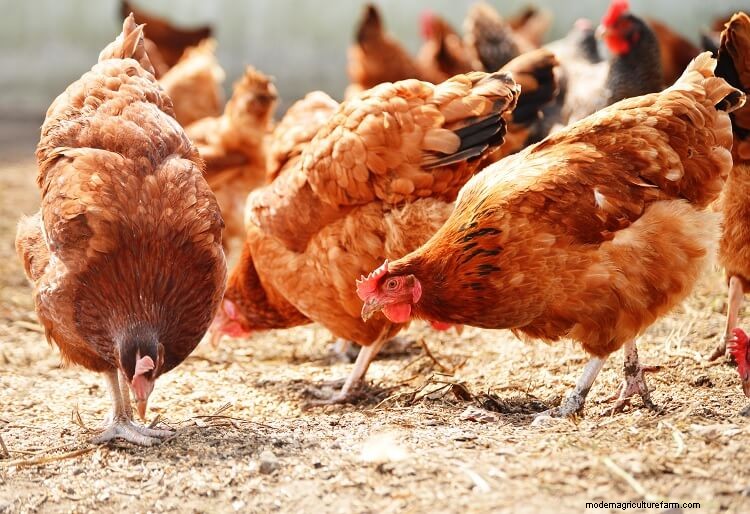
If their diet is not correctly balanced problems including vitamin deficiencies and malnutrition can occur.
Vitamin deficiencies can cause the following symptoms: weakness, lethargy, soft bones, poor muscle mass, toes curling, trembling and poor feathering.
All of these problems can be avoided with correct nutrition.
As extra insurance give them a vitamin/electrolyte supplement every few weeks. One of the most common deficiencies is lack of calcium – even great egg laying breeds can suffer from this.
When hens start to lay soft shelled or rubbery eggs they are usually lacking calcium.
This can be easily fixed with the addition of oyster shell to the diet – it should be offered as a free choice in a separate container.
In the old days chickens were not really fed at all.
They would get a handful of corn and whatever they could scratch up for themselves – how things have changed! These days we have better ideas about feeding our birds since we want them to be healthy and productive.
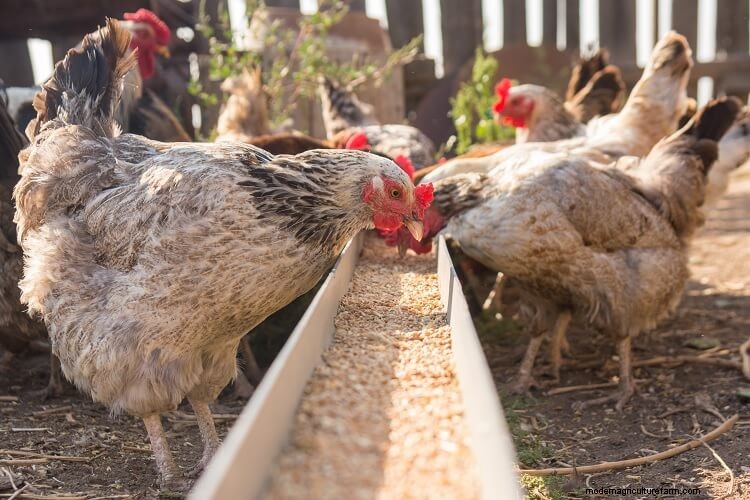
It is not recommended to just scatter feed on the floor – the floor is a dirty place to eat from.
Your chickens should be fed from a dedicated feeder (read 5 best chicken feeders: what to know before buying).
Also remember that as chicks they will need a special small container to eat from.
All chicks should be free feeding.
Let them eat what they want, when they want. They are high energy so food should be available to them at all times. When your chicks become adults (around 16 weeks old) is the time to decide how you want to feed them.
The majority of people free feed – this means make sure food is available at all times. The majority of people do this for convenience for themselves and their birds.
Other folks prefer to feed on a schedule of morning and evening time.
While this is an individual choice I do not recommend scheduled eating for a few reasons:
You can of course still engage in hand feeding if you want to do so. Certainly the chickens will enjoy the human contact – especially if you have treats on hand! If you are too busy and want to free feed then you can use an automatic chicken feeder.
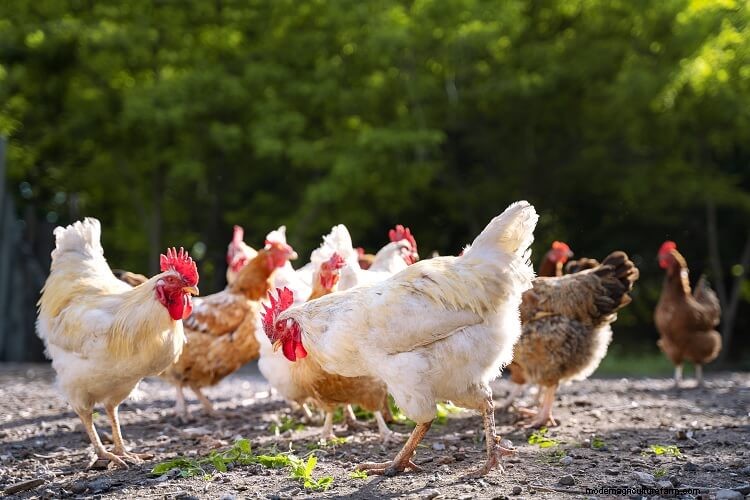
We all love to spoil our hens with treats. I am as guilty of it as the next person, but we should remember that treats are just that – treats.
Treats should be given in small amounts (one or two beakfuls should be sufficient).
Why?
Chickens will fill up on tasty snacks before eating their regular nutritious food.
When they do that, their balanced diet goes out the window and in extreme circumstances it can lead to some significant problems.
Some all time favorite treats include:
Which table scraps can you give them?
In Europe and the UK, giving table scraps to livestock is actually banned. The reasoning behind this is to prevent the spread of possible contagious diseases. Here in the US you are free to feed just about anything to your livestock. You can give a wide array of table scraps from vegetables to leftovers.
Just remember that scraps should be given in moderation.
As an example, most chickens love spaghetti but it is a high carbohydrate source so it should be restricted to an occasional treat.
Often people forget to provide their flock with supplements.
The most important feeding supplement in my opinion is oyster shell. Oyster shells contain calcium carbonate which is essential for your birds’ well-being.
This helps the chicken to put shells on her eggs and maintain strong and healthy bones.
It is important to feed the oyster shell separately from their feed as too much calcium can also cause problems.
The second supplement that is important for chickens is insoluble grit. It can be bought in bags from the feed stores. Grit is essential for them to digest their food properly. If the hens are free ranging they will pick up some pebbles and bits of rock from the ground, but if you cannot let them free range they need grit.
Additional vitamin supplements for adult birds should be limited to about once a month (unless your birds are stressed or poorly).
Like all living things, chickens need the appropriate nutrition for each stage of their life.
Chicks should be fed on chick starter crumble containing at least 20% protein. They can continue on the 20% until they change over to layer feed.
Laying hens and roosters can all be fed 16% layer feed.
The formulations of feed that are sold in most farm and country stores have been precisely calculated by poultry growth specialists to take the guesswork out of it for you.
Each feed bag that you look at should have a paper label attached to it (usually at the base).
As you begin your chicken journey these labels may appear confusing as each particular product may have some extra ingredients.
Some folks like to mix their own rations for their birds. It is possible to do this but it has to be done correctly and in precise ratios otherwise the birds will not get all of the nutrients they need to grow and thrive.
So now you know what and how to feed your chickens.
Keep them well fed and they will love you forever – but do not overfeed them!
Obesity is becoming a huge problem for household chickens. We may love them looking plump and well-nourished but it can lead to some serious laying problems for the hen.
We urge you to read more about feeding and caring for your chickens since we have only really scratched the surface of this huge topic.
You will find many hours of pleasure in caring for your girls if you do it right.
If you have any questions about feeding your hens let us know in the comments section below…

