
Welcome to Modern Agriculture!

One very important point was brought up last week by Dr. Joe Emenheiser, UVM Extension Livestock Specialist. That point is the quality of the foundation stock being used in a line breeding program is incredibly important to the ultimate success of that program. As closely related animals are bred to one another not only are positive or desirable traits concentrated, but so too are undesirable and possibly outright lethal recessives, such as Snorter Dwarfism or any of the many simple recessive, lethal genetic disorders discovered in the Black Angus breed over the last decade.
Starting with proven genetics for one’s foundation is important, but spontaneous mutation does occur even in the “proven” gene pools. That is part of why it is important to maintain line breeding practices within the specific parent breeds. Purposeful and planned line breeding will cause those defects to show up more quickly than in an out crossing program, and thus allows them to be eliminated before being broadly propagated.
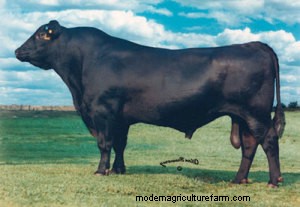
The fly in the ointment is the integrity of the breeder to step up and be honest about defects when they crop up and let their customers know the defect exists, what it is and that any potential carrier should be tested and or culled. With the development of incredibly powerful genetic testing algorithms many defects can be detected through simple hair or blood samples. That said, there can be some animals that have raked in huge sums of money for their owners because they excel in certain desirable traits or they happen to be the flavor of the month for a particular fad. When it comes out that those animals are in fact carriers of lethal recessive genetic disorders there is tremendous financial disincentive to be honest. A Black Angus bull that was incredibly popular during the “carcass craze” of just a few years ago named GAR Precision 1680 was just such a bull. It came to pass that he actually was the source of two lethal recessive disorders, but his owners and propagators were in serious denial about that and thousands of direct and indirect progeny have had to be tested since the truth came out about the bull.
In any case, culling is the real subject here. Anyone can make a mating between two animals. Shoot, the animals themselves may break fences, swim across lakes, bust gates to create their own mating decisions, but how do we decide which animals stay in our program? Do we even have a program? Do we really know what we are breeding our stock toward?
These are valid questions whether one chooses to be a line breeder within a specific breed or a commercial producer who seeks hybrid vigor and the incumbent production and hopefully profit gains from that hybrid vigor. What is the image of your ideal or perfect cow in your environment? Feel free to substitute the words ewe, doe, hen, sow in place of cow. The principles here are what matter, not the breed or even the species. There is much to be learned from the best breeders of dogs or horses for a cow man.
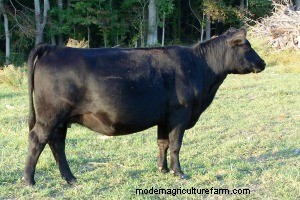
Back to that ideal cow for my program and my environment; what does she look like? To some degree I get to decide. I choose the parent or foundation stock for my farm or ranch. But over time, the environment in which my animals live, breed and die is what selects the animals that are best, not me. I create the selection criteria and the production paradigm. The environment though is the ultimate decision maker.
The chief predictor for making a profit on any livestock operation, whether it’s dairy, poultry, beef or any other, is fertility. Live babies on the ground at the desired time of year which are reared to sale size/weight in the timeframe necessary to make those sales is what drives the bus here. First and foremost is getting the cow in calf. Second is making sure the calf is delivered. Calves which arrive DOA have very poor sale value at weaning. And then there is the issue of having to feed that cow another year before she delivers a calf again. She’s better off serving the farm by being served on a plate.
Traits such as fertility have been poo pooed as having low heritability. I personally disagree with that sentiment. Fertility is a survival trait in nature, not for the individual but for the species. I’ve seen the results in my own herd and others by culling open individuals. By always removing those animals that can’t get bred in my environment, I am left with a herd of cattle that has tremendous fertility. My average cull rate for open cows and heifers over the last five years is 4%. Almost to an animal that 4% is comprised of first calf heifers that fail to rebreed.
My herd is not alone. Many of us who are students of this school of thought have decided to kick the crutches out from under our herds and flocks. By removing grain, wormers, and most supplements beyond free choice salt and at the same time shrinking breeding seasons to 42 days, you really get to see which animals can make it. When any animal that is open at preg check gets culled, only the fertile ones survive. Sometimes it isn’t my “favorite” cow that lives to be 12 or 13 or older on my farm. Maybe it’s the cow I’ve never paid much attention to but she keeps showing up for work. The farm is selecting the cow, not me. This process isn’t for the faint of heart, but it does pay off. This is an investment in your herd’s future.
In another installment we’ll talk about some of the physical traits that serve as predictors for success (fertility foremost) in our stock within a low input regime. Don’t forget, if the animal can thrive in a low input regime, chances are they will outdistance the competition in a high input regime. The reverse is not true of animals produced in a high input system. Most will simply fall out of the gene pool in a low input scenario.
Check out the whole series on breeding matters by Morgan Hartman:
Breeding Matters
Line Breeding is Good for Profit
Breeding Matters III – Inbreeding vs. Linebreeding
Part IV – Culling for Fertility


