
Welcome to Modern Agriculture!

Have you noticed that some hens shed feathers rapidly while others appear almost featherless during molting season?
That variation is normal. Every hen will undergo a healthy molt, which typically lasts between one and five months.
Read more: What Happens When a Chicken Molts (A Visual Guide)
Below we explain the factors that influence molting speed.
Breed is the primary determinant of molt duration. High‑yield layers tend to molt quickly, often experiencing a “hard molt” where feathers are shed in large, often discolored or damaged feather structures.
Hard molters drop feathers in large clumps, sometimes giving a temporary porcupine‑like appearance. Within weeks, new soft feathers replace the shed ones, improving insulation for winter.
Once the molt concludes, these hens often resume egg‑producing activity, enabling them to maintain egg production even during the winter.
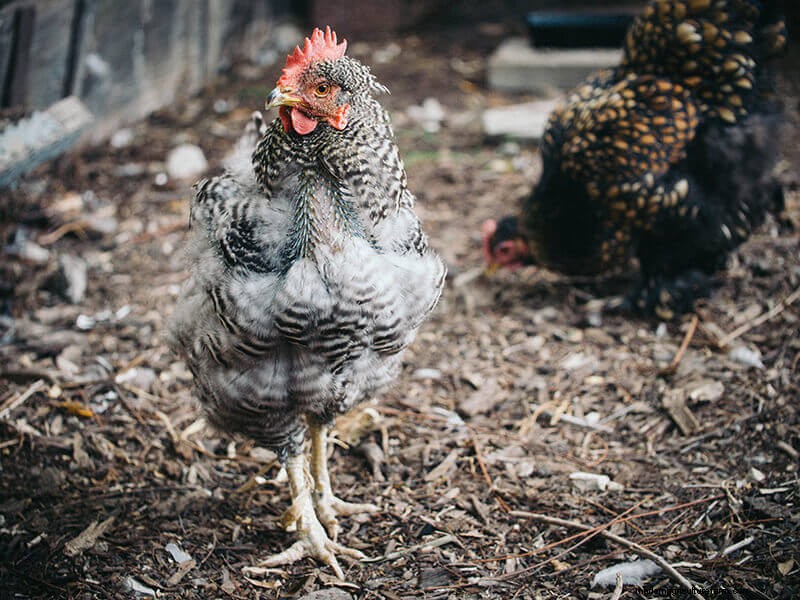
Low‑yield layers typically experience slower molting. They shed feathers in a gradual, unplanned manner, often dropping only a few feathers at a time, making the process less noticeable.
During the “stop‑production” phase, the hen’s reproductive system shuts down, which is why these birds stop laying until the molt is complete.
While the timing of a molt can’t be accelerated, feeding a protein‑rich diet during the molt can support overall health. A balanced diet helps replace lost tissues and supports the hen’s body functions.
Molts usually follow a “contour‑pattern” from head to tail. However, environmental factors such as heat stress, malnutrition, or dehydration can trigger off‑season molting, leading to irregular feather loss.
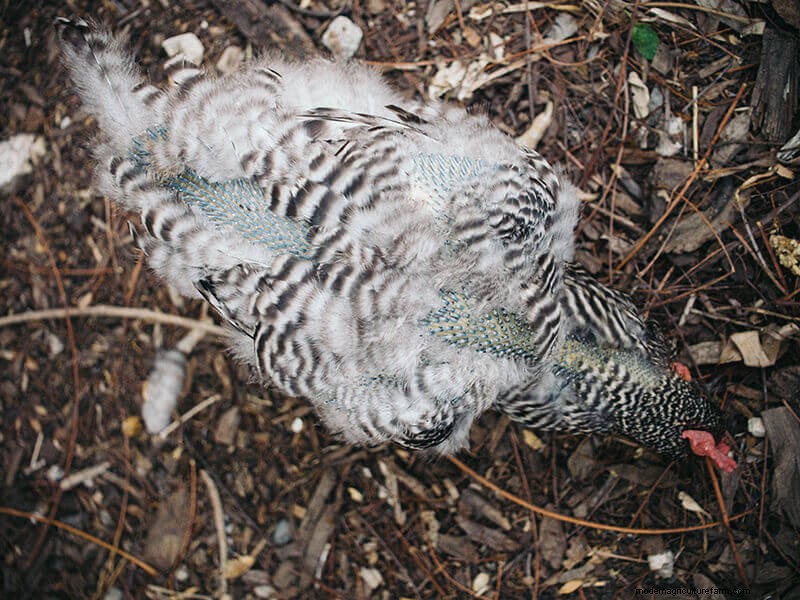
In my flock, the Barred Rock Kimora is a prolific layer, producing up to six eggs per week during peak season. She molts quickly in the fall—by week seven her new feathers are fully grown, and she continues to lay a few eggs each week into winter.
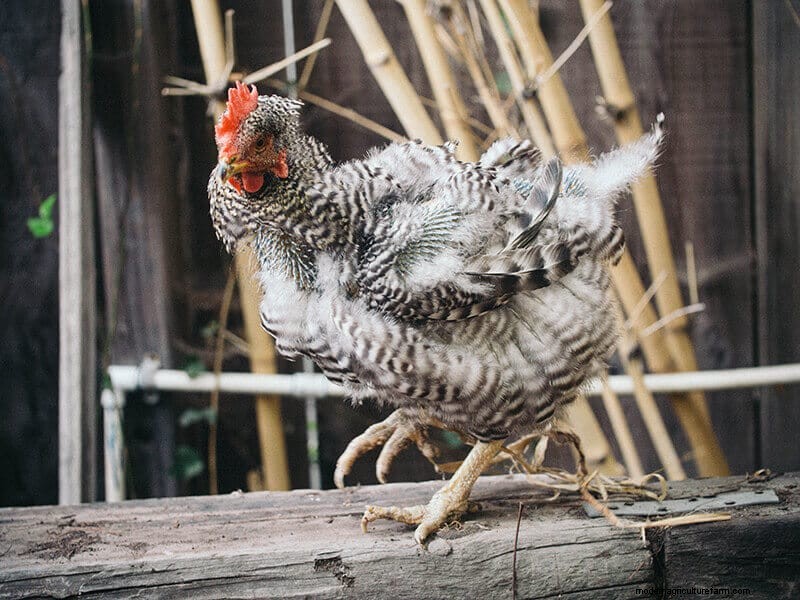
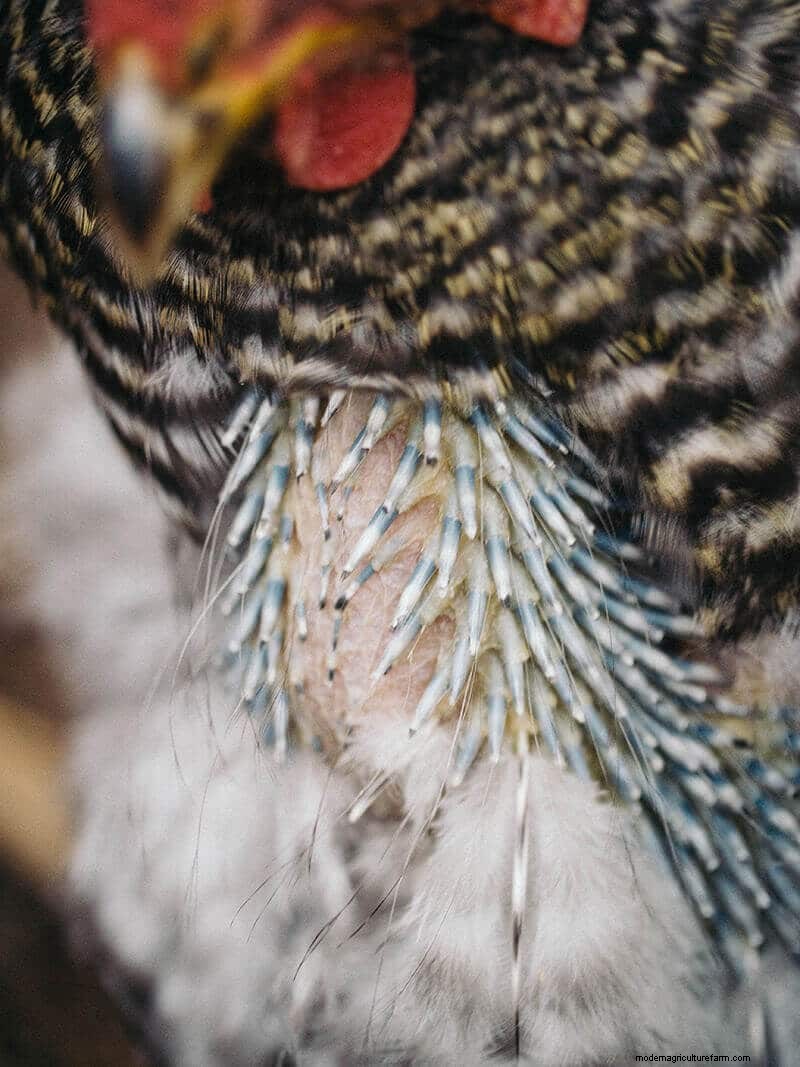
The Golden Laced Cochin Iman, a slower‑molt breed, lays fewer eggs—about three per week in summer. She starts molting late summer, and I notice the feather loss only when I find a few feathers in the coop. She does not lay again until late winter, after the molt is complete.
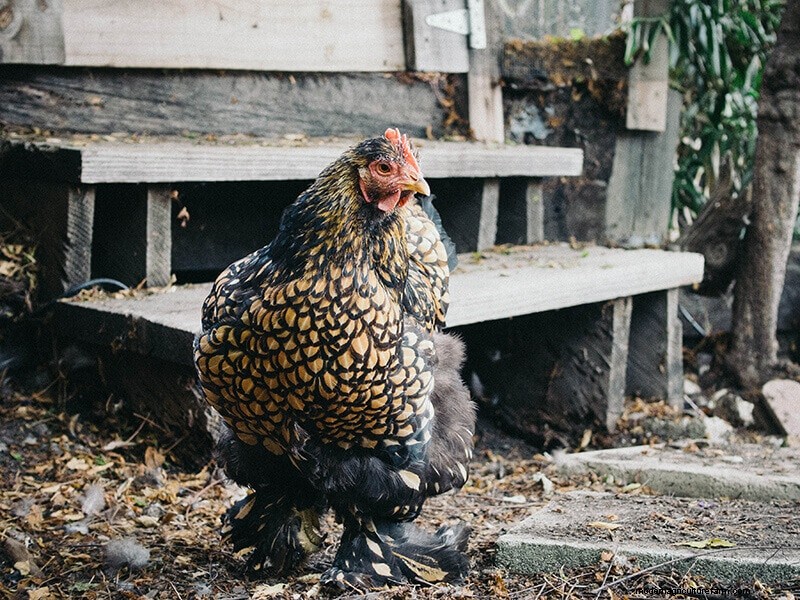
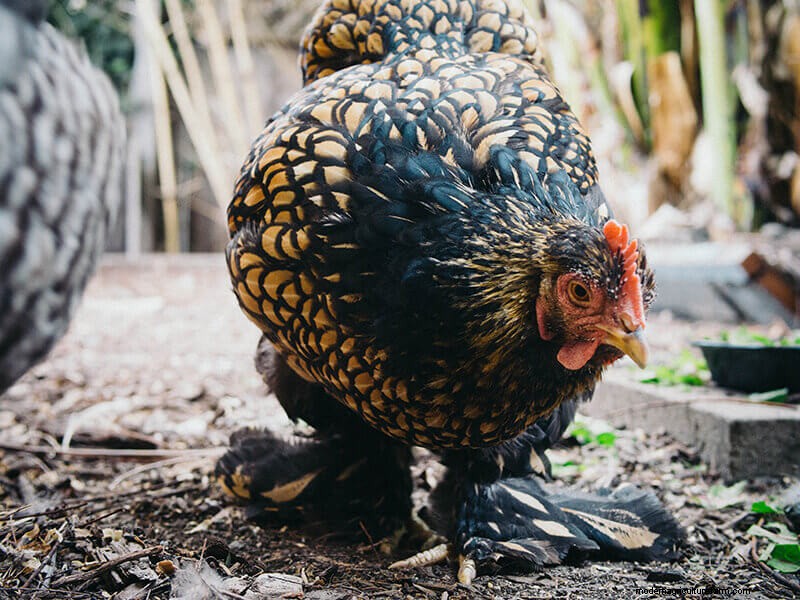
While Iman is not as prolific as Kimora, she maintains a beautiful appearance throughout the year.
Most hens undergo their first adult molt at 16–18 months old. Younger hens (under 12 months) usually do not molt during their first year; the molt occurs the following year.
Note that the adult molt differs from juvenile molts that replace downy feathers in young chickens, which occur when they are 1 week old (down feathers) and at 8–12 weeks old (baby feathers).
Chickens possess a circadian clock that synchronizes with the amount and intensity of light. When light levels drop, the clock signals the bird to initiate molting—a process known as “molt induction.”
Artificial lighting, heat stress, physical stress, malnutrition, or dehydration can also trigger off‑season molting.
A chicken molt typically lasts between one and five months, and is considered healthy and normal. Some birds may take up to six months to complete their molt, shedding feathers gradually but consistently while new feathers grow.
On average, a molt lasts about two months, starting in late summer.
Although the molting process cannot be accelerated, you can supplement the hen’s diet with extra protein during the molt to help it remain healthy. Provide high‑protein chick feed, mealworms, grubs, or even scrambled eggs. These “food‑to‑nutrient” adjustments support the growth of feathers and other tissues.
This post updated from an article that originally appeared on December 3, 2015.

Linda Ly
I'm a plant lover, passionate road‑tripper, and cookbook author whose expert advice and bestselling books have been featured in The Wall Street Journal, Time Magazine, HGTV, and Food & Wine. The Route 66 Cookbook is my latest book. Garden Betty is where I write about modern homesteading, farm‑to‑table cooking, and outdoor adventuring—all that encompass a life well‑lived outdoors. After all, the secret to a good life is... Read more »


