Growing winter squash requires some patience, but this orange and golden warm-season garden vegetable is well worth the wait—and most varieties have a long shelf life. From butternut squash to acorn squash, learn how to plant, grow, harvest, and cure winter squash in your home garden!
About Winter Squash
Because winter squash requires a long growing season (generally from 75 to 100 frost-free days), the seeds are generally planted by late May in northern locations to early July in extremely southern states. See your local frost dates and length of growing season.
Winter squash is harvested in autumn, just before or after their fruits reach full maturity. At this time, the skin is inedible. Squash have a relatively long shelf life (some varieties will keep through winter, hence the name "winter squash"). Varieties include acorn, butternut, Hubbard, pumpkin, and spaghetti.
Despite the great diversity of squash, most commonly grown cultivated varieties belong to one of three species:
- Cucurbita pepo
- C. moschata
- C. maxima
Over several generations, these plants have been cultivated to produce fruit in all kinds of shapes, colors, and flavors.
Squash is one of the three plants grown in the traditional Native American style called the Three Sisters, along with beans and corn. Squash served as a ground cover to prevent weeds from growing. Beans provided natural fertilizer for all three plants, and corn provided a support system for the beans. Learn more about the Three Sisters.
Planting
When to Plant Squash
- This tender warm-season crop is not sown in the ground until all danger of frost has passed and the air and soil are at least 60°F, preferably 70°F. Squash are very sensitive to the cold.
- If you have a short growing season, start seeds in peat pots 2 to 4 weeks before your last spring frost date. Squash seedlings do not always transplant well; handle the roots gently.
Choosing and Selecting Planting Site
- Soil must be rich and fertile (see preparing soil below) but also drain well and not get too soggy.
- Pick a site with full sun and lots of space for sprawling vines. Most full-size winter squash varieties need 50 to 100 square feet to spread. Though squash takes up a lot of space, it's a prolific producer so it only takes a few plants to feed a family and neighbors! Don't overplant. If your garden space is limited, plant winter squash at the edge of the garden and direct vine growth across the lawn.
- You can also grow squash in big 5 to 10 gallon buckets. Or, if you're even more strapped for space, miniature varieties also exist; they can easily be grown up trellises.
Preparing Soil in Advance
- In advance of planting, prepare the soil with lots of organic matter. First, remove any rocks. Then, add in lots of aged manure and/or compost (about 50% native soil to organic matter) dug deep into the ground (the top 8 to 10 inches). Work it up in the autumn or several weeks before planting, but only when the soil is dry enough not to stick to garden tool. Let it settle for about two weeks before planting.
How to Plant Winter Squash
- If you plan to grow only a few plants, use 2 to 3 tablespoons of a balanced (10-10-10) fertilizer for each hill. Scatter the fertilizer evenly over a 2-foot by 2-foot area. Work it into the top 3 to 4 inches of soil. (Or, for a larger garden area, add 2 to 3 pounds of balanced fertilizer for each 100 square feet.)
- Sow seeds in level ground 1 inch deep with seeds 2 to 3 feet apart. Or, sow 3 to 4 seeds close together in small mounds (or hills; the soil is warmer off the ground) in rows 3 to 6 feet apart.
- TIP: Consider planting a few squash seeds in midsummer to avoid problems from squash vine borers and other early-season pests and diseases.
- The seeds should germinate in about a week with the right soil temperature (70ºF / 21°C or more).
- If necessary, use row covers or framem protection in cold climates for the first few weeks of spring.
Thinning Seedlings
- When seedlings in rows are 2 to 3 inches tall, thin to one plant every 18 to 36 inches by snipping off unwanted plants without disturbing the roots of the remaining ones.
- When seedlings in hills are 2 to 3 inches tall, thin to 2 to 3 plants per hill by snipping off unwanted plants without disturbing the roots of the remaining ones
Video Demo: See How to Grow Winter Squash
Care
How to Grow Winter Squash
General Care Tips
- Mulch to discourage weeds, retain moisture, and protect shallow roots.
- Use row covers to protect plants early in the season and to prevent insect problems. Remember to remove covers before flowering to allow pollination by insects.
- When weeding around squash plants, do not over-cultivate, or the squash's shallow roots may be damaged.
- Squash vines are delicate. Take care not to damage the vines.
- Small winter squash varieties can be trained up a trellis. Larger varieties can be trained upward on a trellis, too—though it is a challenge to support the fruit. Netting or slings made of breathable fabric can help to support the heavy fruit.
- Pruning the vines will help with space, as well as allow the plant’s energy to be concentrated on the remaining vines and fruit.
Watering
- Water throughly, frequently, and consistently, with at least 1 inch per week. Water more if you see the leaves wilting. Sandy soils need to be watered more often than heavy clay soils.
- Water diligently when fruit form and throughout their growth period. Misshapen squash result from inadequate water or fertilization.
- When watering, try to keep leaves and fruit dry. Dampness will make root rot and other diseases more likely.
Fertilizing
- Winter squash are heavy feeders. It helps to water regularly with aged manure/compost mixed into the water.
- When the first blooms appear, scratch about 2 tablespoons of all-purpose fertilizer around each hill. Or, if growing squash in rows, side-dress. This give plants a boost as they try to produce fruit or blooms. Do not let the fertilizer touch the plants. Water the plants after fertilizing.
- Once vegetables or flowers start growing and producing buds, you can scratch a small amount of all-purpose organic fertilizer into the soil around the base of the plant and water in, to
Flowering and Fruiting
- Poor polllination can result in squash flowers that do not bear fruit or that bear small fruit. Pollinator activity is reduced by any chemicals, poor weather at bloom time, and lack of habitat. To attract more bees, try placing a bee house in your garden or plant pollinator flowers nearby.
- If your first flowers aren’t forming fruits, that’s normal! Squash plants have separate male and female flowers. Males appear first on long thin stalks. Female flowers follow; these have an immature fruit at the bottom. To fruit, pollen from male flowers must be transferred to the female flower by bees. Or, the gardener can help manually with a cotton swab or paint brush.
Pests/Diseases
Squash bugs are generally considered the most difficult pest and need to be managed early. There are several organic approaches to control:
- Handpick and scrape off those egg clusters early and as best you can
- Spray neem on egg clusters and juvenile squash bugs
- Growing young plants under row covers
- Delay squash planting until early summer as the natural enemies of squash bugs become more numerous and active as summer progresses.
See our Squash Bug pest page for more information.
Other squash pests and diseases include:
- Cucumber beetles
- Aphids
- Squash Vine Borer
- Powdery Mildew
- Blossom-end Rot
- Anthracnose
Recommended Varieties
- 'Waltham Butternut': A large, tan fruit; this butternut squash is sweet and thin-skinned; harvest when it's on the smaller side; flavor improves with storage
- ‘Honeybaby’ or 'Honeynut' butternut squash plants are compact and ideal for small spaces, raised beds, or containers. Expect about 8 small squash per plant. They’ll weigh a quarter to a half pound and perfect for steaming or baking.
- ‘Butterscotch’ butternut squash produces 1 to 2-pound fruits on short vines. The sweet flesh is rich and smooth. Each plant yields 3 to 4 fruits and the plant is resistant to powdery mildew.
- Blue Hubbard squash is an heirloom known for its huge size, blue-gray color, and very hard skin. The flesh inside is orange, flavorful and smooth. It is great for pies and soups and stores well. Give this variety plenty of room to grow.
- 'Buttercup': A round fruit with long vine, Buttercup has deep, bright orange flesh, a dark green inedible rind, and flat top. This heirloom has a sweet, nutty flavor.
- 'Delicata': This bush type squash almost looks like a summer squash. It's very moist and even good raw. Delicata is also tolerant of powdery mildew
- 'Tuffy': An acorn type of squash, expect five or six fruit per plant. Acorn squash is bowl-shaped and has a nutty flavor and more fiborous texture than some squash.
- ‘Sugaretti’ spaghetti squash has eye-catching striped fruits. Each medium-sized squash grows up to 10 inches long and has a sweet nutty flavor. The plants are compact and are resistant to powdery mildew. Bake the squash and use the flesh as a pasta substitute.
- ‘Sunshine’: An award-winning kabocha squash with orange-red skin and bright orange flesh. The compact vine yields about 3 to 4-pound fruit that have a round, flattened shape. The flesh has a sweet nutty flavor and creamy texture. The fruits can be stored for months.
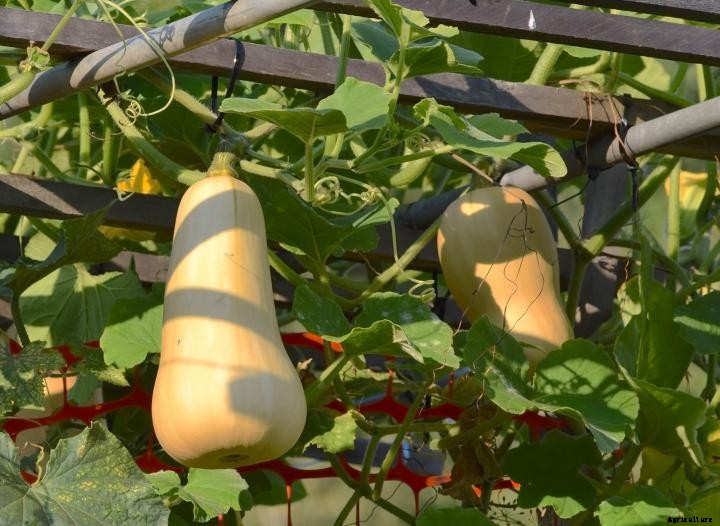
Image: Like most winter squash, the butternut squash is a vining plant that require support and space. Credit: By Ratda/Shutterstock.
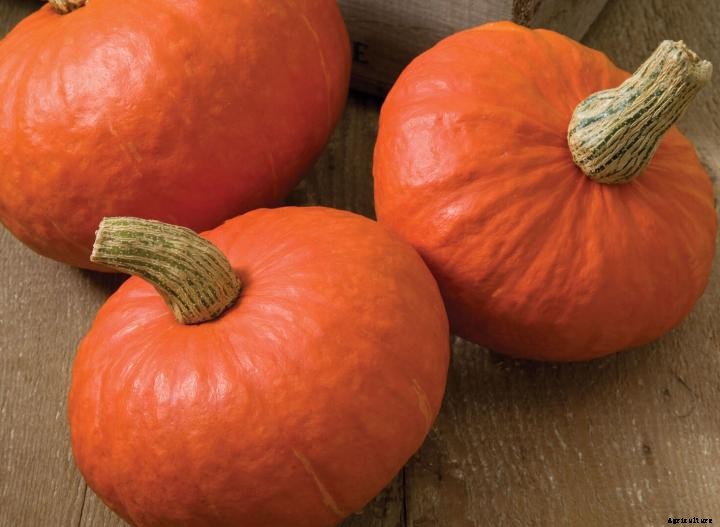
Image: The usunual kaboucha squash; space-saving 6 to 8 foot vines; early maturity makes it adaptable to almost any growing location in North America. Credit: Johnny Seeds.
See more pictures of different types of squash.
Harvest/Storage
How to Harvest Winter Squash
Winter squash and pumpkins are generally ready to be harvested in early- to mid-autumn, usually late September through October.
- Unlike summer squash, which is harvested when tender and a bit immature, harvest winter squash when it is fully mature. The vine leaves die back and turn brown, the stems dry out and get tough, and the rind is deep in color and hard. If you can pierce the skin with your fingernail, it is not mature.
- Harvest on a dry day after the vines have died back.
- Leave an inch or two of stem on winter squashes when harvesting them.
- Cut the squash off the vine carefully with a sharp knife or pruners; do not tear, as you could break the fruit stem or the vines.
- Never carry the squash by their stem; if the stem breaks off, this exposes the skin to infection.
Once you harvest, don't forget to clean up the old squash vines to avoid disease! Add vines to the compost pile if you have one; they'll break down and you can work into the soil before the next planting season.
How to Cure Winter Squash
Winter squash must be “cured” before storage. This process helps to dry off excess moisture and to harden the skin, sealing out fungi and bacteria and allowing the squash to keep for longer.
If the weather is dry, just leave your squash on the vine and let them cure outside in the sunshine. If it’s wet or turning colder, bring the squash inside and put them somewhere warm and dry, such as a slatted greenhouse bench or a sunny window.
How to Store Winter Squash
Before storing winter squash, dip it into or wash with a low-concentratio bleach rinse (1/2 cup bleach to 5 cups water) to sanitize the skin and eliminate bacteria. Air-dry the fruit.
Store in a cool (40° to 50°F), dry, dark place with good circulation. Many varieties of squash will last most of the winter. Note: Acorn will not keep for more than a few weeks.
Occasionally rotate and look for signs of rot. Remove any squash that shows signs of decay.
Try to save some seeds if you grow heirloom varieties (not hybrids) to plant next year. Wash and dry the seeds. Store in an airtight jar in a cool, dark place.
Wit and Wisdom
- The word "squash" derives from askutasquash, the Narragansett Native American word meaning "eaten raw or uncooked."
- Winter squash have been grown in North America for more than 5,000 years.
- Presidents Washington and Jefferson grew squash in their gardens. Give it a try!
- So-called squash bees—Peponapis and Xenoglassa—are excellent Cucurbita pollinators and especially so for butternut squash (and summer squash). Look for them among the flowers in the first few hours after sunrise.
Recipes
Blue Ribbon Pumpkin Pie
Pumpkin Cheesecake Pie
Baked Acorn Squash
Spaghetti Squash Vegetable Medley
Butternut Squash With Penne and Sausage
Maple Squash Casserole
Cooking Notes
- Winter squash is often baked in casseroles or on its own; cook all types of squash only until tender to keep the nutritional content.
- Mmmm, Pumpkin Pie! See our collection of Best Pumpkin Recipes!
- Winter squash is a good source of Vitamin A and has fair amounts of Vitamins C. The darker the flesh, the more beta-carotene the squash has to offer. Learn more about winter squash’s health benefits!
- One cup of cubed winter squash contains about 80 calories, virtually no fat, and very little sodium.


