Have you ever considered growing your own kiwifruit? There are two main types of kiwi plants that can be grown in the home garden: one that is better suited for colder regions and the other for warmer, frost-free areas. Learn how to plant, grow, and harvest kiwis in your garden!
About Kiwifruit
Did you know that these tasty and nutrient-packed fruits grow on a vine and aren't native to New Zealand?
In fact, the kiwifruit plant (Actinidia deliciosa) originally stems from temperate parts of southwestern China and was traditionally known in English as the "Chinese gooseberry." In the early 20th century, the plant was exported to Europe, the United States, and New Zealand, where the vast majority of kiwifruit is grown today.
Hardy kiwi (A. arguta), on the other hand, is native to northern China, Japan, and the Korean peninsula.
Types of Kiwifruit
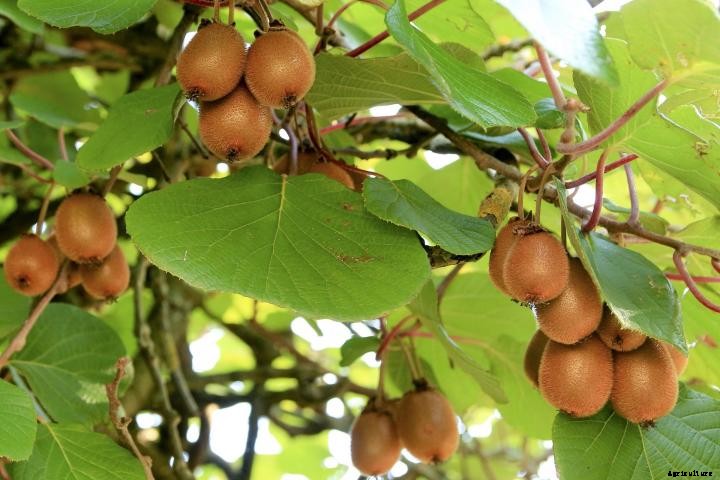
There are two main types of kiwi plants that can be grown in home gardens: the kiwifruit (A. deliciosa) and the hardy kiwi or kiwiberry (A. arguta, A. kolomikta). The kiwifruit is the type that most of us are familiar with; it produces those fuzzy brown fruit that are about the size of an extra-large chicken egg. The hardy kiwi, on the other hand, produces smooth, green, grape-sized fruit, which is why it also goes by the name "kiwiberry." The flavor is said to be sweeter than that of the larger kiwifruit. Some species of hardy kiwis, like A. kolomikta, are grown mainly for their attractive, pink-variegated foliage and fragrant flowers.
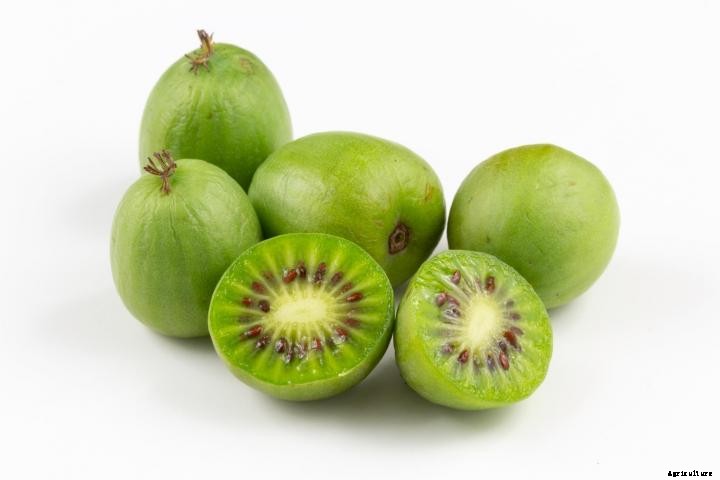
Aside from the difference in their fruits, the plants also differ in terms of hardiness. As its name suggests, the hardy kiwi does best in colder areas (USDA Hardiness Zones 4 to 7) and is even capable of surviving subzero temperatures, while the kiwifruit should be grown in regions where frost is infrequent (Zones 8 to 9). That being said, the fruit and flowers of both types are very susceptible to spring and fall frosts, so this plant is best grown in areas that have a frost-free growing season of at least 200 days.
Note: If you are considering growing kiwifruit in your garden, know that both a male and a female plant are required to produce fruit. The male plant produces flowers, while the female plant produces both flowers and fruit. (However, there is one reportedly self-fertile variety of hardy kiwi called 'Issai', if you only have space for one plant!)
Planting
When to Plant Kiwi Vines
- Plant kiwi plants in the spring after the threat of frost has passed.
- Kiwis typically begin bearing fruit 3 to 5 years after planting.
Choosing and Preparing a Planting Site
- Kiwi vines need a sunny spot to produce the best growth and fruit.
- Plant in a protected area of the garden to avoid wind damage.
- Plant the vines on the north side of the yard in colder regions to minimize the risk of freeze-thaw damage in early spring, when plants are especially susceptible.
- Kiwi plants require well-drained soil, as they are prone to root rot if kept too wet.
- Kiwi vines are slow growers and need sturdy supports. Erect a tall heavy-duty trellis system that can support the vines that can grow 15 feet wide and 20 feet long, and produce up to 100 pounds of fruit.
How to Plant Kiwi Vines
- To get a good crop from kiwi, you'll need to plant male and female plants. The females produce the fruit.
- Tip: The best ratio is said to be at least one male plant for every six female plants.
- Plant the vines 10 to 15 feet apart.
- When planting, you may need to trim the roots if too long.
- Plant vines just deep enough to cover the roots well with soil.
- Water well at the time of planting.
Care
How to Grow Kiwi Vines
- Unless it has been rainy, give the plants supplemental watering during the height of summer or during other dry periods.
- Do not fertilize in the first year. After that, fertilize with a well-balanced fertilizer or soybean meal in the spring.
- Start training the flexible vines up a support during the first year of planting.
- Prune the lateral growth (if not flowering) 2 to 3 times during the growing season.
- Kiwi plants flower and fruit on old wood.
- Regularly remove water sprouts (vigorous shoots originating from older wood) and shoots from the trunk.
- Prune female vines during the winter months, when the plant is dormant. Prune male vines in early summer after bloom.
- In cold areas, the vines of hardy kiwi may die back to the ground each year. Remove the dead stems and mulch with leaves or straw.
How to Propagate Kiwi Vines
- Kiwi can be propagated from seeds. Here's how:
- Remove the seeds from a mature kiwi and let the seeds dry for two days.
- Place the seeds in a container with moist perlite and refrigerate at 40°F (4°C) for 2 months.
- Plant the seeds 1/8 inch deep in moist sterile potting mix and cover the container with plastic wrap.
- Place the container in a warm, bright spot and keep the soil moist.
- When seedlings start growing, uncover the container.
- When the plants have four true leaves, transplant them into individual pots.
- When the plants are several inches tall, transplant them outdoors.
- Kiwis can also be propagated from softwood cuttings (cuttings taken from new growth during the summer):
- Cut a kiwi stem into six inch lengths and cut off any growing tip.
- Put the cuttings into a glass with an inch of water.
- In about 3 weeks, the cuttings will have tiny roots at the ends of the cuttings.
- Plant the cuttings in pots or plant outdoors.
Pests/Diseases
- Root rot can occur if plants become waterlogged.
- Phytophthora crown rot
Recommended Varieties
Hardy Kiwi (Kiwiberries)
- A. arguta ‘Ananasnaya’ (also called ‘Anna’) has jade-colored skin, bright green flesh, black seeds and tastes like pineapple.
- A. arguta ‘Issai’ is self-fertile (does not require a male pollinator) and produces small, juicy fruit. Pollinators love the fragrant white flowers in early summer.
- A. arguta ‘Geneva’ ripens earlier than either 'Anna' or 'Issai' and has sweet, honey-flavored fruit.
- A. arguta ‘Ken’s Red’ has fruit with reddish-purple skins. The flesh inside is dark green with deep-red streaks.
- A. kolomikta ‘Red Beauty’ fruit ripens earlier than most hardy kiwi species, but A. kolomikta can be more temperamental in general. Fruit is skinny and sweet. Foliage turns a brilliant red in the fall.
Kiwifruit
- 'Hayward' is the main female variety of A. deliciosa grown commercially. It produces the fuzzy brown fruit with green interiors that can be found in grocery stores.
- Male varieties include 'Chico', 'Matua', and 'Tamori'.
Harvest/Storage
When to Harvest Kiwi Fruit
- The fruit typically reaches maturity in September/October, which can make it susceptible to early fall frosts in some areas.
- Harvest the fruit when they are soft to the touch and ready to be eaten.
- Alternatively, if early fall frosts are a concern, harvest kiwi fruits when they are still firm but have black seeds. These fruit can be stored in the refrigerator for up to six weeks. Remove it from the refrigerator and allow it to soften for a couple days before eating.
How to Store Kiwi Fruit
- Store firm kiwi in the refrigerator or a cooler for up to six weeks.
- Freeze firm whole hardy kiwis on a cookie sheet and then put them into plastic freezer bags.
Wit and Wisdom
- The kiwi was once referred to as "Chinese gooseberry."
- Hardy kiwi is rich in vitamins C, A and E, potassium, fiber, calcium, and iron.
- Hardy kiwi fruit is also known as kiwiberry, baby kiwi, dessert kiwi, grape kiwi, and cocktail kiwi.
Recipes
Kiwi Jam
Cooking Notes
Raw kiwifruit is rich in a protein-dissolving enzyme called actinidain. This makes the kiwi unsuitable for use in dishes that contain milk products or gelatin. If these dishes are not served immediately, the enzyme starts to digest the proteins in the dishes destroying the texture. In gelatin-based dishes, the enzyme can prevent the liquid from solidifying.


