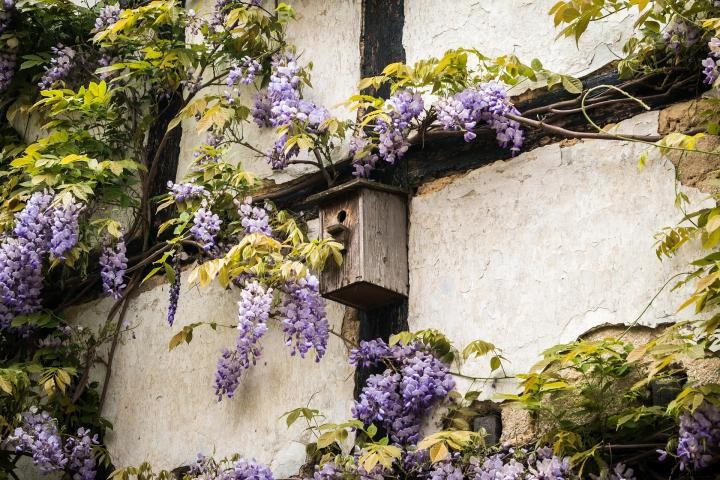
Wisteria blooms vigorously in spring, producing clusters of lilac-color flowers on new growth, which in turn emerges from spurs off the main shoots. When this gorgeous vine finishes flowering (often in June), it's time to prune! See more about caring for wisteria, from planting to pruning in our Wisteria Growing Guide.
About Wisteria
Wisteria is a long-lived vining plant with cascades of blue to purple flowers that look spectacular hanging from a pergola or archway in spring and early summer. However, this vine is a fast and aggressive grower—often reaching 30+ feet long—and is known to grow quite heavy. Wisteria vines will work their way into any crook or cranny they can reach, so it's advised to not plant them too near to your home.
Wisteria flowers are beautifully fragrant, providing a feast for the senses. After flowering, a brown, bean-like pod stays on the plant until winter. Blooms only appear on new growth.
Note: Plant wisteria with caution! All parts of the wisteria plant contain substances called lectin and wisterin, which are toxic to pets, livestock, and humans. These toxins can cause anything from nausea and diarrhea to death if consumed in large amounts.
Is Wisteria an Invasive Plant?
Chinese wisteria (Wisteria sinensis) and Japanese wisteria (Wisteria floribunda) are not native to North America and are considered invasive species in some states. The native wisteria species, American wisteria (Wisteria frutescens) and Kentucky wisteria (Wisteria macrostachya), are great alternatives to the Asian species, so if you’re planning on adding a new wisteria to your garden, we suggest that you go with one of the North American species.
Wondering how to tell the difference between the Asian and North American species?
Asian wisteria are aggressive growers with fuzzy seed pods, while North American wisteria are not quite as aggressive in their growing habits and have smooth seed pods and fruits, as well as more-or-less cylindrical, bean-shaped seeds. Another difference is that American and Kentucky wisteria’s flowers appear after the plant has leafed out in the late spring, whereas the Chinese wisteria's blooms appear before its foliage.
Planting
When to Plant Wisteria
- Plant in the spring or fall, while the plant is dormant.
- Wisteria can be grown from seed, but those grown from seed often take quite a few years to reach maturity and produce flowers. It's recommended to purchase established wisteria plants or start from a cutting.
Where to Plant Wisteria
- Plant in full sun. Though wisteria will grow in partial shade, it probably won’t flower. Sunlight is essential.
- Plant wisteria in fertile, moist, but well-draining soil.
- If your soil is in poor condition, add compost; otherwise, wisteria will grow in most soils. Learn more about soil amendments and preparing soil for planting.
- Choose a site away from other plants, as wisteria grows quickly and can easily overtake its neighbors.
- Wisteria is also known for growing onto (and into) nearby structures, such as houses, garages, sheds, and so on. We strongly recommend not planting wisteria too close to your home!
- Wisteria vines require a very sturdy structure to climb on, such as a metal or wooden trellis or pergola. Mature plants have been known to get so heavy that they break their supports, so plan with care and build your structure with hefty materials.
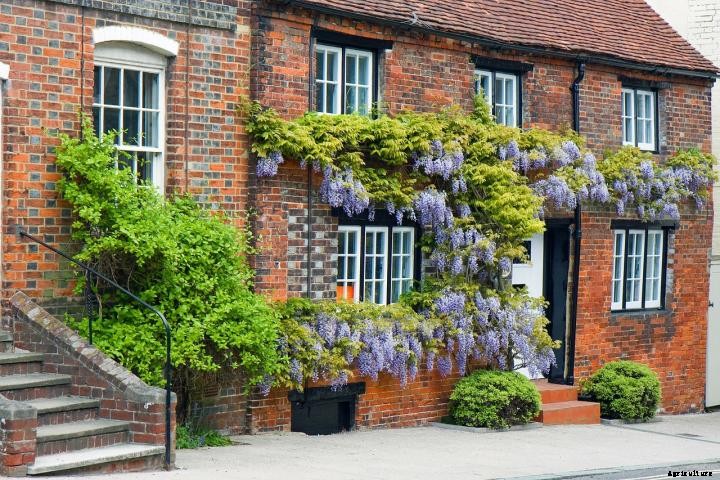
Wisteria looks lovely climbing up the side of a home, but plant with caution; wisteria vines are very powerful and will find their way into any crack or crevice!
How to Plant Wisteria
- Dig a hole as deep as the root ball and 2 to 3 times as wide.
- Space plants 10 to 15 feet apart.
Care
Caring for Wisteria
- Each spring, apply a layer of compost under the plant and a 2-inch layer of mulch to retain moisture and control weeds.
- Some gardeners swear by phosphorus to aid with flowering. Scratch a couple of cups of bone meal into the soil in the spring and then add some rock phosphate in the fall. Read more about soil amendments.
- Water your plants if you receive less than one inch of rain each week. (To know how much rain you are getting, you can place an empty food can outside and measure the depth of water with a measuring stick.)
- For more blooms, try cutting back the rampant shoots every two weeks during the summer.
Pruning Wisteria
Pruning is the secret to good flowering, as wisteria only bloom on new wood.
- Prune wisteria in late winter. Remove at least half of the prior year’s growth, leaving just a few buds per stem.
- If you want a more formal appearance, also prune in summer after traditional flowering. Wisteria produces its flowers on new growth from spurs off the main shoots. Prune all this year's new shoots back to a spur leaving no more than about about 6 inches of growth. In the process the whole plant can be tidied, trained and tied in so that there are no loose, trailing shoots.
- Informally grown, mature plants need little or no subsequent pruning. But for a formally trained plant, cut side shoots back to 6 inches in summer, then shorten them again in winter to 3 buds.
- Do you have a new wisteria? Cut the vine back severely right after planting. Then, the next year, cut the main stem or stems back to 3 feet of the previous season’s growth. Once the framework is full size, shorten further extension growth in midsummer to where growth began for that season.
- Get more tips for pruning wisteria.
When Your Wisteria Won't Bloom
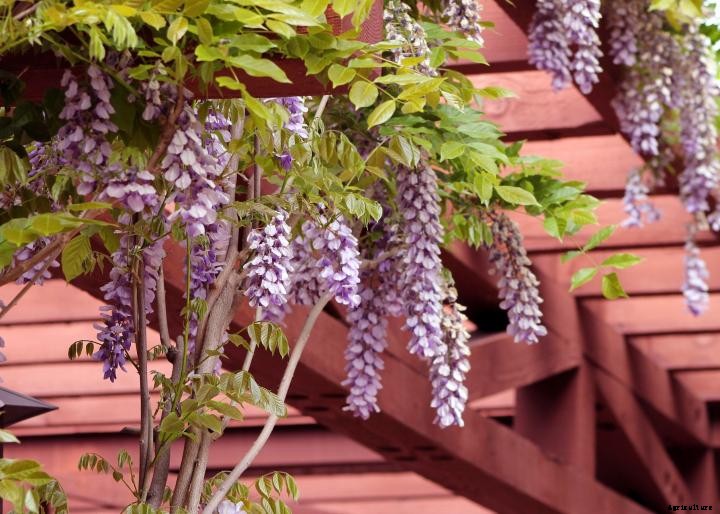
Wisteria are notorious for taking a long time to bloom. Don't expect flowers for 2 to 3 years after planting. Some readers have sworn by this method to spur on blooming:
- Take a shovel and drive it 8 to 10 inches into the ground about a foot and a half away from the wisteria's main trunk to slice into some of the roots.
- Damage about half of the roots and the bush will be shocked into reproduction (flowering).
- Don't worry—it's difficult to hurt this rampantly-growing, unrestrained, often-invasive plant!
- Frigid winter temperatures can also affect wisteria's blooms.
Pests/Diseases
- Dieback
- Crown gall
- Leaf spots
- Viral diseases
- Japanese beetles
- Aphids
- Leaf miners
- Scale insects
- Mealybugs
Recommended Varieties
Native Wisteria
If you are located in North America, consider planting a species of wisteria native to the continent, such as:
- American wisteria (Wisteria frutescens), which grows in Zones 5 to 9. It’s native to a range of states covering Virginia to Texas, southeast to Florida and north up through New York, Iowa, and Michigan. The vine grows 25 to 30-feet long with shiny, dark-green leaves and large, drooping lilac or purple-blue flower clusters which appear after the plant has leafed out. The blooms will only appear on new wood. However, note that the flowers tend to be more lightly fragrant than the Asian wisterias' flowers.
- Kentucky wisteria (Wisteria macrostachya), which grows in Zones 4 to 9. This late-season bloomer is native to the southeastern U.S. and is similar to American wisteria (it is sometimes considered a variety or subspecies of American wisteria). Kentucky wisteria bears mildly fragrant bluish-purple flowers after growing only two to three years, making it the quickest wisteria to bloom.
- ‘Blue Moon’ is an extra-hardy cultivar of native Kentucky wisteria, with showy, silvery-blue clusters. It blooms in late spring or early summer. It’s cold hardy to -40°F (-40°C).
Non-Native Wisteria
- Chinese wisteria (Wisteria sinensis) and Japanese wisteria (Wisteria floribunda) are non-native, invasive species, so we do not recommend them for North American gardens, despite the fact that they are regularly sold at nurseries and garden centers. They are hardy in Zones 5 to 9 and are capable of growing 30 to 60 feet in length (and beyond in the Southern U.S.). Two common varieties of Japanese wisteria include:
- ‘Honbeni’ (syn. ‘Honko’): popular, bears clusters of pink flowers in late spring
- ‘Alba’ (syn. ‘Shiro Noda’): bears lovely clusters of pure-white flowers in late spring
Wit and Wisdom
Are Wisteria Toxic to Pets and Humans?
Yes, all parts of the wisteria plant contain substances called lectin and wisterin, which are toxic to pets, livestock, and humans. These toxins can cause anything from nausea and diarrhea to death if consumed in large amounts.
The substance is especially concentrated in the plant's seeds and seedpods, so removing the seedpods after the plant has flowered is a good idea if pets or children are often nearby. The seedpods do not have a foul flavor or an immediate effect, so an unknowing child or pet won't hesitate to eat as much as possible! Call your local poison control center in case of ingestion.


