Orchids have no equal: They are breathtakingly beautiful, delicate, long-blooming, long-lived, fascinating in fragrance and form, and extremely varied. Few pleasures in gardening surpass the thrill of seeing orchids thrive and bloom. Here's everything you should know about growing orchids and caring for orchids—and we've listed the most common orchid varieties.
Once rare and expensive, orchids now outsell every other houseplant, surpassing even African violets, chrysanthemums, and poinsettias. This is because modern cloning techniques allow for mass production of plants, and cultivation that used to take seven years from seed to bloom now takes only two.
About Orchids
The orchid family is one of the largest in the realm of flowering plants: More than 25,000 species grow naturally, on every continent except Antarctica. The greatest concentration of orchid varieties is found in the tropical regions of the world, namely in Asia and Central and South America. In most of North America, orchids must be grown indoors (exceptions include native species such as the lady’s slipper).
- Every orchid has a characteristic, highly evolved lip, a petal that protrudes in a blossom of three petals and three sepals, some fused together.
- Every orchid has evolved to attract a particular pollinator, which has led to orchids’ enormous variety in appearance.
- Orchids are either epiphytic (air-growing) or terrestrial (earth-growing); most tropical orchids are epiphytic. In the wild, epiphytes cling to trees and stumps, drawing moisture from the mist and rain and decomposing leaves.
Planting
We’ve all seen orchids at supermarkets and home stores and wondered if they’re a wise purchase. “Absolutely,” says Marc Hachadourian, Curator of Glasshouse Collections for the New York Botanical Garden. “Inexpensive orchids are no less likely to thrive. Just choose a strong, healthy-looking plant.”
Most store-bought orchids come packaged in cheap plastic pots with the roots packed in soaked sphagnum moss. This is a problem, as they need air flow to avoid root rot. Once you bring yours home, you should consider repotting it.
Repotting Orchids
General Potting Tips
- Do not repot while a plant is flowering, as the blooms may suffer. Enjoy the flowers, then cut off the spent flower spike with sterile snippers and repot the orchid.
- When an orchid spills out of its pot, the roots trail down the sides of the pot, or the growing medium is reduced to crumbs, it's time for repotting. Repot at the beginning of the next growth cycle (typically in the spring).
- Orchids should be so snug in their pots that you can pick up the plant by its leaves and not shake out the roots.
How to Repot an Orchid
- Carefully remove the orchid from its existing pot. New orchids are typically sold in thin plastic containers, which can be cut away.
- Dispose of the old potting medium, especially if it looks like it's breaking down or rotting.
- Inspect the orchid's roots, cutting off any that are blackened, hollow, spongy, or otherwise damaged. Healthy roots look white or green.
- Hold the plant upright in the new pot and fill in around it with new potting media, tamping down gently, to about an inch from the top of the pot.
- Water the orchid well to settle the media around its roots. Add more media if necessary.
- If the plant doesn't stay in place, consider staking it until its roots take hold of the new media. Green bamboo and curly willow make for attractive stakes.
Orchid Growing Medium
- Never plant an orchid in standard potting soil. All orchids—especially epiphytic species—need a lot of air around their roots. The best medium is one that is very light, porous, and fast-draining.
- Large plants with older roots do better in coarser growing media.
- Most garden stores sell special orchid potting mixes:
- Orchid potting mixes are made of fine, medium, or coarse fir bark chunks, which are usually combined with perlite, peat, or sphagnum moss, and horticultural charcoal. (You can mix up your own, using four to six parts bark to one part each of the other components.)
Orchid Pots
- Orchids are commonly grown in terra cotta pots because they allow for extra airflow. There are even special orchid pots which have wide drainage slits around the sides of the pot. These "peep holes" allow for air movement and also make it easier to check on the health of the roots.
- Select a pot large enough to allow at least an inch of growing space around the roots.
Care
In their native habitats, orchids grow like weeds, but they are inclined to homesickness as houseplants. For the best results, provide the conditions they prefer. Some species have individual preferences, but all need a balance of light, air, water, food, rest, and, from time to time, a new pot in order to thrive.
Orchid Flowers
Of course, orchids are renowned for their beautiful flowers, which can seem to last forever. Orchids can be picky about blooming, however. Here are answers to a few common orchid flower questions:
- How often do orchids bloom? It depends on the type of orchid. Phalaenopsis orchids will readily bloom every few months, while other types may be limited to once or twice a year.
- How long do orchid flowers last? Depending on the species, orchid flowers can last anywhere from several days to several weeks. Generally speaking, they will last longer if the orchid is kept in a cool spot, is watered sufficiently, and isn't stressed.
- When should I cut the flower spike? As soon as the flowers wilt and begin to drop off the stem (called a "spike"), it can be cut. Prune the spike off at the base, being careful not to accidentally snip any leaves or roots as well. Phalaenopsis orchids are an exception: they will often produce more flowers from the same flower spike, so don't be too quick to snip it once the flowers fade. In fact, leaving the flower spike on Phalaenopsis orchids can speed up the time between blooms.
- Why won't my orchid bloom? Your orchid is most likely not getting enough light. Read more about lighting below!
Lighting
- Without adequate light, expect lush growth but no flowers. Insufficient light is the most common reason for failure to bloom.
- These plants thrive in strong light, but direct sunlight can burn orchids. Bright, indirect light from an eastern or southern window is ideal.
- Leaf color is a good indicator of the amount of light an orchid is getting:
- Bright green leaves indicate a happy, healthy plant.
- Dark green leaves signal that a plant is not getting enough light.
- Yellowish-green or red leaves indicate that a plant is getting too much light.
- If you suspect that your orchid is exposed to too much light, feel the leaves. If they feel noticeably warmer than the surrounding air, move the plant to a location with less intense brightness.
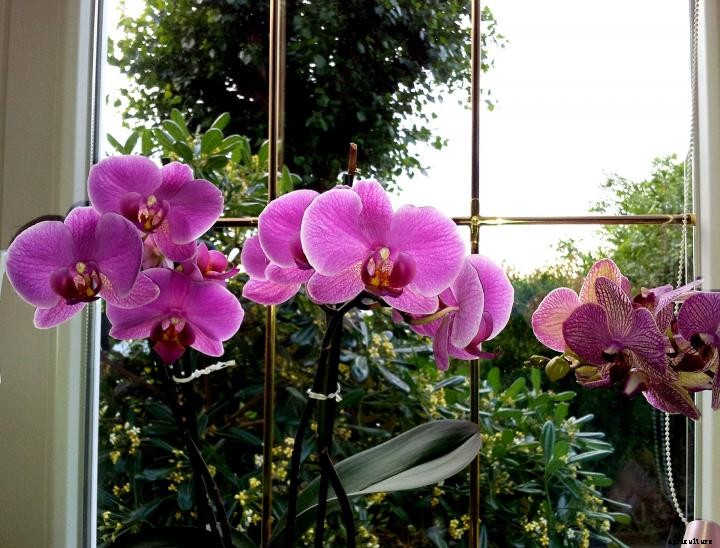
Air Circulation
- Orchids must also have fresh, circulating air. In the wild, continual gentle breezes are vital for their survival. Air in motion helps to evaporate stagnant water, which is a breeding ground for fungi and bacteria that are trapped during watering.
- Ventilation also helps orchids to tolerate intense light that would otherwise burn the leaves. Create gentle breezes: Open windows in the summer and use an oscillating fan in winter. Without ventilation, orchids may eventually die from rot, lack of carbon dioxide, or disease.
Watering
- Experts say that more orchids are killed by incorrect watering than from any other cause. Orchids should be watered just as they dry out. Over-watering may lead to rot, which kills orchid roots.
- Do not water orchids with ice cubes! Most orchid houseplants are tropical species and will not appreciate the direct chill of an ice cube. (Consider how you would feel if someone dumped a bucket of ice on you at the beach!)
- To know when to water, pick up the potted orchid and examine it: Is the potting mix dry? Does the pot feel light? This means that it probably needs a drink.
- Another way to tell if an orchid is thirsty is to look at its roots:
- Plump white roots indicate a healthy orchid that's being watered correctly. When watered, healthy roots should turn bright green.
- Shriveled gray roots signal that the orchid needs more water.
- Shriveled or spongy brown and black roots are a sign of rot, so cut down on watering.
- In general, douse plants early in the day with tepid water once a week in winter and twice a week in warmer weather. Water until the water runs out of the pot freely; this also flushes out any naturally occurring salts. When indoor air is dry, spray orchids with tepid water to keep the humidity up. Terrestrials prefer to be kept slightly more damp than epiphytes.
Fertilizing
- As a general rule, fertilize orchids every 2 weeks during peak growth (spring and summer) and once a month during dormancy (fall and winter). Use a 30-10-10 fertilizer or orchid food, diluted to half strength.
- Approaching bloom, play it safe with a balanced fertilizer, such as 20-20-20.
- Many experienced growers fertilize “weekly, weakly.”
Dormancy
- Many orchids need a period of dormancy—or rest—generally in winter. During this time, when you should reduce or stop fertilizing, plants strengthen their root systems, grow leaves, and stockpile energy for their next growth spurt and bloom. Typically, an orchid can rebloom every 8 to 12 months.
Pests/Diseases
Orchids are relatively pest-free plants but here are some possible pests. All of these can be addressed first with non-chemical options:
Wash off with warm water and insecticidal soap OR use a cotton swab and Isopropyl alcohol OR use Neem Oil OR Superior Horticultural Oils.
- Aphids: Look for clear sticky droplets anywhere on your plant.
- Scale: Check on the undersides of the leaves near the middle vein of the leaf or on the edges of the leaf. Note, when rub off these pests, note that they have hard scaly shell that must be penetrated or broken).
- Mealybugs: Look for a white cottony mass on the top right petal and column. Multiple insecticide treatments are usually necessary to get rid of it. Use the natural treatments suggested above. Or, turn to Orthene (Acephate) for most severe infestations.
- Thrips: These tiny gnat-like creatures that look like light streaks on the flowers or stippling on the leaves. The flower buds are also usually deformed. Neem is usually effective.
- Spider mites: These tiny guys show up as fine webbing on the leaves or a stippling effect. Wash off with strong stream of warm soapy water. Then spray with Insecticidal Soap.
- Snails and Slugs come out at night and leave a slimy trail so if you suspect them, take a flashlight in the evening to search for these culprits. Look under your pots, too. Use (safe) Sluggo® baits, or try the old beer trick. Put out a shallow plate (1/2-inch deep) of beer and they will be in the liquid the next morning.
Orchids rarely suffer from disease but we've listed some common ones:
- Root rot may occur when roots are kept too wet. Provide adequate airflow and water according to the tips above and your orchid shouldn't have any issues.
- Crown rot causes the center growing poit to turn black or rot. Don't leave water in the crown of the plant or this invite disease. It's usually not salvagable.
- Leaf Spot is the damage that most fungal and bacterial diseases leave behind are circular or oblong spots on the foliage or flowers. You could remove diseased leaves by cutting the leaf off about 1/2 inch to 1 inch into healthy leaf tissue that shows no signs of the disease. Be careful not to cut into the diseased tissue and then into healthy tissue, or you'll spread the disease.
Recommended Varieties
There are many beautiful orchid varieties out there today. It can get overwhelming so we have highlighted some of the most common types to get you started.
-
Cattleya, the "classic orchid" (epiphytic, or air-growing): The showy “corsage orchid” has ruffled blossoms in luminous colors and a rich, heady, hint-of-vanilla scent. To achieve blooms, it requires 5 to 6 hours of light per day. Move it outside in the summer, and water copiously.
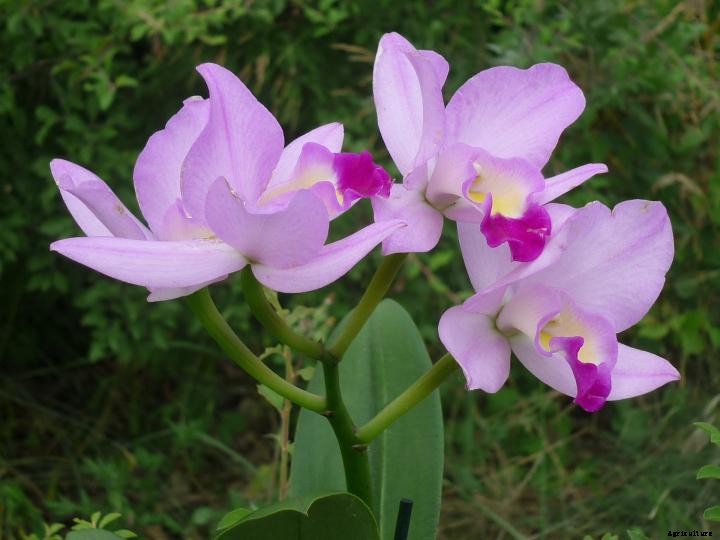
Cattleya
-
Oncidium, the "dancing lady orchid" (usually epiphytic): Easy-to-grow Oncidium bears small flowers that sway like dancing ballerinas. These fast-growing, fanciful flowers appear in every size, shape, and color that you can imagine. It needs filtered light 5 to 8 hours a day.
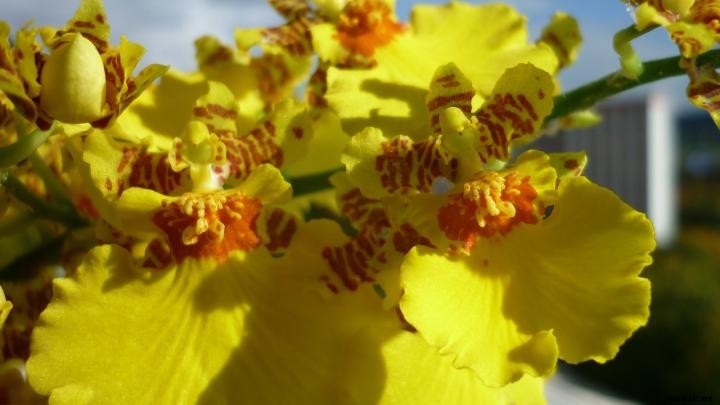
Oncidium
-
Phalaenopsis, the "moth orchid" (epiphytic): The best choice for beginners, this is easy to tend and fast-growing, producing lavish sprays of white, pink, yellow, red, spotted or striped blossoms that last for 3 to 6 weeks. It’s very cold sensitive and needs a lot of humidity. Feed it well.
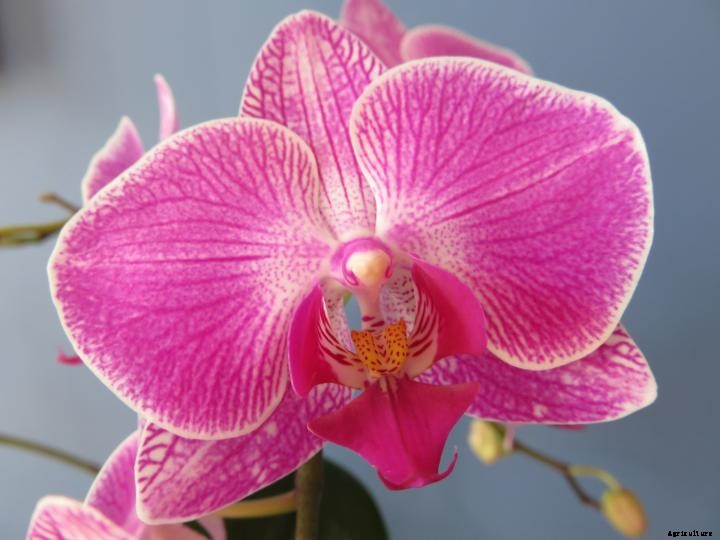
Phalaenopsis
-
Cymbidium, the "buttonhole orchid" (usually terrestrial, or earth-growing): Expect intricate, arching sprays with double rows of big (3- to 5-inch) bold blossoms in colors from pastel to primary. Native in many parts of Asia, cool-loving Cymbidiums are really outdoor orchids; in southern California, they’re ideal garden plants. Cymbidiums are often fragrant, especially those with green flowers.
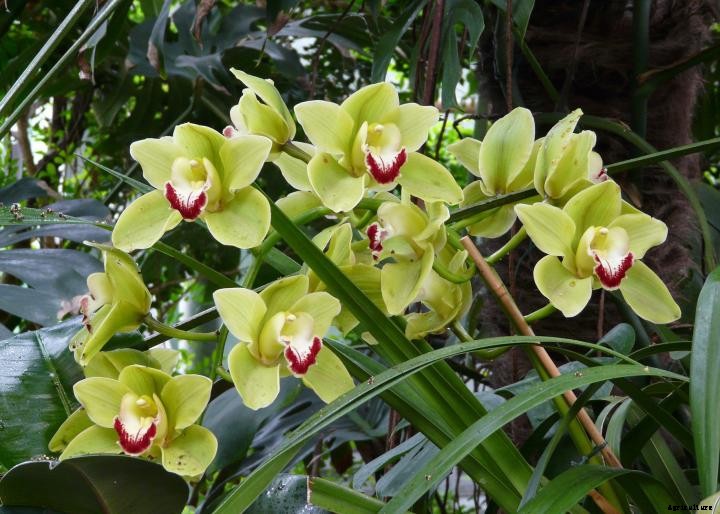
Cymbidium
-
Paphiopedilum, the "slipper orchid" (terrestrial): Often called "Lady's Slippers," this orchid is great for beginners and one of the easiest orchids to grow. Slipper orchids have long-lasting blooms, flaunting outlandish flowers in sensational and mysterious hues. They also have a patterned foliage that is attractive even when not in bloom. Lady's Slippers come in many colors and patterns.
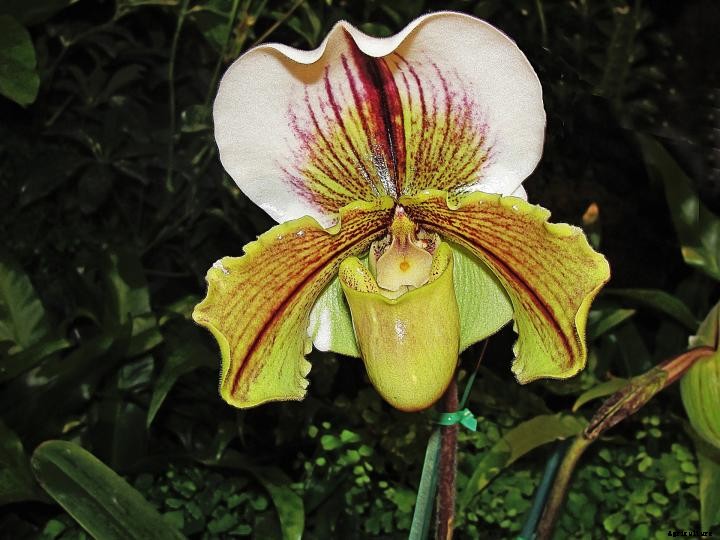
Paphiopedilum
-
Dendrobium, the "orchid of many faces" (usually epiphytic): This light-loving plant thrives when it’s pot-bound, can’t stand to have wet feet, and doesn’t like to be disturbed. The flowers are most often white or purple and white. Use a small pot and repot it only every few years.
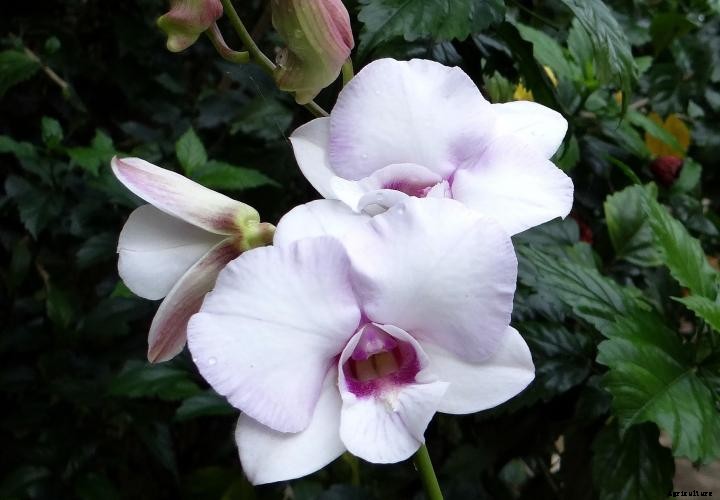
Dendrobium
Dyed Orchids
You may occasionally see Phalaenopsis orchids with neon blue or bright orange flowers for sale in stores. Unfortunately, these flowers have been dyed, which means that the flower will not be the same bright color if the plant blooms again. There's nothing wrong with buying these plants, but you should know that they'll produce only white or light pink flowers in the future.
Fragrant Orchids
Some orchids have an amazing fragrance. Among the most sweet-smelling are . . .
- Angranthes grandalena: sweet jasmine
- Brassavola nodosa: freesia or lily-of-the-valley
- Cattleya walkeriana and hybrids: cinnamon and vanilla
- Maxillaria tenuifolia: roasted coconut
- Miltoniopsis santanaei: roses
- Neofinetia falcata: jasmine
- Oncidium 'Sharry Baby': vanilla and chocolate
- Phalaenopsis bellina: freesia with a touch of lemon
- Phalaenopsis violacea: spicy, cinnamon
- Rhynchostylis gigantea: powerful citrus
- Zygopetalum: hyacinth
Wit and Wisdom
Orchid Babies
Many orchids produce babies! They are small plants or "keikis" that you can remove and repot to grow more orchids! See how to pot an orchid keiki.
Did You Know?
Orchids cleverly produce flowers resembling the pollinator that they want to attract. Ophrys apifera (below) has the appearance of a female bee visiting a pink flower. Thus, it attracts the attention of male bees. When one lands on the orchid, he’s dusted with pollen, which he then spreads when he flies away.


