Welcome to Modern Agriculture!

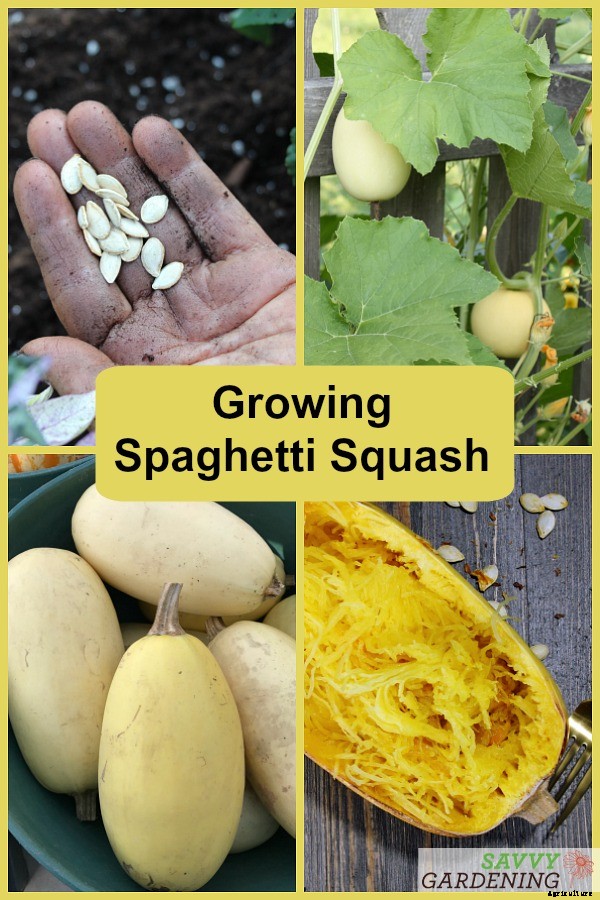
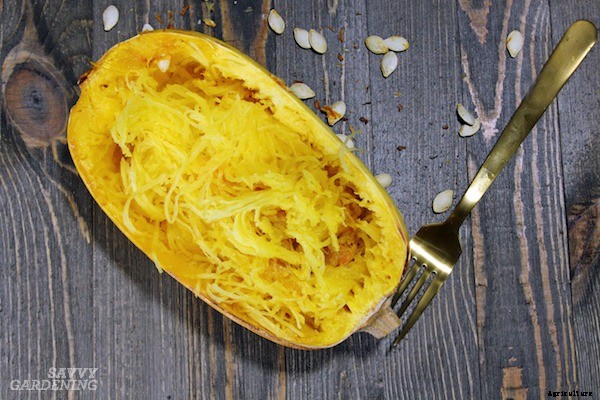
Spaghetti squash is one of my favorite types of winter squash. It makes a great pasta substitute if you’re trying to eat healthier or add more veggies to your diet. When pulled apart with a fork, the interior of a cooked spaghetti squash is stringy and noodle-like, mimicking its namesake pasta perfectly. The mild flavor tastes great topped with marinara or garlic scape pesto. Growing spaghetti squash is surprisingly easy, as long as you have enough room in the garden. In this article, you’ll learn how to grow spaghetti squash in garden beds, both vertically and on the ground.
Spaghetti squash (Cucurbita pepo) is a type of winter squash. Members of the winter squash family are known for their hard rinds and long shelf-life. Other types of winter squash include acorn, butternut, delicata, and buttercup squash, among others. Winter squash require a fairly long growing period to mature, and the fruits are harvested late in the growing season. They will last for months if stored at room temperature in a cool, dry environment.
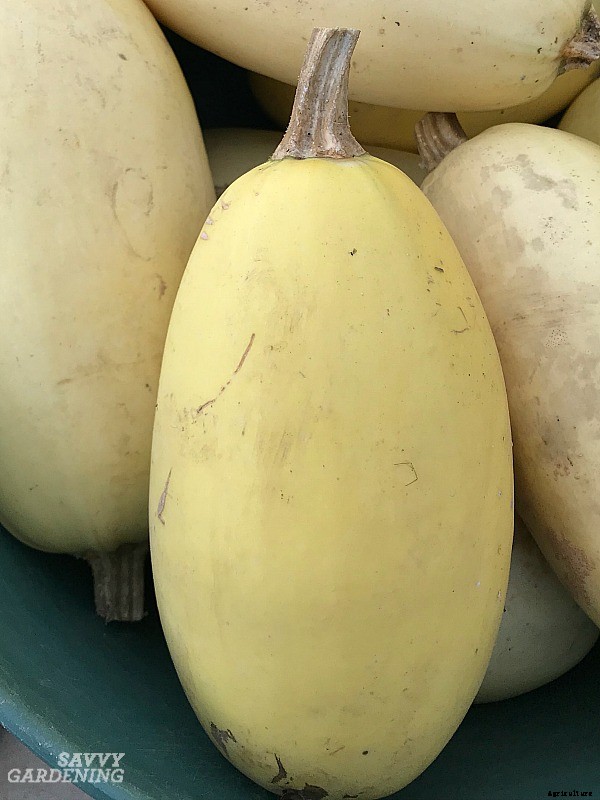
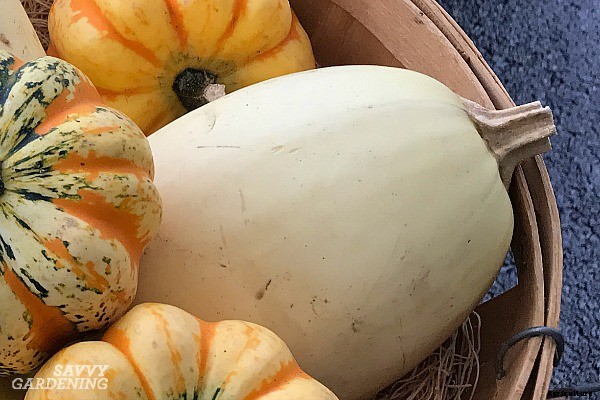
Unlike other types of winter squash, spaghetti squash has flesh that isn’t creamy and smooth. As I mentioned above, it’s stringy, making it unique among this group of vegetables. The skin of each oval-shaped spaghetti squash is smooth, and at maturity, it ages to a soft yellow.
When you’re growing spaghetti squash, it’s important to know the length of your growing season. This is because most cultivars of spaghetti squash, including my favorite ‘Vegetable Spaghetti’, require 100 days on average to reach maturity.
Here’s when to plant squash seeds based on your climate.

Squash seedlings resent transplanting. Starting squash seeds indoors under grow lights is often counter-productive for those with a growing season over 100 days. Planting transplants out into the garden instead of planting seeds sets plant growth back by a few weeks. Because of this, only start squash seeds indoors if you live in a northern region with a short growing season. Otherwise, plant spaghetti squash seeds directly into garden beds a week or two after the danger of frost has passed. In my Pennsylvania garden, I sow seeds of squash and other warm-season veggies, like cucumbers, beans, and zucchini, anytime between May 15th and June 10th.
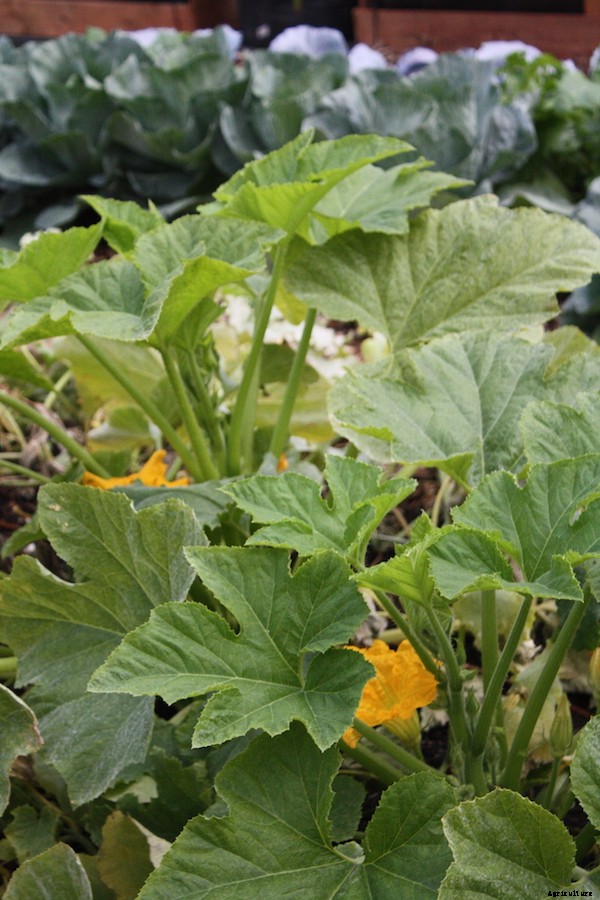
Seeds are sown to a depth of 1 to 1 1/2 inches. When it comes to growing spaghetti squash, there are a few different techniques you can use.
I’m not going to lie – spaghetti squash vines take up a lot of space in the garden. Another option for spaghetti squash planting that requires very little ground space is to grow the vines vertically. Erect a sturdy trellis or fence to support the vines as they grow. I use grid panels or let the vines climb the wooden fence around my vegetable garden. Delicate spaghetti squash tendrils aren’t able to grab the thick wood slats, so I either have to train and tie the vines to the fence as they grow or staple chicken wire onto the fence so the tendrils have something to grab.
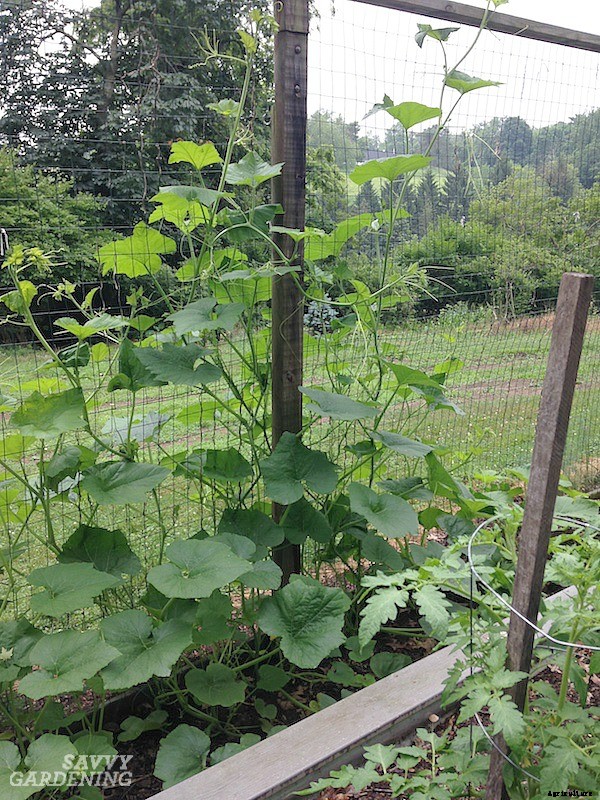
Spaghetti squash plants are big, and they require a decent level of nutrition to perform their best. With healthy, fertile soil as their foundation, each vine will produce 6 to 8 fruits. Prior to growing spaghetti squash, amend the soil with lots of compost.
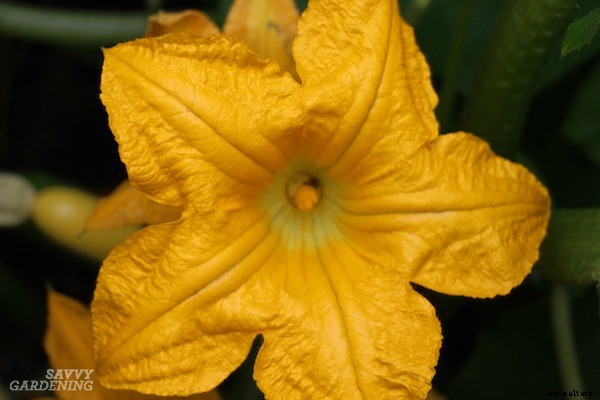
Don’t apply any fertilizer that’s high in nitrogen because it leads to long vines with little fruit. Instead, choose an organic granular fertilizer that’s slightly higher in phosphorous (the middle number). Phosphorous promotes the production of flowers and fruits. Sprinkle 2 tablespoons of organic granular fertilizer (I like this one) around each plant when the plants are 6 inches tall. Apply 3 more tablespoons around the base of each plant again when the vines begin to flower.
Organic liquid fertilizers are another option, though you’ll have to fertilize every 3 to 4 weeks throughout the growing season. To apply liquid fertilizers (I like this one), mix it in a watering can according to label instructions and drench the soil around the base of the plant.
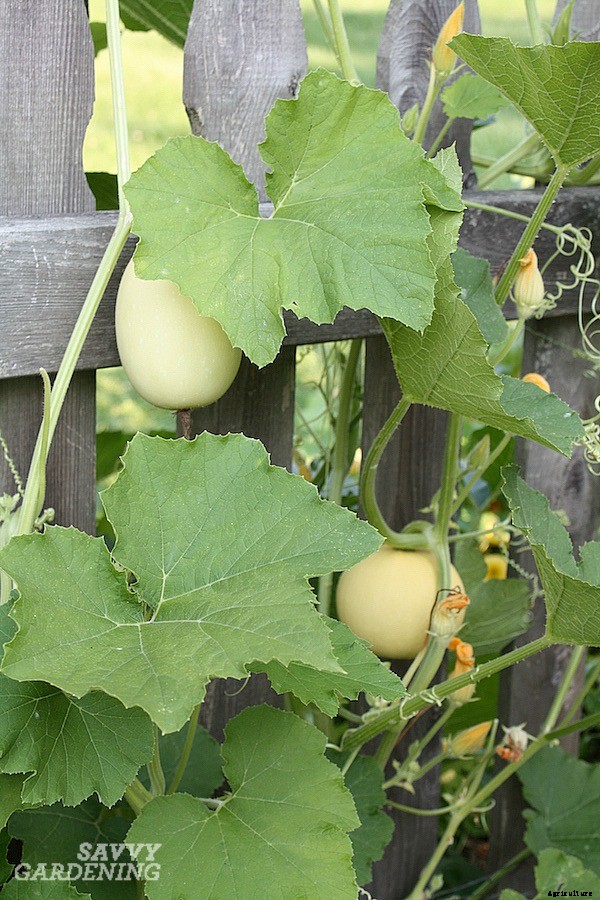
When growing spaghetti squash, it’s important to keep the vines well watered. Mulching with a 3-inch-thick layer of straw, grass clippings, or shredded leaves helps retain soil moisture, but in times of drought, you’ll have to water the vines. I recommend watering by hand so you can target the water directly to the root zone and keep the foliage dry. Like other squashes, spaghetti squash is prone to powdery mildew and other fungal diseases. Dry leaves are key to reducing fungal pathogens.
When hand watering, apply about 1 gallon of water to the root zone of each seedling, 5 gallons around each young vine, or 10 gallons around each mature vine. Allow the water to slowly soak into the ground. Don’t dump it all on at once or a lot of wasted runoff will be the result. If the soil is really dry, perhaps because you were on vacation and it didn’t rain while you were gone, apply a second, equal amount of water about a half hour later so it really soaks in.
For folks growing spaghetti squash for the first time, harvesting might seem tricky. Without cutting the fruits open, how do you know they’re ripe? It’s essential that they’re allowed to fully ripen on the vine because spaghetti squash and other types of winter squash will not ripen once cut from the plant.
Here are a few clues to look for:
To harvest spaghetti squash, cut the fruits from the vine, leaving a 1-2 inch long section of the stem intact. For more on how to harvest winter squash, along with advice on the best squash curing and storage methods, check out this comprehensive article on our site.
Watch me harvest my winter squash for more on how and when to pick spaghetti squash:
With these squash growing tips, you’ll be sowing spaghetti squash seeds and harvesting them like a pro for many seasons to come!
For more on growing spaghetti squash and other veggies, please visit the following articles:
Harvesting and curing squash
Zucchini-growing problems
Combating plant diseases organically
Common cucumber problems
How to hand-pollinate squash & cucumbers
Do you have experience growing spaghetti squash? We’d love to hear about it in the comment section below.