Our vegetable garden is a flavorful mixture of traditional crops like carrots, tomatoes, and beans with unusual vegetables like snake gourds, cucamelons, and burr gherkins. I’m always encouraging gardeners to try something new in their veggie patch as there are so many unique vegetables to grow in raised beds, in-ground gardens, and containers.
In my new digital series, Get Growing with Niki Jabbour, we celebrate all types of food gardening and hope to get you growing no matter where you live or how much growing space you have. In our premiere episode, we focus on some of the fun and unique vegetables I grow in my garden.
Why grow unusual vegetables?
There are a lot of reasons to try growing new-to-you vegetables in your garden:
Availability. Many of the unique vegetables to grow are hard to find in grocery stores and farmers’ markets. If you want to enjoy them, you’ll need to plant them yourself. The good news is that most of these crops are super easy-to-grow and require the same conditions as more traditional vegetables – a sunny site and decent soil. If you have a small space or even just a deck or patio, you can still grow most of these vegetables in containers. (For tips on growing in containers, check out Jessica’s excellent guide on container gardening).
Cost. While some of the crops on the below list (like cucamelons!) are becoming a bit easier to source at farmers’ markets, even if you can find them they’re still expensive to buy. Save money by growing them yourself.
Flavor. This is the number one reason why you should consider growing unusual vegetables in your garden. They offer unbeatable flavors that allow you to flex your cooking skills. When I first began growing vegetables like edamame, yard-long beans, and burr gherkins, I had to do a bit of research on the best ways to enjoy these crops. Soon, I had a pile of recipes that quickly became family favorites.
Easy-to-source. Seed companies know that gardeners are looking for unique vegetables to grow and seeds for crops like burr gherkins and cucamelons have become easier to source in the past few years. When you flip through the spring seed catalogs, don’t be afraid to try something new in your garden. You may be surprised at the variety and diversity from your local seed company.
Four unique vegetables to grow:
Of all the unusual crops in my garden, these are the ones that everyone wants to sample. And no matter how many I plant, I never seem to have enough.
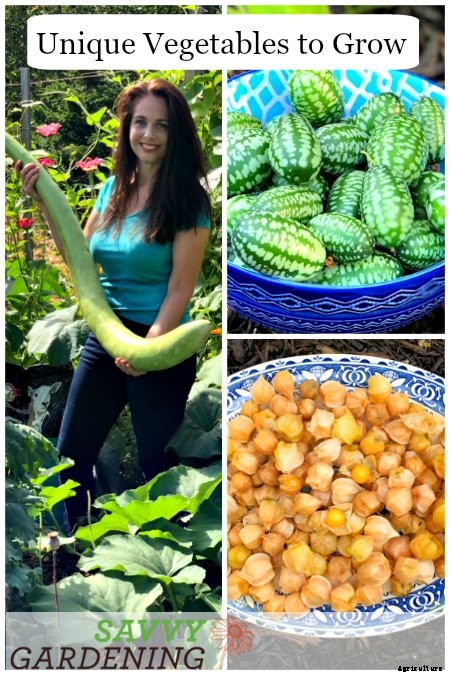
Cucamelons. By far, cucamelons are the most popular veggie in our garden. Everyone loves this quirky little crop that is also known as mousemelon or Mexican Sour Gherkin. Cucamelon vines grow up to 10-feet long and can yield several hundred fruits per plant. We like to eat them as a snack, but they’re also delicious chopped in salads or salsa. Plus, they can be pickled. Did you know that cucamelon plants produce tubers that can be dug up in autumn and over-wintered like a dahlia tuber? Come spring, the tubers can be planted up to get a jump-start on the cucamelon crop.
Snake gourds. My whole journey in growing unusual and global vegetables began with a snake gourd. I thought they were an eye-catching gourd for autumn decor, but my Lebanese mother-in-law pointed out to me that they are, in fact, edible. She showed me that snake gourds can be harvested when immature and then cooked like summer squash. This crop is also known as cucuzza, and they’re best for eating when the slender fruits are eighteen to twenty-four inches long. However, they do get very long and we always let a few grow to maturity so that we have a few six-foot long gourds that can be used for fall decorations or dried for crafting.
Ground cherries. Ground cherries are an essential crop in our garden. We start the seeds indoors in late March, but note that they can be tricky to germinate (try bottom heat). Once growing, you can expect a bumper crop of super-sweet fruits from mid-summer until frost. We like to eat ground cherries straight from the garden, but they’re also fantastic added to fruit salads or cooked into a jam. If you have a dehydrator, dry some for your morning oatmeal, muffins, or granola bars. For more information on growing ground cherries check out this post.
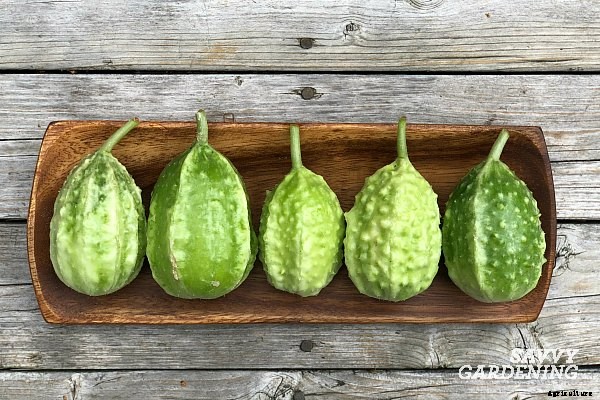
Burr gherkins. I first grew burr gherkins because I thought the oval-shaped, spine covered fruits looked really interesting. I was super happy to learn that they also taste delicious and have a sweet cucumber-like flavor. We eat them raw like cucumbers, not bothering to peel the thin skin. But, I know other gardeners who enjoy adding chunks of burr gherkins to curries and other cooked dishes. The plants form vigorous vines that should be supported on a trellis or given ample space to grow. Harvest the fruits when they’re two to four-inches long. If allowed to grow larger, they turn bitter.
For more information on unique vegetables to grow in your garden, check out my latest book, Veggie Garden Remix.