Welcome to Modern Agriculture!

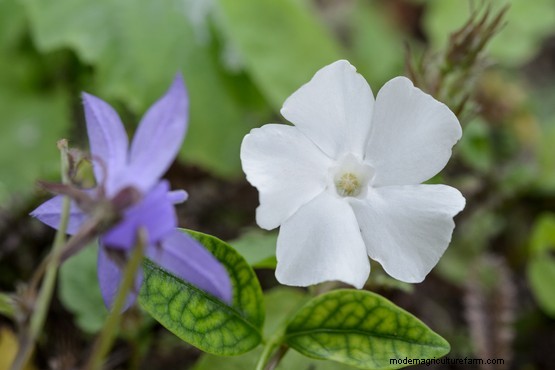
Periwinkles are low-growing evergreen perennials, useful for covering the ground to prevent weeds and for planting up awkward spots. Periwinkles have long stems of glossy evergreen foliage in plain green or variegated with white, yellow, or cream, which provide colour and interest all year round. Blue, white or purple starry flowers appear from spring to autumn.
The most common types of periwinkle are lesser periwinkle (Vinca minor) and greater periwinkle (Vinca major). Choosing the right one for your garden is important as greater periwinkle is extremely vigorous and can become invasive. While greater periwinkle is fine for awkward spots like poor or stony ground, or a rough bank, it can become a big problem in a border with other plants. This is because greater periwinkle throws out long shoots that root where they touch the ground. These can quickly grow among other plants, where it’s then hard to remove.
Periwinkles are tough and easy to grow, thriving in all but the most extreme soils and situations. Lesser periwinkle (Vinca minor) is usually the best choice for gardens, forming neat mats of growth that look good all year and keep weeds at bay. The prostrate-growing shoots of lesser periwinkle root where they touch the ground and gradually spread to form dense carpets of foliage. Space the plants between 30-50 cm apart, depending on how big the plants are on purchase and how quickly you want to cover the ground.
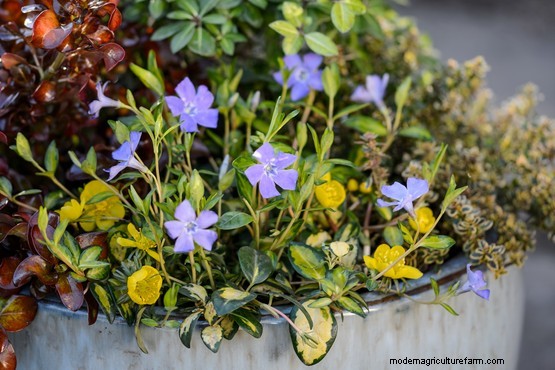
Periwinkle grows readily in all aspects from sun to shade but will flower much more freely in good light. Being one of the relatively few plants to thrive in shade, it’s extremely useful to grow in groups under trees or shrubs. Periwinkle also makes excellent ground cover for hard to access sites such as banks. For best results grow periwinkle in moist but well-drained soil, although it will grow in all but extremely dry or waterlogged ground.
Plant periwinkle in autumn or spring if possible. If the soil is poor, improve it by digging in well-rotted organic matter first. Plant with the top of the rootball level with the ground, firm the soil around the roots and water in thoroughly. If planting periwinkle in spring or summer, keep well-watered during dry spells until established.
Periwinkle shoots develop roots where they touch the ground and plants can be divided during autumn. Alternatively, lift the stems to find sections that have rooted, then detach the individual stems from the parent plant and grow on individually in small pots.
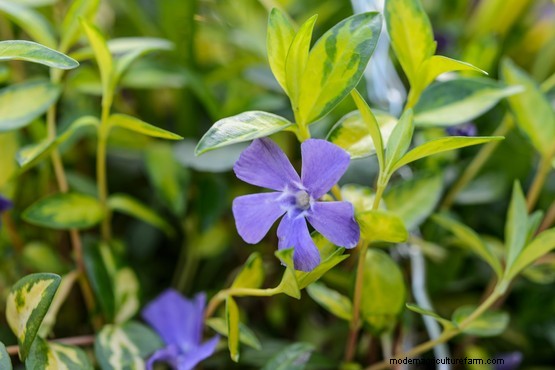
The arching stems of greater periwinkle that grow quickly and root where they touch the ground can become a real problem. Growth can be restricted in several ways: