Welcome to Modern Agriculture!

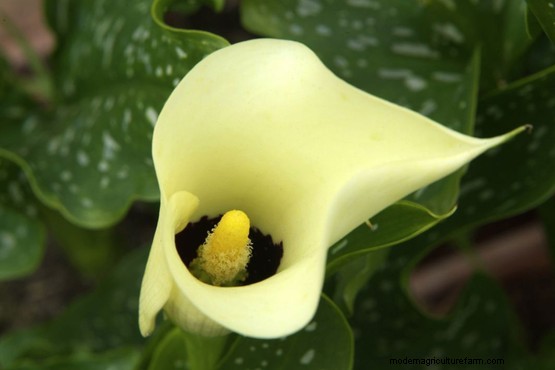
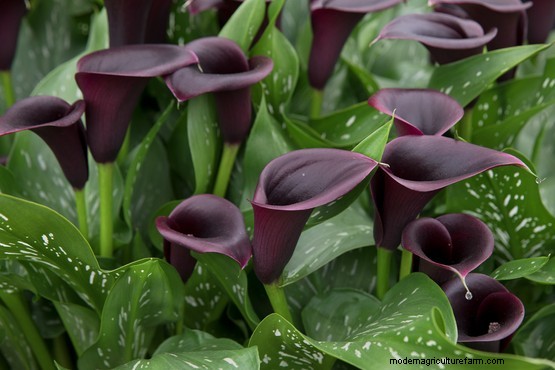
Calla lily, also known as arum lily, is not a true lily. It belongs to the genus Zantedeschia which originates from South Africa. With huge, exotic looking flower-like spathes now available in a wide range of colours, calla lily is becoming increasingly popular as a house plant as well as a garden and patio plant.
Calla lillies flower from early to late summer on sturdy upright stems. Handsome foliage adds to their ornamental value – the lush leaves are wide and bright green, often speckled with white or silver. Most calla lilies are frost tender and the rhizomes or fleshy roots can be stored over winter and then replanted the following spring. The exception is white arum lily (Zantedeschia aethiopica) which is hardy outside in mild areas.
Watch out for confusion with the hardy pond plant bog arum (Calla palustris). Although the name and the white blooms may be similar, Calla palustris needs to be grown in shallow water at the edge of a pond.
Buy calla lilies as rhizomes or as pot-grown plants, to grow in pots of peat-free multi-purpose compost in a sunny frost-free spot indoors or outside. Keep watered and feed regularly, then bring indoors in autumn to overwinter before replanting the following year.
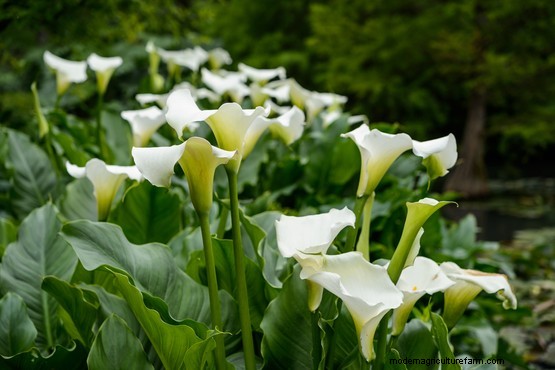
Frost-free conditions are essential as calla lily hybrids are tender. Grow on a well-lit windowsill, in a conservatory or a heated greenhouse. Once all risk of frost has past, calla lilies can be grown in the garden, in pots or in a border. A bright well-lit spot out of the strongest midday sun is ideal. Avoid full shade, but plants will tolerate partial shade. Calla lily must be sheltered from wind.
Calla lily grows from thick rhizomes or fleshy roots that are sold when dormant in winter or spring. Ready-grown plants can be bought in spring and summer, often when in full flower.
To grow from dormant rhizomes, buy in winter or spring and plant 8-10 cm deep in a good, peat-free multi-purpose potting compost. Either pot up and start into growth indoors for earlier flowers, or plant outside after the frosts. Plants raised indoors need to be gradually hardened off or acclimatised to the outdoors by standing out for increasing periods of time.
If growing calla lillies in the ground, improve soil by adding plenty of well-rotted compost or a proprietary soil conditioner. Space plants 30-45 cm apart.
Regular watering is important to maintain the handsome lush growth of calla lilies. Ideally, keep compost moist but take care not to over-water either. Once flowering shoots of calla lily appear, feed every three to four weeks with a liquid fertilizer high in potash, such as liquid tomato fertilizer. Regularly remove dead and faded flower stems and leaves.
Once flowering has finished, continue feeding and watering calla lily for several weeks, still taking care not to over-water, until the leaves start to die back. Bring potted plants indoors before the frosts and leave in the pot whilst dormant. Calla lilies growing in the ground should be dug up and the rhizomes stored in trays of just-moist compost for the winter, in a cool frost-free place. In late winter, repot the roots into moist compost and place in a warm spot to start into growth.
Divide calla lily rhizomes in late winter, before replanting.
Calla lilies are easy to grow and mainly trouble-free.
Aphids may be a problem, particularly on plants growing indoors. Inspect leaf undersides regularly and also look out for a sticky substance on the surface beneath the plant: this is honeydew, which is produced by aphids and other pests. A variety of treatments can be used to combat aphids, though often hand-squashing is all that’s necessary if the pest is spotted early.