Welcome to Modern Agriculture!

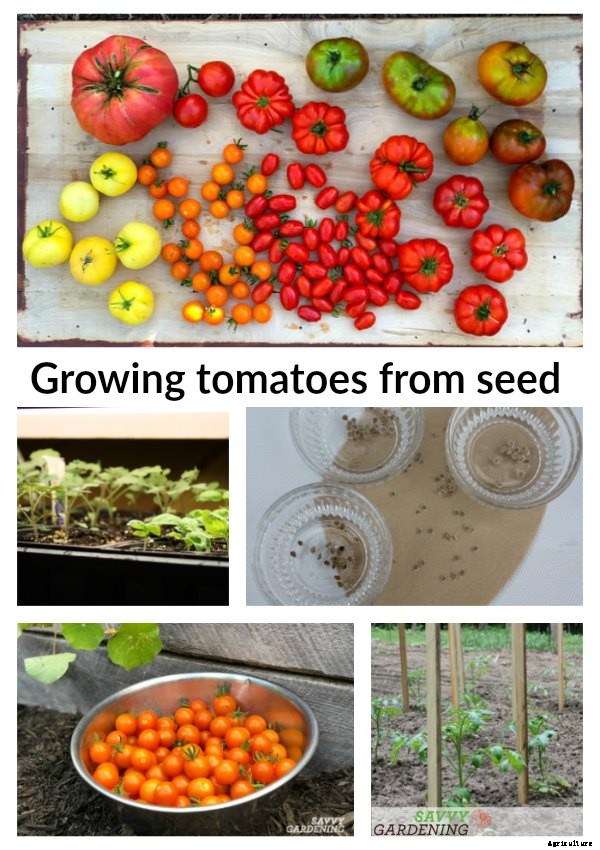
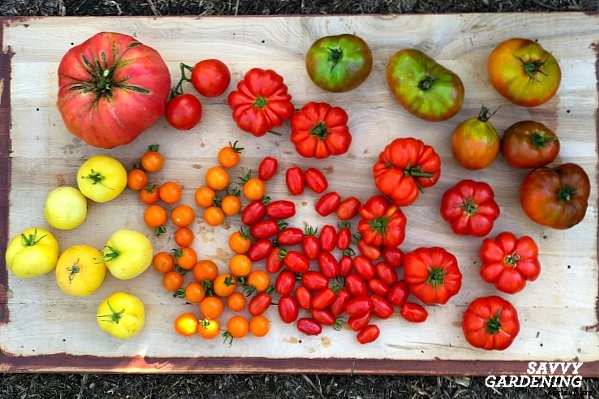
Why start your own tomato seeds when you can pop into your local nursery and buy ready-to-plant seedlings? The biggest reason is variety! Your local nursery may have a dozen or so varieties of tomatoes, but growing your own tomatoes from seed allows you to choose from thousands of heirloom, hybrid, and open-pollinated varieties available through seed catalogs. Plus, starting your own tomatoes can save money, especially if you have a large garden.

When flipping through your favorite seed catalog, you’ll probably notice descriptions like ‘heirloom’ (or sometimes ‘heritage’), ‘open-pollinated’, and ‘hybrid’. Understanding the different types of seeds will help you pick the right tomato varieties for your garden.

Now that we’ve gotten some background on the types of tomatoes seeds, it’s time to crack open those seed catalogs. Be prepared to encounter dozens, if not hundreds, of tempting varieties. To learn more about the many awesome tomato varieties available to grow in your garden, check out Epic Tomatoes, the award-winning book by Craig LeHoullier.
But, with so many varieties to choose from, how do you pare down your list and decide what to grow? Consider these three questions:
The growth habits of tomatoes are broken down into two categories: determinate and indeterminate.
As you flip through seed catalogs, notice that tomatoes are categorized by how long they take to mature — early, mid-, and late-season. I find it more helpful to refer to the ‘days to maturity’, which is how many days a variety needs to produce fruit once they are transplanted (not seeded!) in your garden. In short-season or coastal gardens, opt for fast-maturing, early tomatoes, like Moskovich (60 days), Northern Lights (55 days), or Sun Gold (57 days). If you’d like to figure out the length of your growing season, check out this handy calculator on the National Garden Bureau website.
There are so many different types of tomatoes to grow: slicing, cherry, paste, cocktail, and grape, for example. When I’m trying to decide what to grow, I find it helpful to consider how I want to use my harvest. I like to make several batches of sauce, but most of our tomatoes are enjoyed fresh from the garden in sandwiches and salads. Therefore I plant a mixture of types, including those for sauce, some super-sweet cherry or grape varieties, and beefy heirlooms for slicing.
Growing tomatoes from seed takes about six to eight weeks from sowing to transplanting. Starting seeds indoors too early results in leggy, overgrown seedlings. I aim to transplant my seedlings into the garden about a week after my last expected spring frost date. Find out the last frost date for your region and count backwards by six to eight weeks. That’s when you should sow your seeds indoors.
I start a LOT of seeds each spring and want to be able to use my growing space efficiently. Therefore, I sow my seeds in plastic cell packs placed in 1020 trays. They’re reusable and I can cram hundreds of plants under my grow-lights. You can also use plastic pots or recycled clean yogurt containers, milk cartons, and so on.
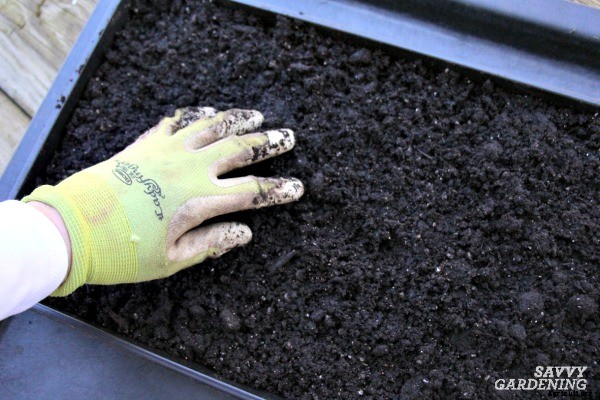
Give your tomatoes the right start with a lightweight, well-draining growing medium like Pro-Mix Seed Starting Mix. Moisten the mix before filling pots or cell packs to avoid uneven wetting.
Tomato seeds are fairly small and if you plant them too deeply, you’ll never see them again. Sow them about one-quarter inch deep, covering lightly with moistened potting mix. Label each variety with a plastic or wooden tag and the name written in permanent marker (trust me, you won’t remember which is which if you don’t label them).
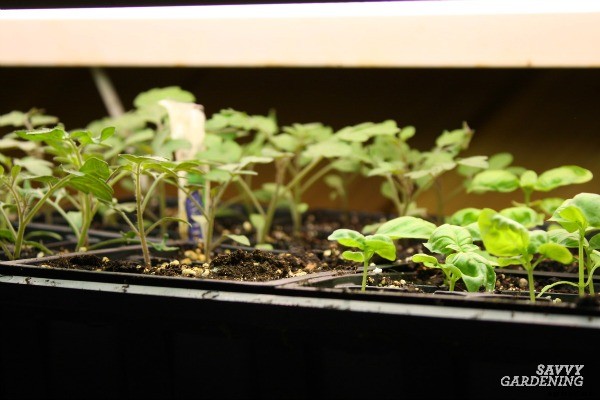
Sturdy, healthy seedlings need plenty of light. Too little light results in legginess where the seedlings reach and stretch, eventually flopping over. The ideal place to start seeds is under a grow light, where you control the amount of light. My grow lights are inexpensive, four-foot shop lights hung with chains on a wooden shelf. As the plants grow, I can move my lights up so that they are always just a few inches from the foliage of my tomato plants. I leave the lights turned on for sixteen hours a day, and have a timer that turns them on and off. You can use a sunny window to start tomato seeds, but due to low light conditions in late winter, expect some stretching. If you plan on making seed starting an annual event, consider investing in a grow light, like this fluorescent fixture or a SunBlaster.
Overwatering is one of the quickest ways to kill delicate seedlings, so keep an eye on soil moisture. It should be slightly moist, but not soaking wet. Once seeds are sown, use a clear plastic dome or a sheet of plastic wrap overtop of the trays and containers to maintain moisture. Once germination occurs, remove all covers so that air can circulate.
As indicated in my previous step, air circulation is important when growing healthy tomato plants. My grow lights are set up in my basement where there isn’t a lot of air circulation. This could lead to fungal issues if I didn’t have a small oscillating fan in the room to move air. Having moving air also toughens up the stems and foliage of the seedlings.
Many potting mixes contain slow-release fertilizer to feed your plants slowly over several weeks. You can supplement these fertilizers with an organic water soluble fertilizer, applied at half the recommend rate every 12 to 14 days. Carefully read and follow all labels on potting mix bags and fertilizer containers.
You’ve reached the last step of growing tomatoes from seed! Once you’ve reached the final spring frost date, it’s time to harden off your tomato seedlings. Hardening off is the process where indoor-grown seedlings are acclimatized to the outdoor garden. Expect this process to take five to seven days (read more about hardening off HERE). Start by putting the seedlings outside in the shade for a few hours. Bring them back indoors that night. Continue to put the seedlings outside, gradually introducing them to more sun each day. They are be ready to be transplanted into the garden or containers within a week.
For more on seed starting and growing tomatoes, check out the following articles:
Last thought: If you enjoy growing your own tomatoes from seed, you may get a kick out of this hilarious book, The $64 dollar tomato.
Are you going to be growing tomatoes from seed for your vegetable garden?