I love growing beans! In my garden, I grow primarily pole beans, while my mother-in-law grows runner beans. My preference is a result of my childhood veggie garden where tender snap beans occupied at least half of the plot. For my mother-in-law, runner beans are a nod to her own youth in the mountains of Lebanon where the meaty pods were slow simmered into flavourful dishes.
This bias on growing beans isn’t limited to my mother-in-law and I. In fact, North American gardeners have generally not embraced runners as a garden veggie, but rather grow them as ornamental plants. Take a peek at any North American seed catalogue, and you’ll see two, perhaps three varieties of runners offered, typically listed in the annual flower section of the catalogue. Alternatively, in the UK where runners are a popular crop, most seed catalogues will list at least dozen varieties, detailing the edible characteristics of each.
Related post: Unique beans
Why the bean bias on this side of the pond? After all, both types are climbers (ok, there are a few dwarf runners, but the vast majority are vining plants) and both produce tasty pods which can be picked young for snap beans or left to mature on the plants for a harvest of dried beans. When eating beans, specifically dried common beans, remember the word phytohaemagglutinin. It’s a mouthful, but is important to know as it’s a natural toxin found within undercooked beans and can cause mild to serious illness. It can easily be avoided, however, by properly soaking and cooking dried beans before you eat them
Growing beans – pole versus runner:
Pole beans (Phaseolus vulgaris)
Pole beans are a member of the common bean family and are warm season crops that are planted after the risk of frost has passed in spring. Pre-heating the soil with a piece of black plastic (like a garbage bag) will boost germination.
Most varieties grow to a height of 6 to 10 feet.
Pole bean flowers are self-pollinating and flower set is high.
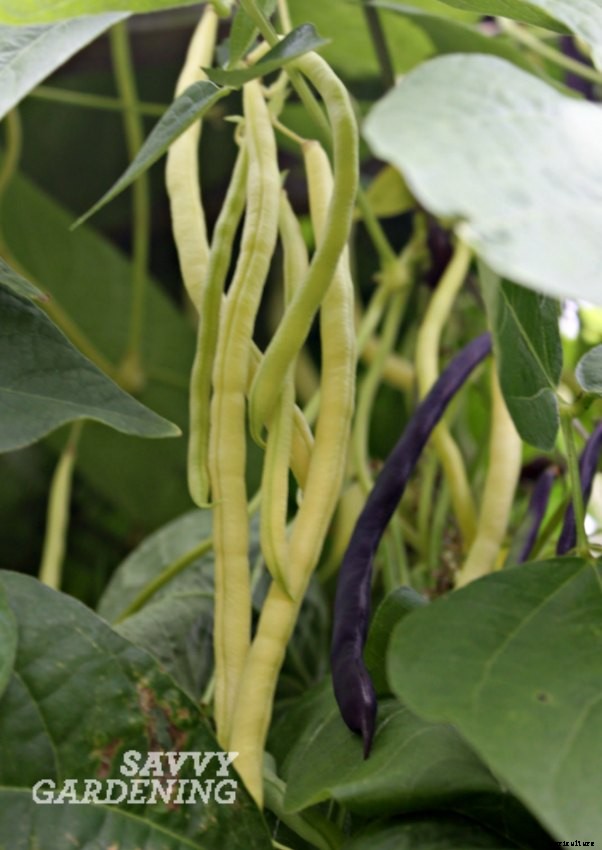
Bean colour can vary from green to yellow to purple, with a few varieties, like ‘Rattlesnake’ bearing two-toned pods.
Top pole-bean picks
‘Fortex‘: Hands down, my favourite pole bean. Why? It’s heavy bearing, has great flavour and the beans remain super tender, even if picked when 11 inches in length!
‘French Gold’: A yellow podded pole bean isn’t easy to find, especially one with such slender, fine flavoured beans. The vines are productive and early to crop, with the initial harvest beginning about two months from seeding.
‘Purple Podded Pole‘: The perfect bean for a children’s garden. The vines are long – mine often grow 10+ feet in length – and smothered in clusters of lilac-purple blooms, followed by the tasty jewel-toned beans.
Related Post – Saving bean seeds
Runner beans (Phaseolus coccineus)
Runner beans are popular with northern gardeners for their ability to crop in cool, foggy, cloudy or wet summers. (Hello, Nova Scotia!) They can also tolerate light shading.
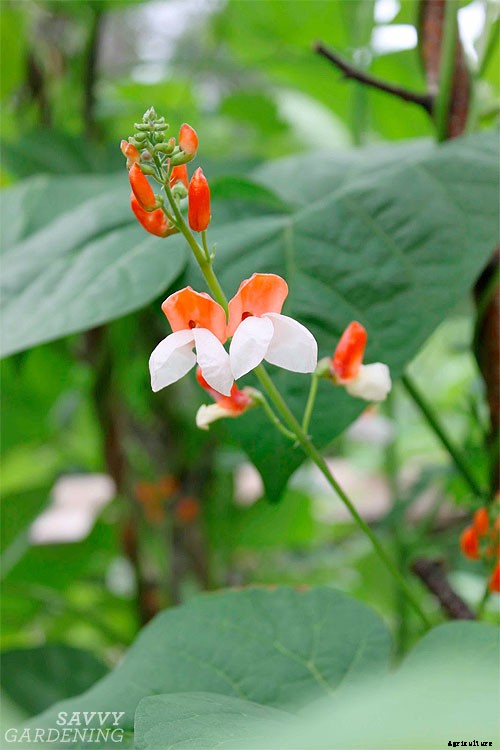
Early runner varieties were primarily red flowered, but today the range includes white, pink, salmon or even bi-colours. The flowers are both larger and showier than those of pole beans.
Runner bean flowers are perfect, which means they are self-pollinating, but they need to be ‘tripped’ by an insect in order for pollination to occur. Many breeding programs are working towards varieties with improved self-fertilizing characteristics.
Runner beans twine around their supports in a clockwise direction. Pole beans twine in a counter-clockwise direction. This is important to note if you are ‘helping’ the young vines find their poles.
Top runner-bean picks:
‘Painted Lady‘: An heirloom variety grown for its flashy bi-coloured blooms. The scarlet and white flowers are followed by large flattened pods that are best picked when 4 to 5 inches in length.
‘Scarlet Runner‘: The classic and widely available variety with bright scarlet-red flowers. Did you know that those showy blooms are edible? Enjoy their mild bean-y flavour in salads or as a garnish.
‘Hestia: This super compact variety was bred for container gardens, growing just 16 to 18 inches tall. The bean crop is respectable, but you’ll also enjoy the pre-harvest show of pretty two-toned blooms.
Fun fact: If you enjoy growing beans and keeping a close eye on your garden, have fun observing your pole and runner beans. With germination, the cotyledons of common garden beans emerge from the soil. Runner beans, on the other hand, have hypogeal germination, which means that their cotyledons stay tucked beneath the soil. The true leaves will be the first part of the plant to emerge.