Welcome to Modern Agriculture!

Cilantro is a ‘love it’ or ‘hate it’ type of herb. And, for those who love it, like me, it can be challenging to grow. It prefers the cool weather of spring and autumn, and a steady supply of moisture. Should the weather turn hot for a few days, you neglect to water, or – Heaven forbid – you look at the plants the wrong way, they’ll quit producing foliage and jump straight to flowering. This is where Vietnamese coriander comes in handy – it shares a similar flavour to cilantro, but it’s incredibly easy to grow!
Vietnamese coriander (Persicaria odorata) is a member of the knotweed family and is also known as Vietnamese mint or Rau Ram. It’s a tender perennial and thrives from late spring to early autumn. It will eventually succumb to frost, but you can bring the plants indoors and place them on a sunny windowsill for winter harvesting.
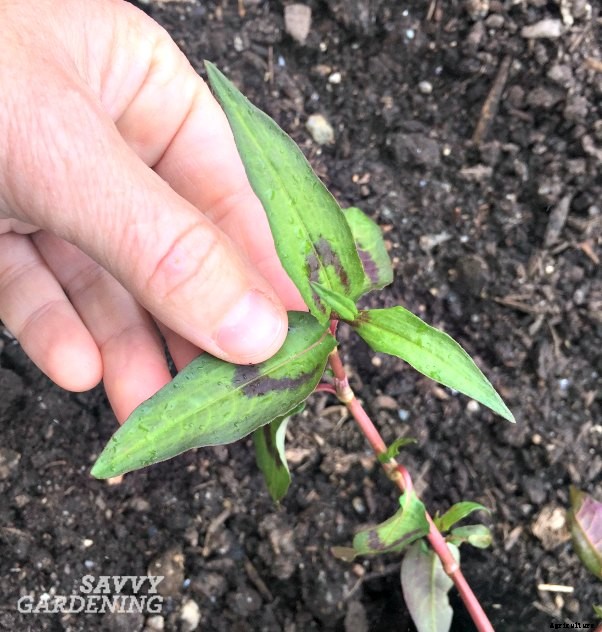
In form and appearance, the foliage of this Asian favourite is quite unlike cilantro. It has narrow, pointed leaves with pretty burgundy markings. It’s typically purchased as a seedling and planted in a container – preferably a big pot as it grows quickly. Give it full sun and don’t overwater! Also avoid over-fertilizing. Too much fertilizer will result in a lot of growth, but less flavour.
Related post: Drying oregano
Related post – A closer look at the many basil varieties
The leaves of this pungent herbs are best used fresh. Young leaves are tender and have the most flavour. To encourage fresh, dense growth, pinch out the growing tip of each shoot when you plant, or periodically as you harvest.
We like to slice the foliage into small strips and add them to fresh spring rolls, green salads, chicken and potato salads, Asian inspired soups, noodles, and curries.
Have you tried growing Vietnamese coriander?