
Welcome to Modern Agriculture!

Did you know you could root tomato suckers for a second crop of fresh and healthy plants? Cloning tomato plants from suckers is quicker than starting a new crop from seed.
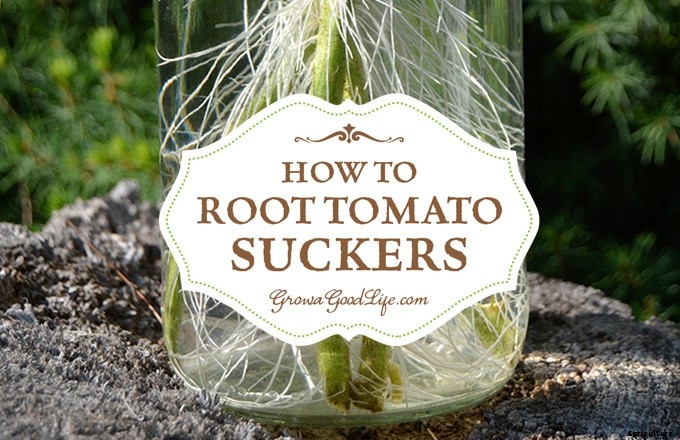
The summer heat and drought conditions can weaken tomato plants and reduce their yield. Instead of coaxing these stressed plants to continue producing and ripening their last fruit, you can root tomato suckers for a second crop of fresh and healthy plants.
The key is to start early, and take cuttings when the plant is still healthy. Within several weeks, you will have new tomato plants. Cloning tomato plants from suckers is quicker than starting a new crop from seed.
Tomato suckers are the branches that sprout in between the tomato plant’s branches and main stem.
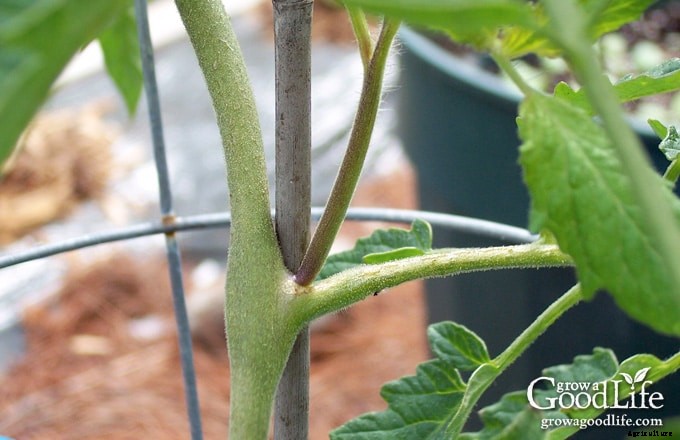
Tomato suckers are the branches that sprout in between the tomato plant’s branches and main stem. Contrary to popular opinion, I don’t prune out all my tomato suckers. I don’t feel it is necessary. The suckers turn into stems that go on to produce blossoms and fruit of their own. Pruning all of these stems reduces the overall yield of the plant.
The only time I do prune out suckers is early in the season right when the tomato plants begin to take off. When the plant is about two feet high, I prune the suckers and the leaves at the base of the plant to prevent the foliage from touching the ground and to improve air circulation. Pruning the lower foliage and mulching the plants to prevent soil splash helps to delay the onset of the early blight fungus that is in my soil. By the time the infection begins climbing the plant, most of the tomatoes are harvested and growing season is nearly over.
Instead of tossing the suckers away, I often experiment with rooting them to grow new plants. Since the temperatures are warmer in summer than early spring, the tomato transplants are eager to settle in and begin growing.
I have had the best luck with rooting cuttings from indeterminate tomato plants. Indeterminate tomato varieties continue to grow and produce fruit all season.
Stems trimmed from indeterminate varieties root within a week and establish quickly after transplanting.
The determinant tomato plants (also called bush tomatoes) I experimented with rooted, but they did not produce many tomatoes. I recommend trying indeterminate tomato plants for your first attempt to root tomato suckers.
When propagating tomato plants from stem cuttings, choose varieties that mature quickly so they can produce a crop before your first frost.
Most indeterminate tomato plants need 80-90 days to mature before ripening fruit. Cherry or grape type tomatoes usually produce quicker than other varieties and are a good candidate to experiment with.
Trim the suckers and root the cuttings early in the season when the plant is still vigorous and healthy.
Even though our growing season is short, I have had some good success with the second planting of tomatoes cloned from suckers. I found that if I transplant the rooted cuttings to the garden by the end of June, there is still enough time for them to adapt and begin producing fruit before our first frost in October.
If you live in a warmer climate with a longer growing season, you can take advantage of this method to grow a succession crop of tomatoes well into fall.
Choose a dry day to trim or prune your tomato plants so the cut area heals over quickly reducing the chances of disease.
Select healthy shoots at the base of the plant with no signs of disease. Aim for suckers that are around 3-5-inches long. Use clean pruning shears or scissors to snip the sucker branches off the plant.
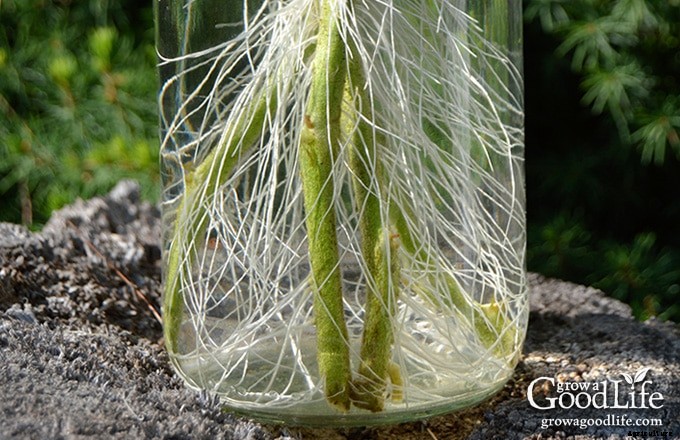
Remove the lower leaves and immediately place the stems in a jar of warm water to root tomato suckers.
The plants will wilt for the first few days due to the shock of cutting. Keep the jar out of direct sunlight for a few days so the cutting can recover.
Once the leaves look normal, move the jar to a sunny window or return it outside.
Change the water every few days replacing with warm water so you don’t shock the roots. You should see some roots forming within a week.
Once the roots are about an inch long, they are ready to be transplanted into larger containers or their permanent location in the garden.
I like to pot them up in containers first so I can care for them more easily as their roots adapt to growing in soil.
Water the seedlings well after transplanting and keep well watered until the plants begin to grow. Shade the seedlings from the hot summer sun until it adjusts and starts forming new foliage.
Harden off your tomato seedlings, transplant to their permanent growing location, and provide a trellis or support for the vines to grow on.
Your new tomato plants will grow quickly and may even catch up to the parent plant because of the warmer temperatures.
Rooting tomato suckers and growing new plants is a nifty little way of getting an additional tomato harvest for free.
If you garden in an area with a longer growing season, cloning new plants from stem cuttings is a great way to grow a second crop of healthy tomatoes in the fall when the temperatures are cooler.
Rooting tomato suckers and growing new plants is a nifty little way of getting an additional tomato harvest for free. If you garden in an area with a longer growing season, cloning new plants from stem cuttings is a great way to grow a second crop of healthy tomatoes in the fall when the temperatures are cooler.


