Welcome to Modern Agriculture!

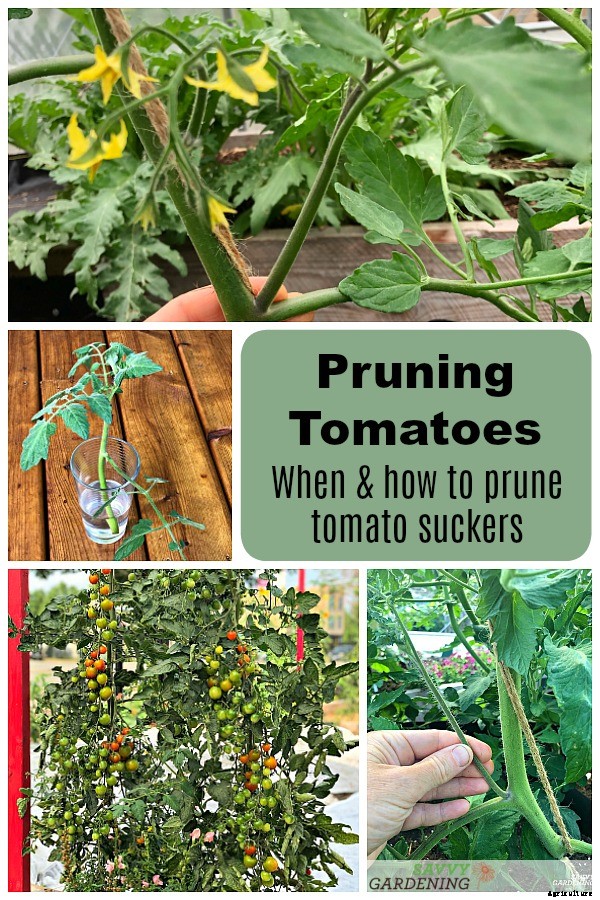
It’s a question I’m asked all the time, “Should I remove tomato plant suckers?” The answer: “It depends!” There really isn’t a right or wrong answer to this question as it relies on a few factors like the type of tomato plants you’re growing and how you’re supporting them. Read on to learn whether or not you should pinch out tomato suckers.
First, I think it’s important to note that a ‘tomato sucker’ isn’t botanically a sucker. A sucker is a shoot that that grows from the base of a plant. It’s common for trees or grafted plants to produce suckers. Suckers are usually removed because they sap energy from the main plant and don’t produce flowers or fruits. A tomato ‘sucker’, on the other hand is a secondary stem, or side-shoot, and will produce flowers and fruits. Because most gardeners know these secondary stems as suckers, I’ll continue to use that term below.
There are two main types of tomato plants: determinate, also called bush and indeterminate, also called vining.
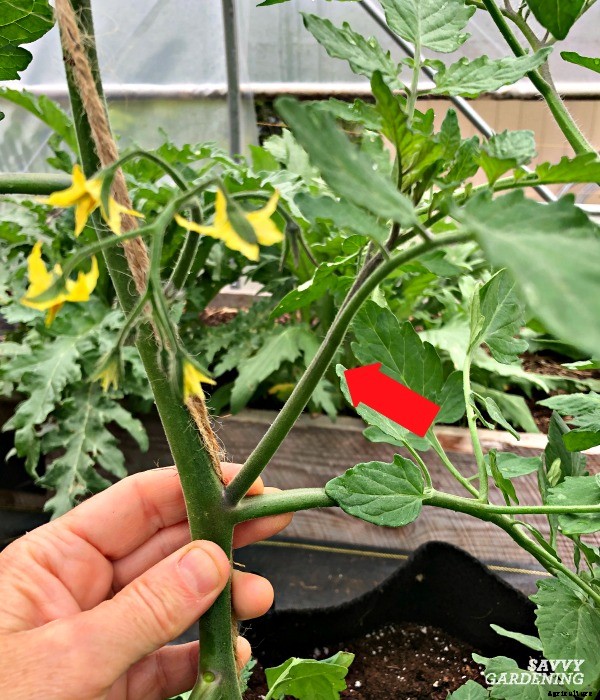
Tomato suckers are produced on both determinate and indeterminate tomato plants. A sucker is a shoot that forms in the joint where a leaf meets the stem. If allowed to grow, suckers eventually produce flowers and fruits, but the plant will be very dense with growth.
Pruning tomato suckers is about controlling and managing the growth of the plant. Because they are botanically stems not suckers, tomato suckers do not take energy away from the plant. In fact, they actually contribute to plant growth and garden lore says leaving suckers may result in better tasting tomatoes. How? More stems means more leaves to gather sunlight which is converted to energy (sugars!) by the plant.
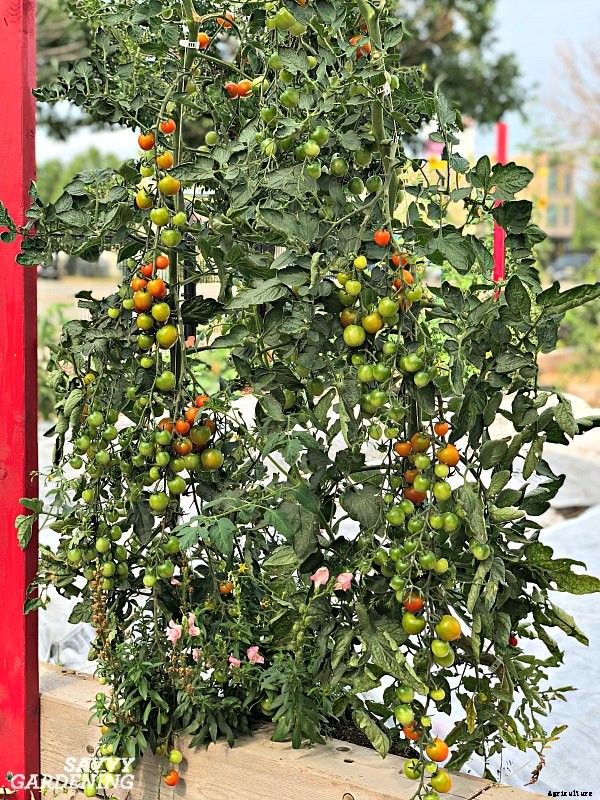
Garden lore also says that if you remove tomato suckers you’ll get fewer, but larger fruits. If you allow the suckers to grow, you’ll end up with more tomatoes, but smaller sized fruits. I’ve experimented with this over the years planting the same varieties side by side in my garden bed. I would remove suckers from one plant and not from the other and didn’t notice a difference in fruit size or flavor. I did however get more fruits from the plant that was not pruned. This was fine for the compact determinate plants, but the indeterminate large-fruited tomato plants grew very dense with leaves and were more susceptible to tomato diseases.
Determinate tomatoes – I leave the suckers to grow. Suckers = more stems = more flowers = more fruits.
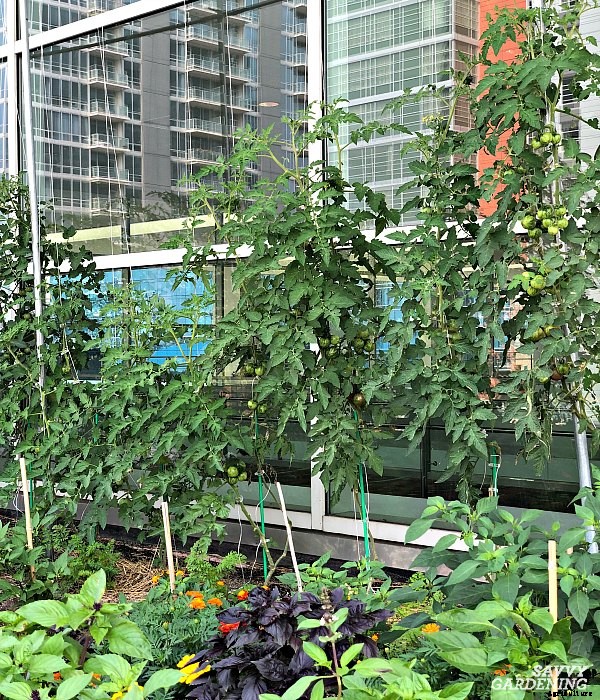
Indeterminate tomatoes – My pruning strategy depends on how I support vining tomato plants and if they’re large or small fruited. I typically grow them on sturdy one by two by seven foot wood stakes. In my polytunnel I grow them up twine. Here are five examples of when and how to prune indeterminate tomatoes:
Also keep in mind that if you’re growing tomato plants vertically you should tie them to their supports every seven to ten days with cloth strips, twine, or another soft material. Don’t tie them tight. This keeps the stems straight.
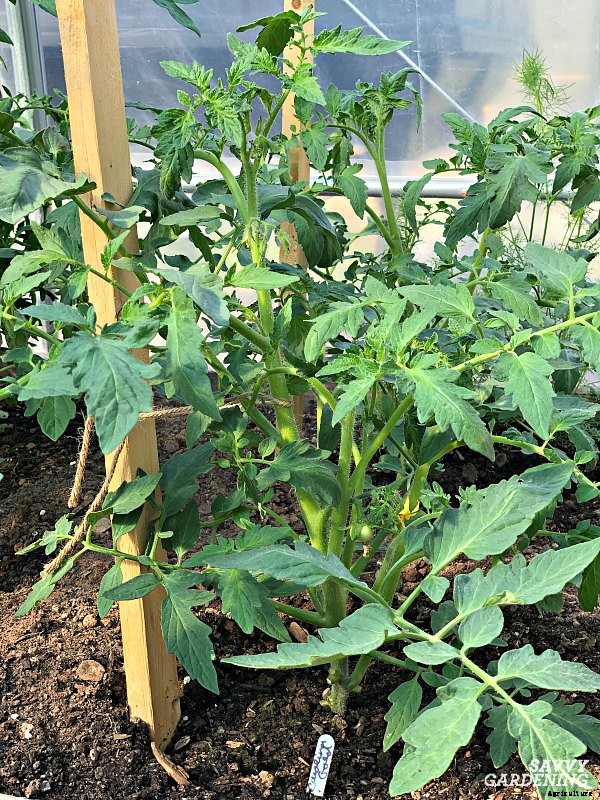
When suckers are small, just one to three inches long, they’re easy to snap off with your fingers. Once they’re larger I recommend removing them with a clean pair of pruners or garden snips. You don’t want to accidentally damage the plant or the nearby foliage.
Staying on top of sucker removal isn’t a huge job but it is one that you’ll want to do on a regular basis. I aim to pinch suckers every seven to ten days.
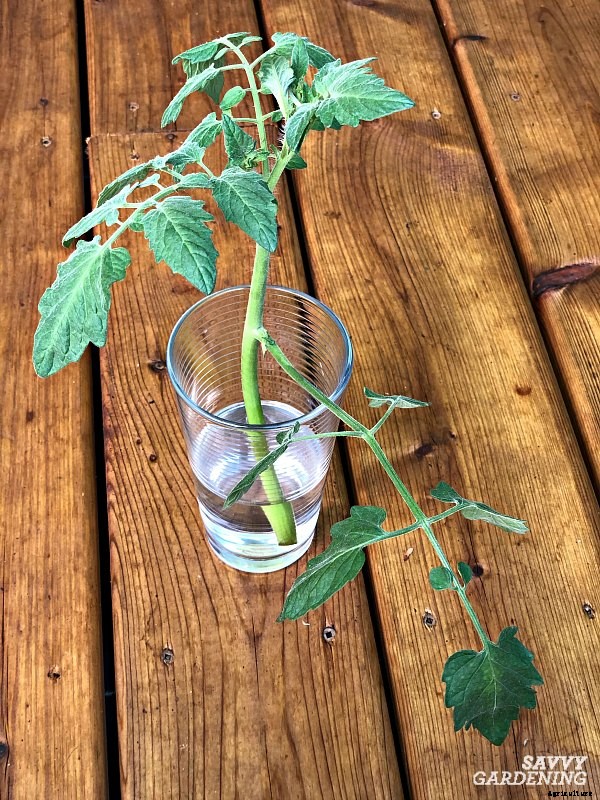
The obvious way to dispose of suckers is to toss them on the compost pile. But there is something else you can do with suckers – you can root them! Tomato suckers root very quickly and you can use them to get more plants.
How to root tomato suckers:
Rooting a tomato sucker takes about seven to ten days. Keep in mind that if you live in a climate with a short season like me, it’s best to root suckers as early as possible and from fast-maturing cherry tomato plants. This gives the new plants enough time to grow, mature, and fruit before the autumn frost arrives. Here are my five steps to rooting and then planting tomato suckers.
Step 1 – Using your fingers, clean garden snips, or pruners, snap off the sucker.
Step 2 – Immediately place the pruned sucker in a container of clean water. Label each container if you are going to be rooting more than one variety of tomato. Make sure no leaves are under water.
Step 3 – Place the container with the sucker in a bright spot but out of direct sunlight. I usually put them on my kitchen counter. Change the water every day or two.
Step 4 – Once the roots have formed and are about an inch long pot the sucker up in a four inch pot filled with moist potting mix. At that point, I move the pots outside to a shady site for a few days, gradually introducing them to more sun over a four to five day period.
Step 5 – Plant!
For more details on growing tomato plants from suckers, check out this article by Lovely Greens.
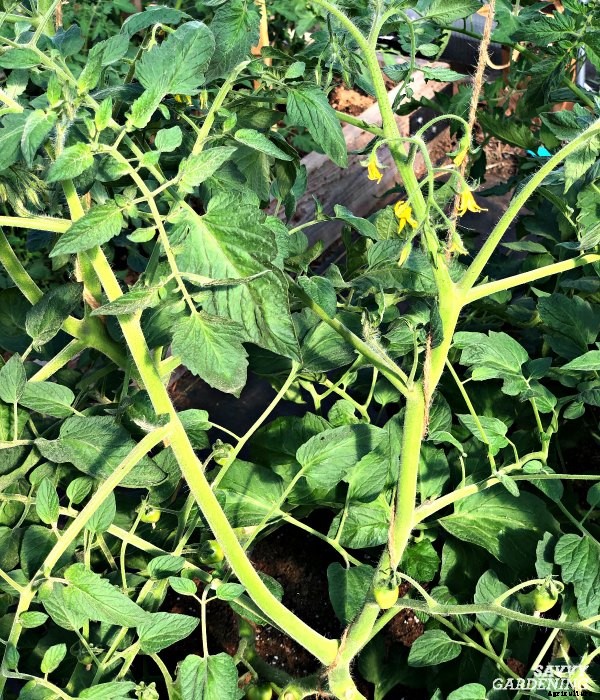
Besides sucker removal, I also prune some leaves from my plants. This is a technique I learned from famed tomato grower, Craig LeHoullier, the author of Epic Tomatoes. As the plants grow, I remove the bottom leaves from my plants. How many leaves? Well that depends on the individual plant but I like the bottom foot of each plant to be free of foliage. This helps reduce the spread of soil-borne diseases like early blight.
To remove the bottom leaves I use a clean pair of garden snips or pruners. I clean the blades between plants to minimize the potential spread of diseases. Once I’m finished, I gather the clipped leaves and toss them in my compost bin. If the leaves are showing signs of disease, I put them in the garbage.
I also mulch the soil surface with straw or shredded laves. This two step approach (removing bottom leaves and mulching soil) has dramatically improved the health of my tomato plants. For more tomato growing tips, be sure to check out this detailed article from Jessica.
Another tomato pruning task is topping the plants. This is something I typically do in late summer, about a month before the first expected frost date, but it can also be done when tomato plants grow past the top of their stakes. I cut the top of the plant above the last fruit cluster that I think still has time to mature before fall.
To learn more about growing tomatoes check out these awesome posts:
Will you be pinching out your tomato plant suckers?